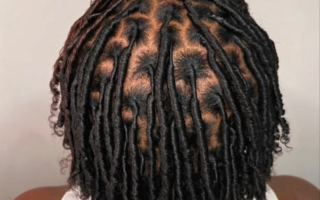
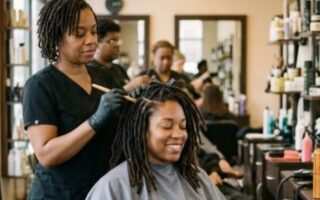
Low Tension Loc Styles That Protect Your Hairline (Stop Traction Damage Now)
Your locs should be a source of confidence, beauty, and self-expression, not a reason to worry about your hairline. However, if you have ever noticed thinning edges, tenderness around your temples, or tiny broken hairs after taking down a hairstyle,a Low Tension Loc Styles maybe what you need to protect your hair .
The truth is that not every protective hairstyle is actually protective. Some styles look beautiful but place unnecessary pressure on your roots, especially around the delicate hairline. Over time, repeated pulling can contribute to traction alopecia, a type of hair loss caused by prolonged tension on the hair follicles.
Fortunately, you do not have to sacrifice beautiful hairstyles to protect your edges. Low Tension Loc Styles offer a gentler approach to styling while allowing you to enjoy different looks, express your personality, and maintain healthier hair habits.
Whether you have starter locs, mature locs, short locs, or long, thick locs, there are plenty of ways to style your hair without constantly pulling at your roots.
In this guide, we will explore beautiful Low Tension Loc Styles, explain why excessive tension damages your hairline, and share practical tips for keeping your edges comfortable and healthy.
Why Your Hairline Needs Extra Protection
Your hairline is one of the most delicate areas of your scalp. Unlike the thicker hair around the crown, the hair near your temples and forehead can be particularly vulnerable to repeated pulling.
For example, tight ponytails, tightly secured loc buns, and styles that require excessive pinning can place continuous pressure on the same follicles.
Initially, you might only experience slight discomfort. However, repeated tension can eventually cause inflammation, breakage, and thinning.
This is why choosing Low Tension Loc Styles matters so much.
A genuinely protective style should allow your locs to sit comfortably without pulling your roots backward or creating painful pressure around your temples.
Additionally, remember that a hairstyle should never hurt to look good. If your scalp feels sore, your edges look stretched, or you develop small bumps after styling, those are signs that something needs to change.
What Are Low Tension Loc Styles?
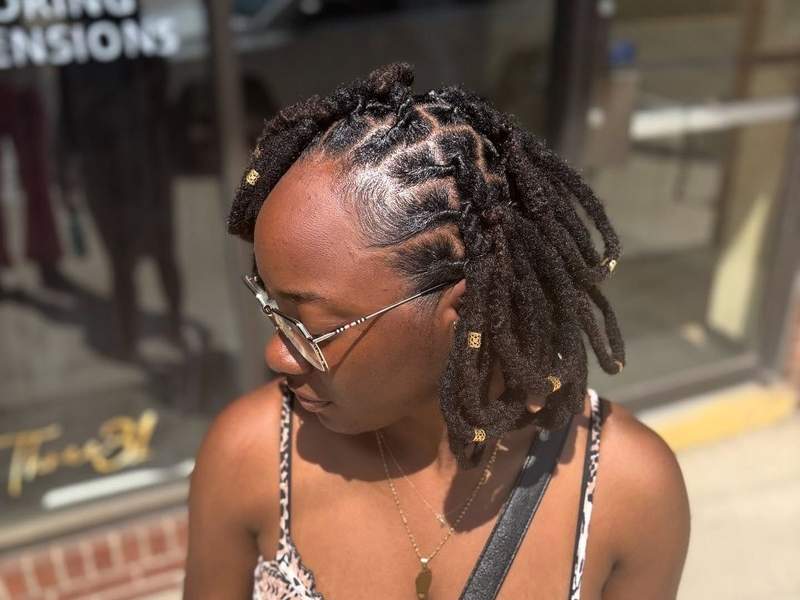
Simply put, Low Tension Loc Styles are hairstyles designed to keep your locs looking beautiful without placing excessive stress on your scalp or hair follicles.
Rather than pulling every loc tightly into one position, these styles allow your hair to fall naturally or use gentle positioning techniques.
For instance, you can wear your locs loose, create a relaxed side part, or gather them loosely with a soft accessory.
The main idea is to avoid unnecessary pulling, especially around your hairline.
Moreover, good Low Tension Loc Styles consider your loc length, thickness, scalp sensitivity, and individual hair needs.
They are not limited to one particular look. In fact, you can create elegant, casual, professional, and sophisticated hairstyles while keeping tension to a minimum.
Beautiful Low Tension Loc Styles That Protect Your Hairline
The best part about choosing Low Tension Loc Styles is that you have plenty of options. You do not need complicated techniques or uncomfortable accessories to achieve a gorgeous look.
Here are ten hairstyles worth trying.
Loose, Flowing Locs
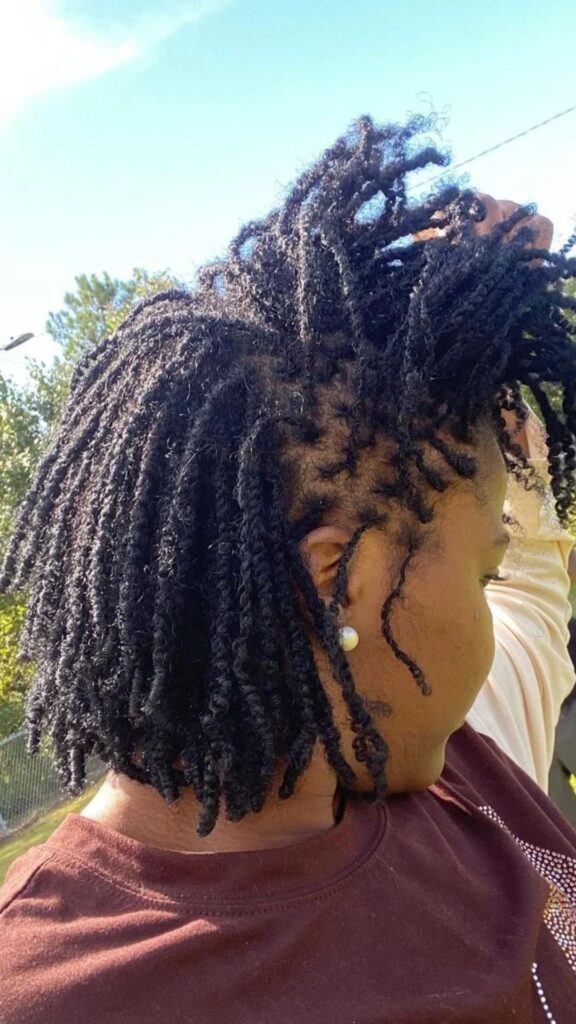
Sometimes, the simplest hairstyle is also the kindest to your hair.
Loose, flowing locs allow your hair to rest naturally without being pulled into a tight arrangement.
This style works particularly well for medium-length and long locs. Simply allow your locs to fall around your shoulders or down your back.
Additionally, you can change your part occasionally to avoid repeatedly placing pressure on the same areas.
Loose locs are especially useful when your scalp needs a break from elaborate styling.
Among the easiest Low Tension Loc Styles, this option requires very little manipulation and works for almost any occasion.
Soft Side-Parted Locs
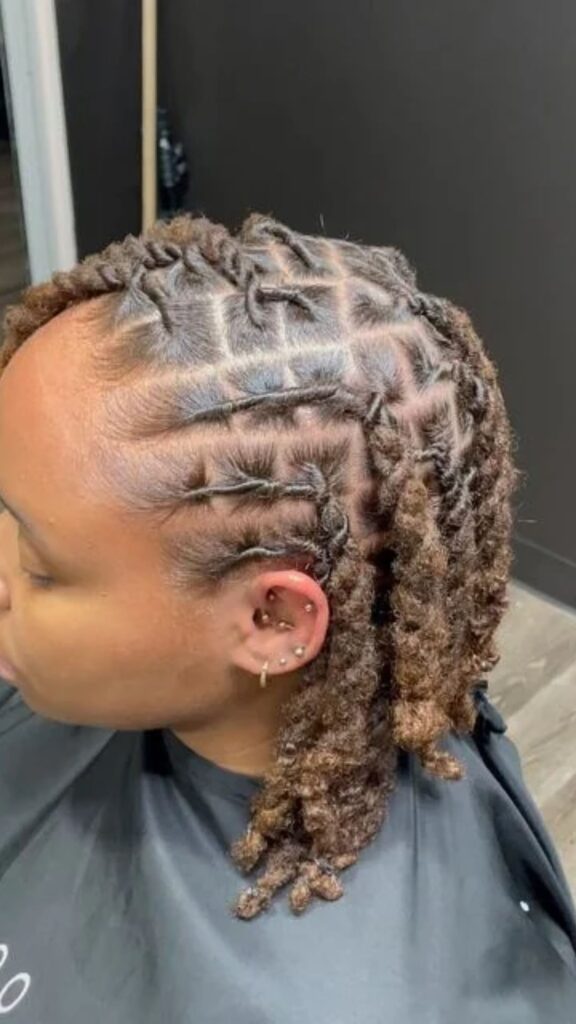
If you want something slightly more polished, consider a soft side part.
Instead of pulling your locs tightly backward, gently move them toward one side and allow them to fall naturally.
The result is an effortless hairstyle that frames your face beautifully.
Furthermore, you can experiment with different parting positions without forcing your roots into uncomfortable directions.
However, avoid creating a part that feels tight or repeatedly stresses thinning areas.
Soft side-parted Low Tension Loc Styles are particularly lovely for everyday wear, casual outings, and professional settings.
Loose Half-Up, Half-Down Locs
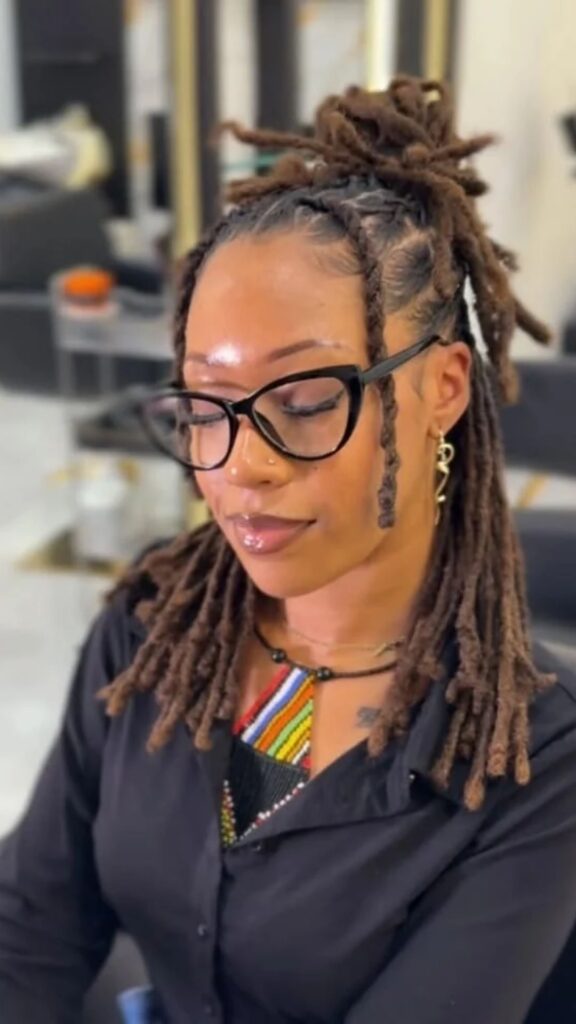
Want to keep some locs away from your face without tying everything up?
A loose half-up, half-down hairstyle is an excellent choice.
Simply gather a small, comfortable section from the front or sides and secure it gently. Leave the remaining locs flowing freely.
Unlike tightly pulled hairstyles, this approach distributes the styling more naturally.
Additionally, using a soft fabric scrunchie can help reduce friction and unnecessary pulling.
Remember, the gathered section should feel comfortable. If your temples begin to pull, loosen the hairstyle immediately.
This is one of the most versatile Low Tension Loc Styles because it combines practicality with a relaxed, feminine appearance.
Low, Loose Loc Ponytail
A ponytail does not automatically have to damage your hairline.
The important difference is how tightly you secure it.
For a gentler look, gather your locs loosely at the back of your neck. Use a soft, loc-friendly hair tie that does not snag or squeeze your hair.
Avoid repeatedly pulling the front sections backward.
Additionally, do not leave the ponytail in place for several consecutive days if it causes discomfort.
A relaxed ponytail is perfect when you want your locs neatly arranged without placing excessive tension on your edges.
Loose Loc Bun
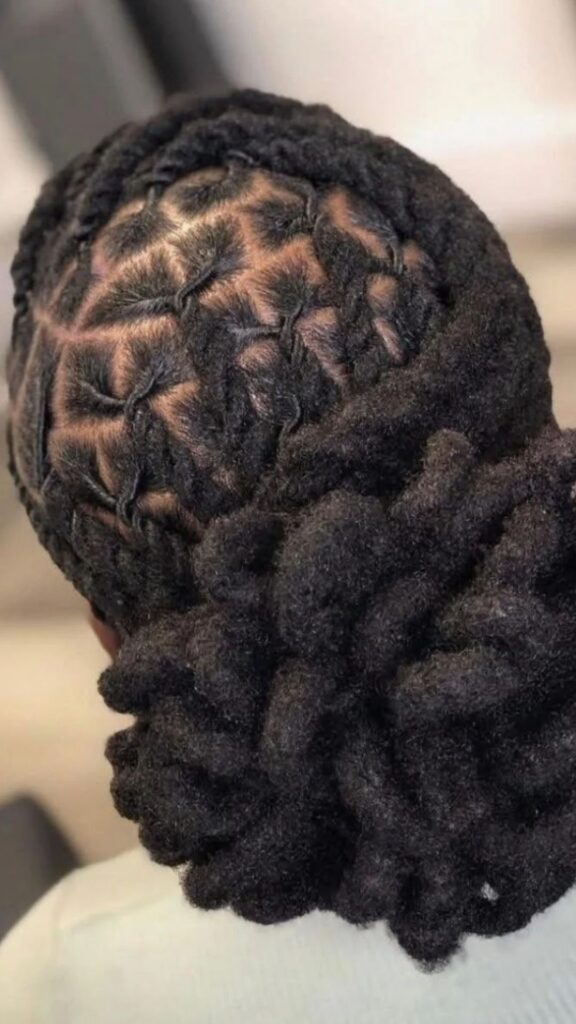
A beautifully arranged bun can look elegant without being painfully tight.
Instead of twisting your locs firmly against your scalp, gather them gently and create a relaxed bun.
You can position it low at the back of your head or slightly to one side.
Furthermore, use lightweight, smooth accessories rather than numerous tight pins.
If your locs are particularly thick or heavy, avoid forcing them into a small bun. The weight can increase tension even when the style initially feels comfortable.
Among practical Low Tension Loc Styles, a relaxed bun is ideal for dinners, meetings, special occasions, and everyday elegance.
- Natural Loc Bob
Shorter locs offer wonderful styling opportunities.
If your locs are already bob-length or you are considering a loc haircut, a natural loc bob can be a beautiful, low-manipulation option.
The locs fall around your face without requiring tight ponytails or complicated arrangements.
Additionally, shorter locs may feel lighter than longer locs, although the actual weight depends on their thickness and density.
You can wear your bob with a middle part, a soft side part, or no defined part at all.
This is one of the chicest Low Tension Loc Styles for anyone who appreciates effortless beauty.
- Locs Secured With a Satin Scarf
Accessories can transform a simple hairstyle into something special.
A satin scarf, for example, can help you create a stylish look without tightly manipulating your roots.
You can gently wrap the scarf around your head while leaving most of your locs loose.
Alternatively, use it as a decorative accessory around a relaxed bun.
However, make sure the scarf is not tied tightly around your temples or forehead.
The goal is comfort, not compression.
When styled gently, scarf-based Low Tension Loc Styles are perfect for relaxed weekends, travel, and casual outings.
- Loose Loc Updo
Updos are not automatically harmful. The problem usually comes from excessive tension, heavy styling, and repeated pulling.
For a relaxed updo, gather your locs loosely and arrange them with minimal manipulation.
You can allow a few locs to frame your face while securing the remaining sections comfortably.
Additionally, consider your loc length and weight before attempting an elaborate arrangement.
If your hairstyle feels heavy or pulls at your temples, choose a simpler option.
A comfortable updo can provide an elegant appearance without compromising your scalp comfort.
- Naturally Curled Locs
If you enjoy texture and volume, curled locs are worth considering.
Depending on your loc maturity and hair needs, you can use suitable loc-safe curling methods that do not require tight pulling at the roots.
The resulting curls add movement and personality while allowing your locs to remain relatively loose.
Furthermore, this hairstyle works beautifully for celebrations, photoshoots, and everyday occasions.
Avoid using excessive heat or techniques that leave your scalp uncomfortable.
Naturally styled curls offer another creative option when exploring Low Tension Loc Styles.
- Loose Loc Side Sweep
A side-swept hairstyle creates an elegant appearance with very little effort.
Simply move your locs gently toward one shoulder and allow them to fall naturally.
You can use a lightweight accessory if needed, but avoid securing the locs so tightly that your roots begin to pull.
This style works especially well for medium and long locs.
Moreover, it gives you a polished look without requiring an elaborate installation process.
For anyone looking for simple Low Tension Loc Styles, a natural side sweep is an excellent everyday choice.
Hairstyles That Can Cause Traction Damage
Although many loc hairstyles are beautiful, some can become problematic when worn too tightly or too frequently.
Understanding which styles deserve extra caution can help you make better decisions.
Tight high ponytails: These pull the front hairline backward and may create continuous pressure around the temples.
Extremely tight buns: Gathering heavy locs into a small, tightly secured bun can place considerable stress on the roots.
Tightly braided front sections: Decorative braids around the hairline can contribute to traction when installed too firmly.
Heavy loc extensions: Additional weight can increase the pulling force on your natural hair, especially when attached near fragile edges.
Repeatedly slicked-back styles: Constantly brushing and securing your hair tightly in the same direction can increase mechanical stress.
Of course, the style itself is not always the problem. Installation technique, frequency, duration, and hair weight all matter.
Therefore, choose Low Tension Loc Styles whenever possible, particularly if you have already noticed thinning around your edges.
How to Recognise Early Signs of Traction Alopecia
One reason traction alopecia can be difficult to recognise is that the changes may happen gradually.
At first, you might notice that your edges look slightly thinner than usual.
However, there are other warning signs worth paying attention to.
- Tenderness or soreness around your hairline.
- Small bumps or irritation near the follicles.
- Broken hairs around your temples.
- Gradually receding edges.
- Redness or inflammation after styling.
- A persistent feeling of tightness around your scalp.
Importantly, traction alopecia can become permanent if the follicles experience prolonged damage.
Consequently, stop wearing styles that cause pulling and seek advice from a dermatologist if you notice persistent thinning, inflammation, or hair loss.
Switching to Low Tension Loc Styles early can help reduce further mechanical stress, although existing hair loss may require professional treatment.
Essential Tips for Protecting Your Edges While Wearing Locs
Choosing beautiful Low Tension Loc Styles is only one part of maintaining healthy edges.
Your everyday hair habits matter just as much.
- Give Your Hairline Regular Breaks
Your edges do not need to be styled every day.
In fact, leaving your locs loose between elaborate hairstyles can reduce repeated manipulation.
Therefore, alternate between styled looks and natural, relaxed days.
- Avoid Excessive Weight
Long, thick locs can become heavy, particularly when gathered into certain hairstyles.
If you notice pulling around your temples, avoid styles that concentrate the weight near your hairline.
Additionally, consider whether your current loc length and thickness are comfortable for your scalp.
- Be Gentle When Retwisting
Retwisting should not hurt.
Although neat roots can look attractive, excessively tight retwisting can contribute to traction damage.
Ask your loctician to prioritise scalp comfort instead of creating an extremely tight finish.
Moreover, avoid unnecessary retwisting simply because your roots have started to loosen.
- Choose Hair Accessories Carefully
Elastic bands, metal clips, and rough accessories can snag locs or create uncomfortable pressure.
Instead, consider smooth, lightweight accessories that hold your hair without squeezing it.
Satin scarves and soft fabric scrunchies can be useful options.
- Keep Your Scalp Comfortable
A comfortable scalp is essential for maintaining a healthy loc routine.
Clean your scalp appropriately, remove product buildup, and avoid applying excessive oils or heavy products.
Remember, oil cannot reverse traction alopecia or guarantee hair growth.
Therefore, focus on gentle care rather than relying on miracle products.
- Avoid Repeating the Same Tight Style
Even if a hairstyle looks comfortable initially, wearing it repeatedly can place stress on the same follicles.
Instead, vary your parting positions and choose different Low Tension Loc Styles throughout the week.
This simple habit can reduce repeated mechanical stress.
How Often Should You Style Your Locs?
There is no universal styling schedule that works for everyone.
Your ideal routine depends on your loc maturity, length, thickness, scalp sensitivity, and lifestyle.
Nevertheless, constantly manipulating your locs is rarely necessary.
For everyday wear, loose styles are generally a convenient choice.
For special occasions, you can experiment with relaxed buns, soft updos, or scarf accessories.
However, avoid keeping any hairstyle that causes discomfort simply because you want it to last longer.
Additionally, remember that protective styling should not become another source of stress.
The best Low Tension Loc Styles are those that complement your lifestyle while allowing your scalp to remain comfortable.
Can You Regrow Your Edges After Traction Damage?
This is one of the most common questions people ask after noticing thinning around their hairline.
The answer depends on how much damage has occurred.
When traction damage is identified early, removing the source of tension may allow affected follicles to recover.
However, prolonged traction can cause permanent scarring and irreversible hair loss.
Therefore, it is important to stop tight styling as soon as possible.
A dermatologist can assess your scalp, determine whether scarring has developed, and recommend appropriate treatment.
Furthermore, avoid spending money on products that promise instant edge restoration without reliable evidence.
Switching to Low Tension Loc Styles is a helpful preventive step, but it should not replace medical assessment when hair loss is already present.
Building a Hairline-Friendly Loc Routine
Healthy loc maintenance does not have to be complicated.
In fact, consistency and gentle handling are often more valuable than elaborate routines.
Start by choosing Low Tension Loc Styles that suit your natural loc length and thickness.
Next, pay attention to how your scalp responds after styling.
If a hairstyle leaves your temples sore, change it rather than trying to tolerate the discomfort.
Additionally, schedule your maintenance appointments around your hair’s actual needs instead of following unnecessarily frequent retwisting schedules.
You should also avoid excessive brushing around your edges and minimise unnecessary manipulation.
Most importantly, understand that healthy locs do not need to look perfectly slicked down every day.
A little frizz, natural movement, and visible new growth are normal parts of the loc journey.
Your hairline deserves the same patience and care as the rest of your hair.
Frequently Asked Questions About Low Tension Loc Styles
- Are Low Tension Loc Styles suitable for starter locs?
Yes. However, starter locs require particularly gentle handling because they are still developing.
Choose simple styles that do not pull at the roots or disturb the locking process.
Loose locs, gentle accessories, and natural parting are generally preferable to complicated updos.
- Can I wear my locs in a bun without damaging my edges?
Absolutely. The important thing is to avoid pulling your locs too tightly.
Choose a relaxed bun, distribute the weight comfortably, and remove the style if you experience soreness.
- Do protective styles always prevent hair loss?
No. A hairstyle is not automatically protective simply because it keeps your hair arranged.
Styles that create excessive tension can contribute to traction alopecia.
This is why choosing genuinely comfortable Low Tension Loc Styles is important.
- Are long locs more likely to cause traction damage?
Long locs can place additional weight on the roots, especially when they are tightly gathered or secured.
However, length alone does not automatically cause hair loss.
The weight, styling method, and amount of tension are important considerations.
- Should I stop retwisting if my edges are thinning?
If you notice thinning or tenderness, avoid tight retwisting and consult a qualified dermatologist.
Your loctician can also help you adopt gentler maintenance practices.
- Can I wear protective styles every day?
You can style your locs regularly, provided your chosen hairstyles do not create excessive tension.
Nevertheless, alternating between styled and loose looks gives your hairline a break from repeated manipulation.
Beautiful Locs Should Never Come at the Expense of Your Edges
Your loc journey should be enjoyable, comfortable, and sustainable.
You deserve to experiment with different hairstyles without constantly worrying about whether your edges will survive the process.
Fortunately, Low Tension Loc Styles make it possible to enjoy beautiful, versatile hairstyles while reducing unnecessary stress on your hairline.
From loose ponytails and flowing locs to relaxed buns and elegant side sweeps, there are plenty of options that combine beauty with comfort.
Remember, your hairline does not need to be pulled tightly to look neat. Your locs do not need complicated styling to look beautiful, either.
Start paying attention to your scalp, choose lightweight accessories, avoid painful hairstyles, and give your roots enough time to rest.
Most importantly, do not ignore the early signs of traction damage.
Healthy edges are worth protecting, and the best hairstyle is always one that makes you feel beautiful without causing unnecessary discomfort.
Choose Low Tension Loc Styles, embrace your natural loc journey, and let your hair thrive without sacrificing your hairline.