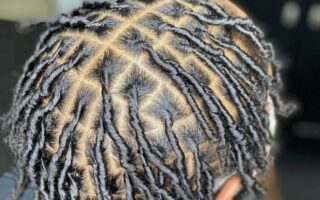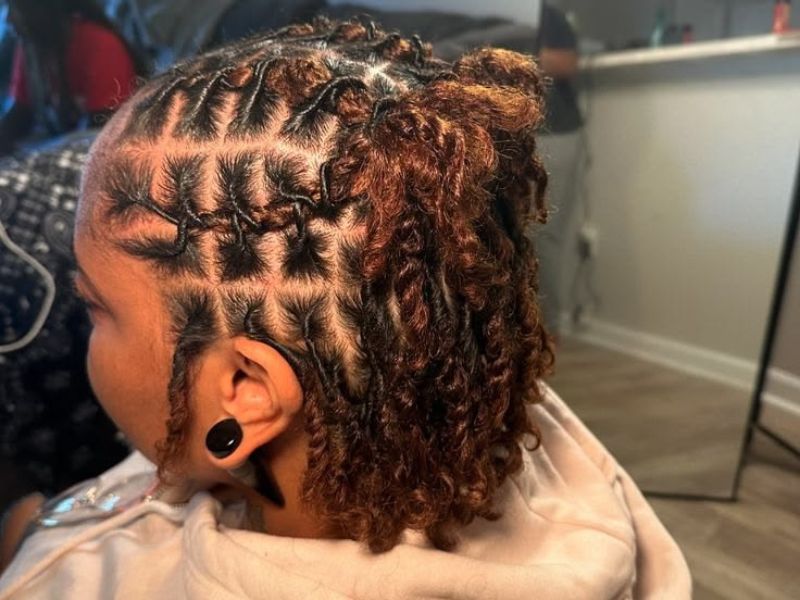
Starting your loc journey is exciting, especially when you imagine all the beautiful hairstyles you will eventually wear. However, the first few months can also bring questions. Can you style your new locs without making them unravel? Which hairstyles are safe for freshly installed coils and twists? How do you keep your hair looking neat without constantly retwisting it? Learning How to style starter locs begins with understanding that your hair needs time to settle, form, and mature. You can still enjoy different looks during this stage, but the techniques you use matter.
Starter locs are delicate because the hair has not fully developed the internal structure of mature locs. Depending on whether you started with comb coils, two-strand twists, braids, or another method, your hair may loosen, puff up, or develop frizz as the locking process continues. These changes do not automatically mean something is wrong.
The goal is to choose hairstyles that work with your current length and installation method rather than forcing your hair into a look that requires more tension or manipulation. Simple side parts, loose styles, soft headbands, and carefully arranged half-up looks can help you enjoy your starter locs while protecting their developing structure.
This guide explains practical styling ideas, the mistakes to avoid, the accessories you can use, and the everyday habits that help your locs remain comfortable and well cared for. You will also learn how to recognize normal frizz, handle loose ends, and decide when professional maintenance is necessary.
Understand Your Starter Locs Before Choosing a Hairstyle
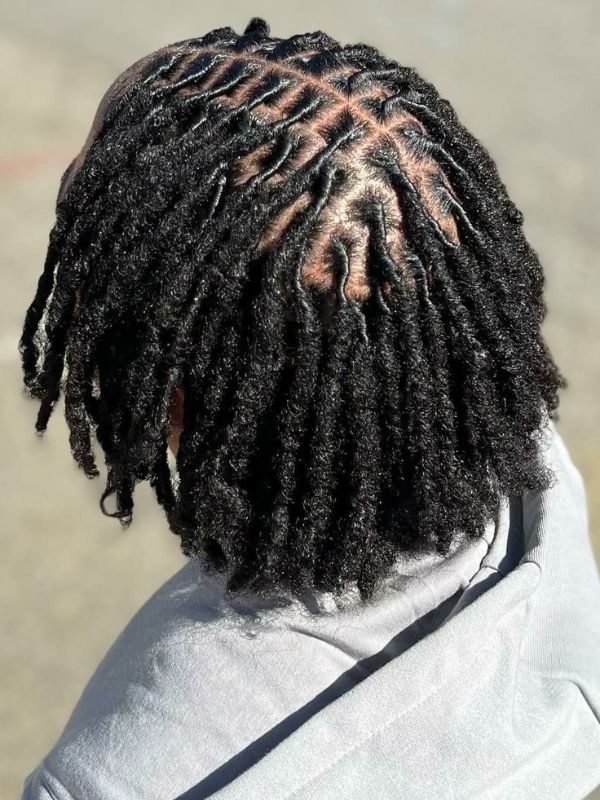
Before exploring different looks, it helps to understand what makes starter locs different from mature locs. Starter locs are the early stage of the locking process. The individual sections have been arranged into coils, twists, braids, or another chosen formation, but the strands still need time to begin tangling and holding together more securely.
This is why some hairstyles that work beautifully on mature locs may not be suitable for freshly installed ones.
For example, a mature loc can often be gathered into a firm bun without much difficulty. However, a new comb coil may loosen when repeatedly stretched, twisted, or pulled into the same position.
Your installation method also matters. Comb coils can unravel when their ends are disturbed, while two-strand twists may loosen along their length. Braided starters can retain their original pattern for longer, although they still need gentle handling.
When considering How to style starter locs, pay attention to three things:
- The age of your locs: Freshly installed locs generally need less manipulation than locs that have begun to mature.
- The installation method: A hairstyle should respect the way your individual locs were formed.
- Your current length: Choose styles that your hair can reach comfortably without pulling at the roots.
You do not need to rush into complicated hairstyles. Start with simple arrangements, observe how your locs respond, and gradually introduce other looks when your hair is ready.
For additional inspiration, explore How to Care for Your Locs the Right Way: A Step-by-Step Guide.
How to Style Starter Locs Without Unraveling or Weakening Them
1. Wear Your Starter Locs Naturally
Sometimes, the easiest hairstyle is the one that requires almost no manipulation. Wearing your starter locs naturally allows you to enjoy their texture while giving them room to develop.
This option works particularly well during the first few weeks, when your hair may still be adjusting to its new formation. You do not need to gather every section, twist the roots again, or add accessories to make the style interesting.
Instead, concentrate on keeping your hair clean according to your loctician’s instructions, protecting it while sleeping, and arranging it gently in the morning.
How to create this look in How to style starter locs
- Begin with clean, dry locs.
- Use your fingertips to separate any sections that are sticking together at the surface.
- Allow your locs to fall in their natural direction.
- Create a middle or side part only if the existing sections allow it comfortably.
- Leave the rest of your hair untouched.
The benefit of this style is its simplicity. You can wear it to school, work, family gatherings, casual outings, or relaxed weekends without spending time arranging every loc.
It also makes it easier to notice changes in your hair. When you are not constantly twisting or gathering your locs, you can identify unusual thinning, persistent unraveling, or areas that need attention.
Learning How to style starter locs does not mean you must create a different hairstyle every day. Sometimes, leaving your hair alone is the most practical choice.
If you want more ideas for wearing your hair naturally, visit How to Style Short Locs: 13 Beautiful Looks for Women.
2. Create a Simple Side Part
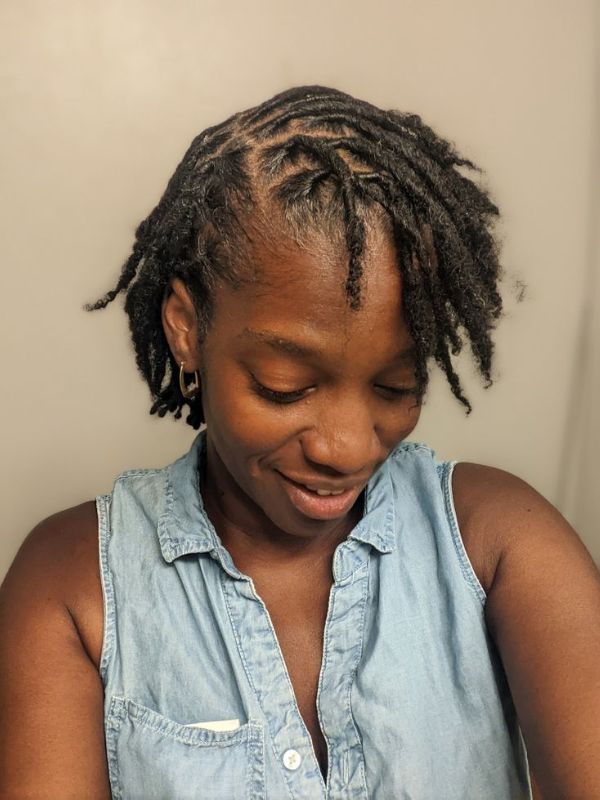
A side part is a straightforward way to change the appearance of your starter locs without gathering the hair into a tight style.
The look depends on how your existing sections fall. You can direct the front of your hair toward one side while allowing the remaining locs to rest naturally around your head.
This hairstyle is particularly useful when your locs are too short for ponytails or buns. Rather than stretching them toward a gathering point, you simply change the direction of the visible sections.
How to create a comfortable side part in How to Style Starter Locs
Start by examining the parts created during installation. If you already have a natural division that suits the style, work with it rather than forcing a new part through tightly arranged roots.
Next, use your fingertips to move the front sections gently toward the desired side. Do not pull individual locs away from their roots to make the part look sharper.
If the hair falls back into its original position, allow it to do so. Starter locs do not always hold a new direction immediately, and repeatedly forcing them into place can create unnecessary tension.
You can also use a lightweight, smooth headband to help frame the style. Choose one that sits comfortably and does not press tightly against the hairline.
A side part can work for everyday activities and special occasions. It can also make a simple hairstyle feel more deliberate without requiring additional products.
Remember that neatness does not mean eliminating every stray hair. A little frizz is common during the starter stage.
For another low-manipulation option, read How to Keep Your Locs Looking Neat All the Time—Even Between Retwists.
3. Try a Gentle Front Sweep
A front sweep moves a small section of hair away from the forehead while leaving the rest of the starter locs loose. It is a simple way to create a slightly different appearance without attempting a full updo.
The style works best when the front locs have enough length to change direction naturally. If they are extremely short, you may prefer a headband instead.
Steps to achieve the look
- Begin with dry hair that is free from unnecessary product buildup.
- Identify a small section near the front hairline.
- Gently guide the section toward the side or backward.
- Leave the remaining locs loose.
- If needed, use one smooth, lightweight pin that does not snag or squeeze the hair.
Avoid pulling the front section tightly toward the crown. The hairline can be vulnerable to repeated tension, especially when the same sections are styled this way every day.
You should also avoid repeatedly twisting the swept section to make it look more defined. The objective is to reposition the locs, not to reshape their entire structure.
If the hairstyle does not stay in place, choose a softer alternative. A headband can provide a similar visual effect without requiring you to secure the hair with pins.
This is one of the most useful approaches when learning How to style starter locs because it changes the overall look while leaving most of the hair untouched.
For more inspiration with shorter lengths, see How to Style Sisterlocks for Short Hair: 10 Stunning Ideas When Your Locs Feel Too Short to Style.
4. Use a Soft Headband for an Easy Everyday Look
Headbands can make starter locs look more organized without requiring complicated styling techniques. They are also useful when your locs are too short to gather comfortably.
The key is choosing an accessory that fits properly. A headband should not leave your scalp sore, press hard against your temples, or pull the hairline backward.
Fabric headbands are often comfortable for casual wear. Smooth, flexible designs can also help keep the front sections away from your face during everyday activities.
How to style your starter locs with a headband
First, arrange your locs naturally with your fingers. You do not need to comb through them or twist the roots again.
Next, position the headband slightly behind the hairline or wherever it feels comfortable. Allow the front sections to sit naturally rather than forcing them beneath the band.
You can leave all your locs loose or gently direct a few front sections backward. Keep the pressure light, particularly around the temples.
Choose colours that complement your clothing. Neutral shades can work well for everyday outfits, while patterned or colourful headbands can add interest to a simple hairstyle.
However, avoid wearing a tight band for long periods. If the accessory leaves marks, causes discomfort, or pulls at your edges, remove it and choose a looser option.
Clean your headbands regularly, especially if you exercise or sweat while wearing them. This helps prevent dirt and product residue from transferring to your hair and scalp.
When exploring How to style starter locs, remember that accessories should support the hairstyle rather than force your hair into a shape it cannot comfortably hold.
You can also explore How to Choose Sisterlocks for Older Women: Low-Maintenance Styles You’ll Love for more ideas about comfortable, simple styling.
5. Try a Loose Half-Up Hairstyle When Your Locs Are Ready

A half-up hairstyle gathers part of the hair while leaving the remaining locs loose. It can create a more structured appearance without requiring every section to fit into a single ponytail.
However, this look is not suitable for every starter-loc stage in How to style starter locs. Freshly installed coils may not have enough length to reach a gathering point comfortably. Therefore, wait until your hair can be arranged without stretching the roots.
How to create a relaxed half-up style
- Identify the upper sections that naturally reach the back or crown.
- Gather only the amount of hair that can move comfortably.
- Use a soft, loose hair tie if your locs can tolerate one.
- Leave the lower sections hanging naturally.
- Check the roots and hairline to make sure nothing feels tight.
Do not keep adding more locs just because a few sections fall out. Those shorter sections can remain loose and still look intentional.
Avoid elastic bands with exposed metal or rough edges. They can snag the hair when you remove them. Smooth, loc-friendly accessories are preferable.
You should also avoid sleeping in a tightly secured half-up style. Repeated tension during sleep can stress the same roots for hours. Let your hair down before bedtime unless your loctician has recommended a particular protective arrangement.
If your starter locs are still very short, begin with a front sweep or headband instead. You can revisit half-up styles when your length and loc maturity make them easier to achieve.
For additional hairstyle inspiration, see How to Style Short Locs: 13 Beautiful Looks for Women.
6. Create a Soft Crown Arrangement
A crown arrangement directs a small section of locs toward the upper part of the head. It can look polished while keeping the remaining hair loose.
Unlike a tight bun, this style does not need to gather all your locs into one small area. You can simply arrange the sections that naturally reach the crown.
The main consideration is your loc length. If the front or side sections cannot reach the top comfortably, do not stretch them to complete the look.
How to create the style
Start by identifying the sections that already fall toward the crown. Gently guide them into position with your fingers.
If the sections hold their shape naturally, leave them as they are. If they need a little support, use a smooth pin placed without pulling the roots.
Keep the remaining locs loose. This creates a balanced appearance while limiting the amount of hair you manipulate.
A crown arrangement can work for casual outings, family gatherings, and occasions when you want your hair away from part of your face. It can also be adapted as your locs become longer.
However, avoid twisting each section repeatedly to make the crown look tighter. The style should come from positioning the hair, not forcing the starter locs into a new formation.
If you experience scalp tenderness, remove the pins and allow your hair to rest.
For additional ideas about arranging locs for special occasions, read How to Choose Wedding Locs Styles That Make You Look Elegant and Put Together.
7. Wear a Satin or Silk Scarf as an Accessory
A scarf can change the appearance of starter locs without requiring you to manipulate the individual sections. It is especially helpful when you want a coordinated look for a casual outing or family event.
Choose a scarf made from a smooth fabric that does not catch on your locs. Satin and silk are popular options because they can reduce friction compared with rougher materials.
Simple ways to wear a scarf
You can fold a scarf into a narrow band and place it around your head, leaving the locs loose. Alternatively, wear a wider scarf around the crown while allowing the back sections to remain visible.
For a simple everyday style, coordinate the scarf with your outfit. A solid-colour scarf can complement patterned clothing, while a printed scarf can add colour to a plain outfit.
The important thing is to avoid tying it too tightly. A scarf should remain secure without pressing hard against the hairline or creating tension around the temples.
Do not wrap the scarf so firmly that your locs become compressed or bent into an uncomfortable position. Adjust it whenever you notice pulling.
You can also use a scarf to protect your hair during suitable outdoor activities, although you should still follow your normal scalp-cleaning routine.
At night, a properly fitted satin bonnet or smooth pillowcase can provide protection without requiring a decorative scarf to remain tied tightly.
When learning How to style starter locs, accessories provide an easy way to experiment with colour and texture while keeping manipulation low.
For more loc-care guidance, visit How to Care for Your Locs the Right Way: A Step-by-Step Guide.
8. Use Minimal Hairpins for a Side-Tucked Look
A side-tucked style is useful when a few locs around your face keep falling forward. It moves a small section away from the face without requiring an elaborate updo.
However, the pins you choose matter. Rough, sharp, or poorly fitted accessories can snag your locs, especially when the hair is still forming.
How to create the style
Begin by separating a small section near one temple. Gently guide it toward the side or slightly backward.
Place a smooth pin where it can hold the section without pulling the roots. Make sure the pin does not press into your scalp.
Leave the remaining locs loose. There is no need to pin every section into place.
Before leaving home, move your head gently from side to side. If the pin catches, shifts painfully, or pulls the hair, remove it and try another arrangement.
Do not force a pin through a tightly packed group of locs. Instead, select a smaller section or choose a headband.
At the end of the day, remove the pins carefully rather than pulling them out quickly. Check that no locs have become caught in the accessory.
This style is suitable for short and medium starter locs when the sections can reach the desired position naturally.
For additional inspiration, explore How to Style Sisterlocks for Short Hair.
9. Try a Simple Middle Part
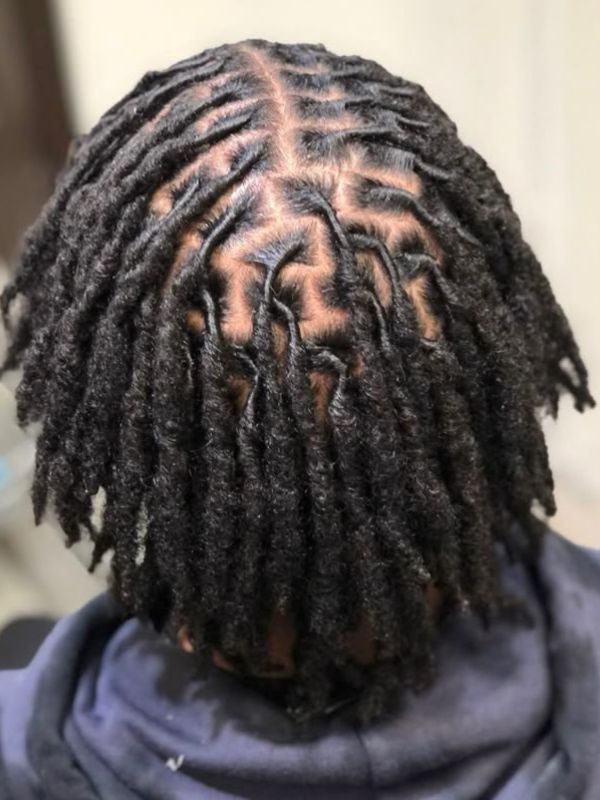
A middle part creates a balanced appearance without requiring the locs to be gathered or twisted. It is also easy to maintain because most of the hair remains in its natural position.
This style works best when your existing installation pattern allows the hair to fall comfortably on both sides. You do not need to create a perfectly straight line if doing so requires pulling apart tightly arranged sections.
How to achieve a relaxed middle part
First, look at the parts your loctician created. If a natural division runs near the centre, follow it gently.
Use your fingertips to arrange the front sections on either side. Avoid dragging a comb through the starter locs or separating the roots with force.
Allow the hair to settle naturally. If the part looks slightly irregular, that is not a problem.
A middle part can be worn with all the locs loose or combined with a soft headband. It is suitable for everyday activities because it does not depend on pins, bands, or heavy styling products.
If your locs repeatedly fall in another direction, consider working with that pattern instead. Starter locs do not need to match a perfectly symmetrical photograph to look well arranged.
A comfortable style that respects your hair’s natural direction is more useful than a sharply defined part that causes tension in How to style starter locs.
For more ideas, read How to Style Short Locs: 13 Beautiful Looks for Women.
10. Arrange Your Locs Into a Loose Side-Swept Look
A loose side-swept hairstyle gives your starter locs a slightly more dressed-up appearance. It can work for outings, photographs, and occasions when you want a simple change without committing to an updo.
The technique is straightforward. Rather than gathering the entire head, you direct the front and upper sections toward one side.
How to create this look
Begin with dry locs and choose the side where your hair naturally falls most comfortably.
Move a few sections toward that side using your fingertips. Leave the remaining locs in place.
If you need an accessory, use a lightweight pin or soft headband. Avoid pulling the hair tightly behind your ear or toward the back of your head.
You can also allow a few locs to frame your face. There is no need to secure every loose section.
This hairstyle is particularly useful when your locs are short because it creates a visible change without requiring extra length.
If your locs return to their original direction, allow them to do so. Repeatedly repositioning the same sections can cause unnecessary handling.
Remember that your hair may respond differently on different days. Humidity, washing, and the natural texture of your hair can affect how easily the locs settle into a particular arrangement.
For more inspiration, see How to Keep Your Locs Looking Neat All the Time—Even Between Retwists.
11. Choose a Loose Low Gathering Style When Your Locs Are Mature Enough
A low gathering style brings some of the locs toward the back of the head. It can be convenient when you want your hair away from your face, but it requires enough length to avoid tension.
For freshly installed locs, this may not be practical. Wait until your hair can reach the gathering point naturally.
How to create a comfortable low style
Separate only the sections that can reach the back comfortably. Gather them loosely near the nape and secure them with a smooth, soft accessory.
Do not stretch shorter sections to make them join the group. Allow them to remain loose.
Check the hairline, temples, and nape for pulling. If the style feels tight, remove the accessory and choose a looser arrangement.
Avoid keeping the same low gathering style for extended periods if it repeatedly pulls on one area. Changing your styling direction can help reduce repeated stress on the same roots.
You should also avoid using heavy extensions to make starter locs appear longer or fuller for a particular hairstyle without professional advice. Extra weight can place unnecessary strain on developing locs.
When exploring How to style starter locs, remember that a low ponytail or gathering style is an option to grow into, not a requirement for the early stages.
For more inspiration as your locs gain length, explore How to Style Short Locs: 13 Beautiful Looks for Women.
12. Experiment With Lightweight Loc Accessories
Accessories can make simple starter locs feel more personal. However, the right choice should be lightweight, smooth, and appropriate for the size and maturity of your locs.
You do not need to decorate every loc. A single accessory can be enough to change the overall appearance.
Accessories you can consider
- Soft fabric headbands.
- Lightweight scarves.
- Smooth hairpins designed to avoid snagging.
- Small, loc-friendly cuffs that fit without squeezing the hair.
- Satin or silk coverings for nighttime protection.
Before using a cuff or decorative ring, check whether your locs are developed enough to support it. Some accessories can slide off, compress the hair, or become caught in loose strands.
Avoid forcing a tight cuff onto a new loc. It should not require you to squeeze the hair or pull the loc through a narrow opening.
Also, do not attach heavy decorations to the same small section repeatedly. The added weight may stress the loc, especially near the root.
Keep your accessories clean. Dirt, sweat, and product residue can collect around decorative pieces and transfer to the hair.
If an accessory becomes stuck, do not pull hard. Remove it carefully or ask an experienced loctician for assistance.
For more ideas on maintaining locs while experimenting with your look, read How to Care for Your Locs the Right Way: A Step-by-Step Guide.
13. Wear Your Starter Locs With a Soft Head Wrap

A head wrap can create a polished appearance on days when you do not want to manipulate your locs. It can also help protect the hair from friction, depending on the material and how it is worn.
This option is especially useful when your starter locs are short or when you want a break from styling.
How to wear a head wrap comfortably
Choose a smooth, breathable fabric. Fold it to a width that suits the look you want, then place it around your head without pulling the hairline backward.
You can leave some locs visible around the front or allow the wrap to cover most of the hair. Either option can work, depending on your preference and the occasion.
Tie the wrap securely enough to stay in place, but not so tightly that it causes discomfort. If you notice pressure around your temples, loosen it.
Avoid wrapping wet locs for long periods. Moisture trapped under a covering can leave the hair damp, so allow your locs to dry fully after washing.
For sleeping, use a covering designed for comfortable overnight protection rather than tying a decorative wrap tightly.
A head wrap can also help you coordinate your hairstyle with your clothing. Try neutral colours for everyday wear or patterned fabrics for a more noticeable accessory.
For additional loc-care ideas, explore How to Steam Your Locs: Everything You Need to Know. Always follow stage-appropriate guidance before introducing steaming to newly installed locs.
14. Keep Your Styling Routine Simple on Busy Days
You do not need a complicated hairstyle every morning. A simple routine can help you maintain your appearance while limiting unnecessary manipulation.
This is particularly helpful during the starter stage, when your hair is still forming and may not hold elaborate styles consistently.
A simple morning routine
First, remove your nighttime covering and examine your scalp and locs. Look for discomfort, unusual tangling, or sections that have become caught together.
Next, use your fingertips to arrange the hair gently. If the locs look slightly frizzy, remember that some frizz is normal.
Choose a simple style, such as wearing the hair loose, creating a comfortable part, or adding a soft headband.
Finally, stop adjusting your hair once it looks and feels comfortable. You do not need to keep twisting individual locs throughout the day.
Avoid carrying a comb or twisting product around simply to fix every strand that moves out of place. Constant corrections can disturb the starter pattern.
Instead, focus on consistent scalp care, appropriate washing, nighttime protection, and professional maintenance when needed.
The aim of How to style starter locs is not to achieve perfect hair every morning. It is to find a routine that allows your locs to develop while still giving you practical styling options.
For more maintenance ideas, read How to Keep Your Locs Looking Neat All the Time—Even Between Retwists.
15. Protect Your Locs When Exercising
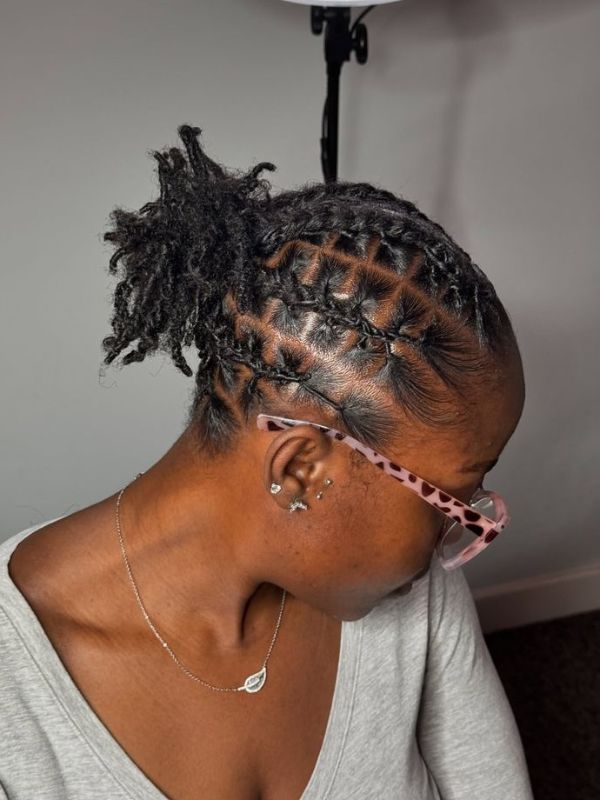
Exercise can leave your scalp sweaty, but that does not mean you must avoid physical activity to protect your starter locs. The important thing is to manage sweat, friction, and moisture appropriately.
Choose a soft, breathable headband if you need to keep the hair away from your face. It should fit comfortably without pulling the hairline.
After exercising, allow your scalp to cool and follow your normal cleansing routine as needed. Do not leave your hair damp under a tight covering for long periods.
If your scalp becomes sweaty frequently, ask your loctician about an appropriate washing schedule for your installation method and stage of development.
Avoid repeatedly tying your locs into a tight ponytail before exercise. A simple headband may be enough to keep the front sections out of your face.
Also, be careful when wiping sweat away. Rubbing a towel aggressively over the locs can disturb their formation.
Use a clean, soft towel and gently blot the skin when necessary.
Once your hair is dry, arrange it loosely with your fingers. There is no need to retwist every section after a workout.
For further guidance on caring for your hair, visit Starter Locs on Short Hair: What to Expect and How to Style Them
16. Choose Styles That Suit Your Installation Method
Not every starter-loc method responds to styling in the same way. Understanding your installation method helps you avoid hairstyles that disturb the pattern.
Comb coils
Comb coils are formed by coiling small sections of hair. Their ends may loosen when the locs are repeatedly twisted, stretched, or disturbed. Simple loose styles and comfortable headbands may be easier to manage during the early stage.
Two-strand twists
Two-strand twists begin with two sections of hair wrapped around each other. They may loosen or puff up as the locking process develops. Avoid pulling the twists apart or repeatedly retwisting them simply to maintain a fresh appearance.
Braided starter locs
Braided starters retain a visible braid pattern during part of the early process. You can wear them naturally or use gentle accessories, provided they do not pull the roots or distort the braids.
Interlocked starter locs
Interlocking uses a technique that passes hair through the root in a particular pattern. The maintenance needs differ from those of comb coils and twists, so ask your loctician which styling and washing practices suit your installation.
Regardless of the method, avoid assuming that a hairstyle is safe simply because it works on someone else’s locs.
The age of your locs, the condition of your hair, and the amount of tension required all matter.
If you are unsure which styles suit your installation, consult the professional who started your locs.
For more information about starting and maintaining locs, read How to Transition from Relaxed Hair to Locs Without Damaging Your Hair.
17. Avoid Tight Ponytails and High Buns During the Early Stage
Tight ponytails and high buns can place considerable tension on the roots. This is especially concerning when starter locs are short and need to be stretched to reach a particular position.
You may see beautiful high buns online and want to recreate them immediately. However, a style that works on long, mature locs may not suit newly installed hair.
What to do instead
Choose a loose style that allows the locs to fall naturally. If you want your hair away from your face, use a soft headband or gently reposition a small front section.
If your locs eventually become long enough for a bun, make sure the style does not pull at the temples, crown, or nape.
Avoid securing the same section tightly every day. Repeated tension can stress the same area, even when each individual styling session seems harmless.
Pay attention to discomfort. A hairstyle should not cause pain, tenderness, headaches, or a persistent pulling sensation.
If you notice thinning around the hairline or a loc becoming unusually narrow near its root, stop the tension-producing style and consult a qualified professional.
Healthy styling is not about forcing your hair to look a certain way. It is about finding options that work with your locs as they develop in this How to style starter locs.
For more advice, see How to Fix Common Loc Problems and Keep Your Locs Healthy.
18. Avoid Heavy Products That Make Styling Difficult
Heavy styling products can coat starter locs, attract residue, and make the hair feel greasy or weighed down. They can also encourage you to keep manipulating the hair because the sections feel sticky or do not sit as expected.
You do not need a large collection of products to style your starter locs.
Instead, follow a simple routine recommended by your loctician. Use products that suit your scalp and installation method, and avoid applying several products simply to make the hair look smoother.
Products and habits to approach carefully
- Heavy waxes that leave residue inside the locs.
- Thick creams applied repeatedly to the same sections.
- Excessive oils that make the hair feel coated.
- Strong holding products used to force the locs into an unfamiliar shape.
- Frequent product layering without proper cleansing.
Remember that oil and moisture are not the same thing. Applying more oil does not automatically mean your hair is adequately hydrated.
If your scalp feels dry or uncomfortable, seek advice about suitable products instead of applying multiple treatments at once.
Also, avoid using products to glue loose ends into place. If a starter loc repeatedly unravels, the underlying cause may relate to its installation method, hair texture, washing routine, or stage of development.
For further guidance, read How to Care for Your Locs the Right Way: A Step-by-Step Guide.
19. Protect Your Starter Locs While Sleeping
Nighttime protection is an important part of maintaining starter locs. Friction from cotton pillowcases, blankets, and repeated movement can disturb the hair’s arrangement.
A satin or silk bonnet can reduce friction when it fits comfortably. A smooth pillowcase is another option, particularly if you prefer not to wear a bonnet.
How to protect your hair at night
Start by allowing your locs to dry fully if you have washed them. Damp hair should not be kept covered for extended periods.
Next, arrange your locs naturally. Avoid tying them tightly or pulling them into a small bundle before covering your head.
Choose a bonnet that stays in place without squeezing the hairline. If it slips off, look for a better-fitting design rather than tightening it excessively.
Wash your bonnet or pillowcase regularly. Clean nighttime coverings help limit the transfer of sweat, dirt, and product residue.
In the morning, remove the covering gently and arrange your locs with your fingertips.
You do not need to retwist every section that looks slightly different after sleeping. Some movement and frizz are normal.
Consistent nighttime protection can make your daily routine easier because you spend less time trying to rearrange the hair.
For additional maintenance tips, explore How to Keep Your Locs Looking Neat All the Time—Even Between Retwists.
20. Wash Your Starter Locs Without Excessive Manipulation

Cleanliness remains important during the loc journey. Avoiding washing indefinitely because you fear unraveling can leave sweat, dirt, and product residue on your scalp.
However, the right approach depends on how recently your locs were installed and which method your loctician used.
Follow the washing instructions provided for your installation. If you are unsure when to have your first wash, ask the professional who started your locs rather than relying on a universal waiting period.
How to reduce unnecessary disturbance
Use a suitable shampoo and concentrate on cleaning the scalp gently. Avoid aggressively rubbing, scrubbing, or twisting individual starter locs.
Rinse thoroughly so that shampoo does not remain trapped in the hair.
After washing, gently squeeze excess water from the locs instead of wringing them. Allow the hair to dry completely.
If your installation method requires a particular washing technique, follow the instructions from your loctician.
Some starter locs may loosen during washing despite careful handling. This does not necessarily mean you have damaged your hair.
Avoid trying to repair every loose section immediately with repeated twisting. If several locs unravel or the same sections keep opening, seek professional advice about whether your maintenance routine needs adjustment.
Clean hair and a healthy scalp remain important throughout the locking process in How to style starter locs.
For more guidance, read How to Care for Your Locs the Right Way: A Step-by-Step Guide.
21. Understand the Difference Between Frizz and Unraveling
One of the most common concerns during the starter stage is deciding whether your hair is behaving normally.
Frizz occurs when individual hairs become visible around the surface of a loc. It is common as the hair begins to lock, and it does not automatically indicate damage.
Unraveling occurs when the original coil, twist, or braid begins to loosen or open. Depending on the method, this can affect the ends, the middle of the section, or the overall shape.
The distinction matters because each situation may require a different response.
When you notice frizz
Avoid trying to twist every stray hair back into place. Some surface frizz is part of the locking process, and repeatedly manipulating it can create unnecessary work.
When you notice a loose end
Observe whether the end has loosened slightly or whether the entire section has opened. Do not pull the hair apart to investigate.
When a loc has unravelled significantly
Contact your loctician if you are unsure how to repair it. They can assess whether the original pattern needs to be restored and whether your current routine is contributing to the problem.
Remember that starter locs do not become mature overnight. Their appearance will change as the hair develops.
When learning How to style starter locs, it is important to recognize that a slightly fuzzy finish can be normal. You do not need to eliminate every loose hair to have healthy locs.
For additional advice, explore How to Fix Common Loc Problems and Keep Your Locs Healthy.
22. Give Your Hair Breaks Between More Involved Styles
Even a comfortable hairstyle can become less suitable if you wear it in the same position continuously.
For example, repeatedly sweeping the same locs backward or gathering the same sections into a ponytail can place ongoing stress on particular roots.
Rotating between simple styles gives you more flexibility and helps you notice which arrangements feel comfortable.
A practical rotation
On one day, wear your locs naturally. On another, use a soft headband. Later, try a gentle side part or scarf.
You do not need to create a new hairstyle every day. The idea is to avoid depending on one tension-producing arrangement.
Also, remove accessories before sleeping if they pull on your hair. Overnight tension can continue stressing the same areas long after you finish styling.
If you notice discomfort, stop using the style until you understand what is causing it.
You should also give yourself permission to leave the hair alone. A simple, natural appearance can be just as suitable for everyday activities as an elaborate arrangement.
The starter stage is a time to learn how your hair responds. Observe which styles remain comfortable, which accessories catch on your locs, and which routines leave your scalp feeling healthy.
For more inspiration, visit How to Style Short Locs: 13 Beautiful Looks for Women.
23. Know When to Ask Your Loctician for Help
Although many starter-loc concerns are manageable, some situations require professional attention.
If one loc repeatedly unravels, the problem may involve the installation technique, the length of your hair, or the way the section responds to washing and styling.
Likewise, persistent tension, unusual thinning, or discomfort should not be ignored.
Consider seeking professional advice when:
- Several locs repeatedly open after washing.
- The same sections continue unraveling despite gentle handling.
- You notice thinning around the roots or hairline.
- Your scalp remains sore after styling.
- Two or more locs have become firmly joined at the roots.
- You are unsure how to repair a significantly loosened section.
Avoid attempting complicated repairs with unfamiliar tools. Pulling, cutting, or repeatedly twisting the hair can make the situation harder to manage.
A loctician who understands your installation method can examine the hair and recommend an appropriate maintenance plan.
It is also worth discussing your preferred hairstyles during appointments. Explain whether you want to wear your locs loose, use accessories, or gradually introduce more structured styles.
This helps your loctician provide advice that suits your lifestyle and hair rather than giving you a routine that feels unnecessarily complicated in How to Style Starter Locs.
For additional information about common loc concerns, read How to Fix Common Loc Problems and Keep Your Locs Healthy.
24. Adapt Your Hairstyle to Your Loc Length
Length influences how many styling options are available, but it does not determine whether your starter locs can look presentable.
Very short locs often work well when worn naturally, arranged into a side part, or paired with a soft headband.
Medium-length locs may offer more opportunities for a gentle half-up style, a loose side tuck, or a low gathering arrangement.
Longer locs can eventually support a wider range of buns, ponytails, and updos, provided the style does not place excessive tension on the roots.
How to choose a style for your current length
First, observe how far your locs reach without being stretched.
Next, choose a hairstyle that uses that natural length. If the sections cannot reach a gathering point, select a style that keeps them loose.
Finally, check that any accessory can be used without forcing the locs through a narrow opening or pulling them away from their roots.
Avoid comparing your early-stage locs with photographs of mature locs. The images may show hair that has developed for years, so the styling possibilities will naturally differ.
Your current length is enough to work with. You can enjoy simple styling now and explore more elaborate options as your locs develop.
For more ideas suited to shorter hair, read How to Style Sisterlocks for Short Hair: 10 Stunning Ideas When Your Locs Feel Too Short to Style.
25. Keep Your Styling Tools Clean and Gentle
Your styling tools can affect how easily you arrange your starter locs. Rough tools, sharp accessories, and poorly fitted pins may catch loose hairs or disturb the hair’s formation.
You do not need an elaborate collection of styling tools. In many cases in this Starter locs on short hair, your fingertips and a few carefully chosen accessories are enough.
Useful tools for simple styling
- A soft fabric headband.
- Smooth hairpins that do not snag.
- A satin or silk bonnet.
- A soft towel for gently removing excess water.
- A clean scarf for decorative styling.
If your loctician recommends a particular tool for your installation method, follow their guidance.
Avoid using a fine-toothed comb to repeatedly pull through the starter locs. Likewise, do not use sharp tools to separate sections that have become joined at the roots.
Clean your accessories regularly, especially those that touch your scalp directly.
When removing pins, take your time. If a pin catches on a loc, do not pull it out forcefully.
The same rule applies to cuffs and decorative rings. They should not be forced onto the hair, and they should be removed carefully when necessary.
Simple tools make styling easier because they allow you to arrange the hair without introducing unnecessary friction or tension.
For more information about maintaining healthy locs, visit How to Care for Your Locs the Right Way: A Step-by-Step Guide.
26. Avoid Trying to Make Every Loc Look Identical
Starter locs rarely look perfectly uniform throughout their development. Some sections may swell, others may appear thinner, and a few may develop frizz sooner than the rest.
These differences can depend on the installation method, hair texture, section size, and the way individual locs develop.
Trying to make every section look identical through repeated twisting can create more problems than it solves.
What you can do instead
Focus on keeping your scalp clean and your styling comfortable. Allow the locs to develop without repeatedly reshaping them.
If a section looks different, observe whether it is simply frizzy or whether the loc is actually loosening.
Avoid pulling individual locs to compare their length or strength. This can place unnecessary stress on the roots.
If you notice a significant change, such as persistent thinning or repeated unraveling, ask your loctician to assess the section.
It is also helpful to take occasional photographs of your hair. These can help you observe gradual changes without constantly handling the locs.
Remember that starter locs are a developing hairstyle. Their texture and appearance will change as the hair matures.
A successful routine is not one that removes every difference. It is one that supports healthy hair while allowing the locs to develop naturally.
For more information about differences in loc development, read Why Some Locs Grow Faster Than Others and How to Fix Slow Growth.
27. Prepare Your Starter Locs for Special Occasions

You can still enjoy a special hairstyle during the starter stage. The trick is to plan around your hair’s current length and condition rather than attempting a complicated look at the last minute.
For a family gathering, you might wear your locs naturally with a decorative headband. A soft scarf can add colour to a birthday outfit, while a simple side part may suit a formal occasion.
If your locs have enough length and stability, you may be able to create a relaxed half-up style or gentle side tuck.
Plan the hairstyle before the event
Try the style ahead of time, using the same accessories you intend to wear.
Check that nothing pulls at the roots or catches on the locs. If the style requires repeated adjustments, choose a simpler option.
Avoid introducing unfamiliar heavy products immediately before an event. Product residue or an unexpected reaction can make your scalp uncomfortable.
You should also avoid asking a stylist to force short starter locs into a complicated updo simply because it appears in an inspiration photograph.
Instead, explain your hair’s stage of development and ask for a low-tension alternative.
A simple hairstyle can look polished when the accessories complement your outfit and the hair is arranged thoughtfully.
For more formal hairstyle inspiration, explore How to Choose Wedding Locs Styles That Make You Look Elegant and Put Together.
28. Create a Simple Weekly Loc-Care Routine
A consistent routine can make styling easier because you are less likely to rely on repeated twisting, heavy products, or last-minute repairs.
Your exact schedule should depend on your scalp, installation method, and loctician’s advice. However, you can use a few basic habits to organize your care.
Daily
Arrange your locs gently, avoid unnecessary manipulation, and protect them while sleeping.
On wash days
Follow an appropriate washing method, rinse thoroughly, and allow the hair to dry completely.
Throughout the week
Notice any discomfort, repeated unraveling, or unusual changes around the roots. Avoid attempting to fix every minor sign of frizz.
At maintenance appointments
Ask your loctician whether the installation is developing as expected and whether your styling routine needs adjustment.
This approach keeps your routine manageable. You do not need to spend hours arranging your hair every morning.
It also helps you separate styling from maintenance. A hairstyle changes the appearance of your locs, while maintenance supports their continued development.
Both matter, but they serve different purposes.
For more advice on building a practical routine, read How to Care for Your Locs the Right Way: A Step-by-Step Guide.
29. Learn What to Do When a Starter Loc Begins to Unravel
Finding a loose starter loc can be worrying, especially if you have only recently started your loc journey. However, one loose section does not automatically mean the entire installation has failed.
The first step is to avoid panicking or repeatedly twisting the section in an attempt to make it look neat.
How to respond calmly
First, identify whether the loc has developed ordinary frizz, a slightly loose end, or more extensive unraveling.
Next, avoid pulling the section apart to inspect it. This can disturb the hair further.
If only the end appears loose, ask your loctician whether it can be left alone until your next appointment or needs a small repair.
If the entire section has opened, professional guidance can help restore the original formation without excessive manipulation.
Do not apply glue, wax, or heavy styling products to force the section to stay together.
It is also useful to review your recent routine. Have you been twisting the same loc repeatedly? Did you use a new product? Did several sections loosen after washing?
These observations may help your loctician identify a suitable solution.
Some loosening is common during the early stage, and your response should depend on the extent of the change.
The goal is to address genuine problems without treating every loose hair as a reason for another retwist.
For more guidance, visit How to Fix Common Loc Problems and Keep Your Locs Healthy.
30. Build Confidence in Your Natural Loc Journey
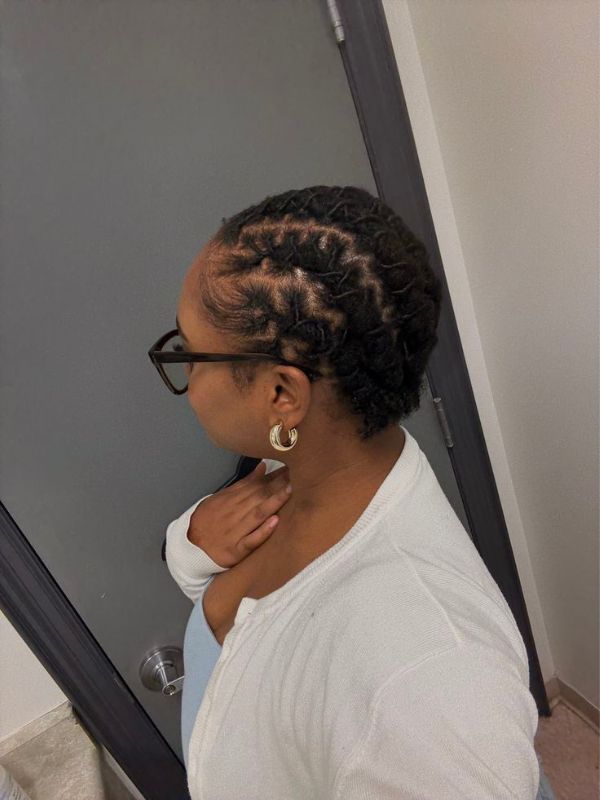
One of the most helpful things you can do during the starter stage is allow yourself time to learn what works for your hair.
Social media often shows finished hairstyles without explaining how long the locs have been developing. A complicated updo may look simple in a photograph, yet it could require years of growth, professional preparation, or a different installation method.
Instead of measuring your progress against someone else’s hairstyle, pay attention to how your own locs develop.
Notice which accessories feel comfortable. Learn how your hair responds to washing. Choose styles that suit your current length, and ask questions when you are unsure about maintenance.
You can also experiment with colour through clothing and accessories rather than relying on products that may leave residue inside the locs.
The more familiar you become with your hair, the easier it will be to select styles that fit your routine.
Remember that you do not need to eliminate every sign of frizz or make your locs look mature before they are ready. Your hair is allowed to change throughout the locking process.
How to style starter locs becomes much easier when you focus on gentle techniques, suitable accessories, and realistic expectations.
Enjoy the early stage rather than treating it as something you must rush through. Simple styles can look beautiful while allowing your locs to develop at their own pace.
Frequently Asked Questions About Styling Starter Locs
1. Can I style my starter locs immediately after installation?
It is best to keep styling minimal immediately after installation. Your locs need time to settle, and the amount of manipulation they can tolerate depends on the installation method and your hair’s condition.
You can usually leave them loose or use a comfortable accessory that does not pull on the roots. However, avoid tight ponytails, buns, repeated twisting, and complicated styles that require stretching the hair.
Ask your loctician when you can safely begin trying more involved hairstyles.
2. How do I style starter locs without unraveling them?
Choose styles that require little manipulation. Wearing your locs naturally, creating a gentle side part, or using a soft headband can change your appearance without repeatedly twisting or pulling the sections.
Avoid forcing your locs into styles that require more length than you currently have. Also, follow your loctician’s guidance about washing, drying, and maintenance.
Some loosening can still occur during the starter stage, even when you handle your hair carefully.
3. Is frizz normal in starter locs?
Yes. Frizz is common as your hair begins to lock and mature. Individual hairs may become visible around the surface, and the texture of your locs can change over time.
Frizz does not automatically mean your locs are damaged or failing to lock.
However, if an entire section repeatedly opens, the roots become unusually thin, or your scalp feels persistently uncomfortable, consult your loctician.
4. Can I wear a ponytail with starter locs?
It depends on your loc length, maturity, and installation method. Very short starter locs may not reach a ponytail holder comfortably.
If your hair is long enough, a loose gathering style may be possible. Avoid stretching the locs, pulling tightly at the roots, or securing the same sections under tension every day.
If the style feels uncomfortable, remove the holder and choose a more relaxed alternative.
5. Can I use gel on starter locs?
The answer depends on the product and your installation method. Heavy gels may leave residue or coat the hair, while some products may interfere with your preferred maintenance routine.
Avoid applying gel repeatedly to force the locs into a particular shape. Ask your loctician which products, if any, are suitable for your hair.
Simple styling techniques often work without requiring strong-hold products.
Conclusion: Enjoy Beautiful Starter Locs Without Unnecessary Manipulation
Learning how to care for and style starter locs is about understanding what your hair needs at each stage of its development. You can enjoy different looks without constantly twisting, pulling, or forcing your hair into complicated hairstyles.
Start with simple options such as wearing your locs naturally, creating a gentle side part, using a soft headband, or adding a lightweight scarf. As your hair develops, you can explore half-up arrangements and other styles that suit your length and installation method.
At the same time, remember that styling and maintenance are different. A hairstyle changes the appearance of your locs, while proper cleansing, nighttime protection, and suitable professional care help support their continued development.
Avoid heavy products, tight accessories, and repeated manipulation. Pay attention to discomfort, unusual thinning, and sections that keep unraveling. When something concerns you, seek advice from a loctician who understands your installation method.
Most importantly, give your hair time. Starter locs naturally change as they mature, and some frizz or loosening may occur along the way. You do not need to correct every small imperfection to enjoy your loc journey.
Choose comfortable styles, maintain a simple routine, and allow your locs to develop at their own pace. With patience and appropriate care, you can enjoy your starter locs while preparing for the wider range of hairstyles that may become possible as they mature.
For further inspiration, explore the ChiomaCreates Hairstyles & Locs collection.