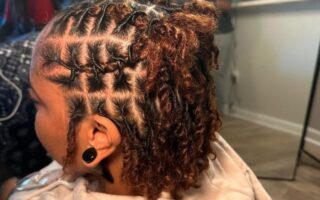
Starting a loc journey can feel exciting until you look in the mirror and wonder whether your hair is long enough. If you are considering Starter locs on short hair, you probably have questions about how they will look, which installation method to choose, how long they take to mature, and whether you can style them before they grow longer. The good news is that short hair can be a suitable starting point for locs, provided your hair is healthy and you choose a method that works with its texture, length, and condition.
The early stages may look different from the polished loc hairstyles you see on social media. Your locs might shrink, become frizzy, loosen at the ends, or appear uneven while they develop. These changes do not automatically mean something has gone wrong. They are part of a process that requires patience, suitable maintenance, and realistic expectations.
Another reason people love beginning with short hair is that they can learn how to care for their locs from the beginning. You can develop a simple washing routine, understand your scalp’s needs, and discover which accessories work for your hair without relying on complicated hairstyles.
However, knowing what to expect makes the experience much easier. Starter locs on short hair need thoughtful installation, gentle styling, and maintenance that suits their stage of development. You should not have to choose between enjoying your hairstyle and protecting your hair.
This guide explains how short starter locs work, what happens during the early months, which methods you can consider, and how to style your locs without putting unnecessary stress on your roots. You will also discover practical maintenance tips, common mistakes to avoid, and answers to frequently asked questions.
Whether you have tightly coiled natural hair, a shorter natural haircut, or new growth after transitioning from relaxed hair, there are several things you can do to prepare for a successful loc journey.
Bookmark Sisterlocks vs. Traditional Locs: Which One Is Right for You?
What Are Starter Locs on Short Hair?
Understanding the Early Stage of a Loc Journey
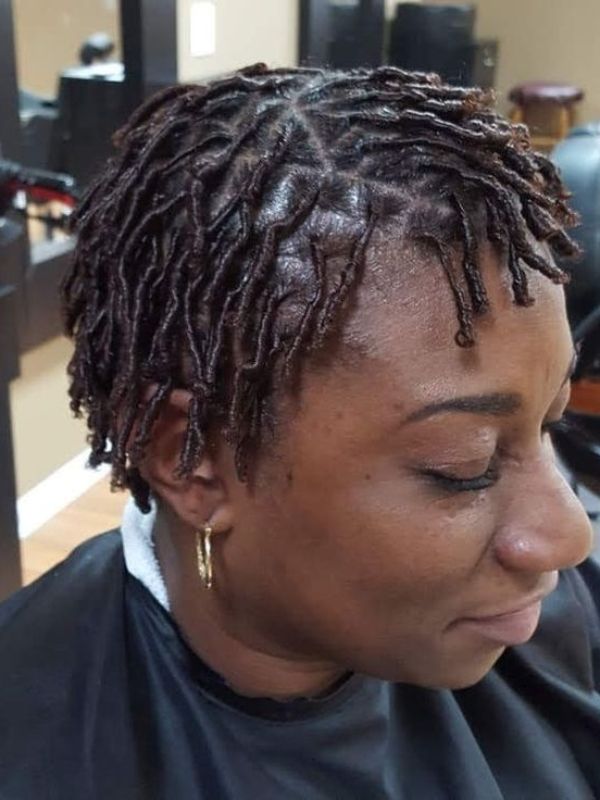
Starter locs are newly formed sections of hair that have begun the process of developing into established locs. At this stage, the hair has not yet fully compacted and matured. Consequently, the sections may look like twists, coils, braids, or small textured strands rather than the firm locs you may be familiar with.
Starter locs on short hair are simply newly established locs created on hair with a shorter starting length. There is no single length that works for everyone because the suitable starting point depends on your hair texture, chosen technique, section size, and the skill of the person installing them.
Some people begin with closely cropped hair. Others have enough length for two-strand twists or comb coils. Your starting point influences the installation method and the range of styles available during the first few months.
The important thing to understand is that starter locs do not become mature overnight. The hair gradually tangles, intertwines, and compacts according to its texture and the method used to form the locs.
During this period, you may notice loose hairs, frizz, shrinking, and changes in the shape of individual sections. These changes are not necessarily signs of poor progress.
Instead of expecting your hair to look exactly like mature locs immediately, focus on keeping your scalp comfortable, following suitable maintenance instructions, and allowing the process to develop naturally.
How Short Starter Locs Differ From Mature Locs
Mature locs generally have a more established structure than newly installed locs. They are usually more compact and may tolerate certain styling techniques that would disturb newer sections.
By contrast, Starter locs on short hair can be more delicate because the hair is still developing its structure. Some methods create a more secure initial shape, while others rely on gradual locking over time.
This distinction matters when you choose hairstyles.
For example, a mature loc might be long enough to wrap around itself and form a bun. A short starter loc may not have enough length to do that comfortably. Trying to force the same style can place unnecessary tension on the roots.
You may also find that your locs look different after washing. Depending on the installation method, some sections can loosen or become more textured when wet.
That does not mean you should avoid washing your hair indefinitely. Instead, follow a suitable cleansing routine and the maintenance guidance recommended for your particular method.
The goal is to keep your scalp clean while protecting the developing sections from unnecessary disturbance.
Why Hair Length Is Only One Part of the Decision
Hair length matters, but it is not the only factor to consider before starting locs.
Your natural texture, hair density, scalp condition, and preferred loc size also influence the process. Someone with tightly coiled hair may have different installation options from someone whose hair has a looser curl pattern.
Similarly, fine hair may require a different section size from thick hair. A skilled loctician can assess these differences and recommend a technique that suits your needs.
Before choosing Starter locs on short hair, think about the following questions:
- Is your hair healthy enough for the method you want?
- Does your hair have enough length for the chosen installation technique?
- Do you prefer small, medium, or larger locs?
- How much maintenance can you comfortably manage?
- Are you prepared for the appearance of developing locs?
- Do you want to maintain a particular haircut or parting pattern?
These questions help you make a realistic decision before installation.
If you want additional ideas for shorter loc styles, explore How to Style Short Locs: 13 Beautiful Looks for Women. It provides inspiration for working with shorter lengths while considering practical styling options.
What to Expect When Starting Locs With Short Hair

Your Hair May Look Shorter After Installation
One of the first surprises people experience is how short their hair appears after installation.
Natural hair can shrink considerably, especially when it has a tight curl pattern. Once the hair is divided into sections and twisted or coiled, the finished style may sit closer to the scalp than expected.
This is normal for many natural hair textures. It does not automatically indicate that your hair has lost length.
The appearance also depends on the installation technique. Comb coils, two-strand twists, braids, and other methods create different shapes, so two people starting with similar lengths may have different results.
With Starter locs on short hair, it helps to discuss your expectations with your loctician before installation. Ask how the chosen method is likely to look on your current length and whether shrinkage may affect the finished style.
Remember that the early appearance is only one part of the process. As your hair grows and the locs develop, their shape and overall appearance will change.
Frizz Is a Normal Part of Development
Frizz can appear during the early stages of a loc journey. You may notice small hairs extending from the locs or a softer texture around the sections.
It can be tempting to smooth every loose hair back into place. However, repeatedly manipulating your locs to achieve a perfectly neat appearance can create unnecessary stress.
Frizz does not automatically mean that your locs are damaged or poorly installed. It can be part of the natural development process.
The amount of frizz varies according to your texture, installation technique, maintenance habits, and stage of maturity.
Instead of treating every loose hair as a problem, learn which changes are expected and which deserve professional attention.
For example, some surface frizz is different from a loc that is repeatedly breaking, becoming unusually thin, or loosening significantly at the root.
If you are unsure about a change, ask your loctician to assess it rather than repeatedly twisting the section yourself.
Some Locs May Develop at Different Speeds
It is common for individual locs to look slightly different as they develop. Some may appear more compact, while others remain fluffy or loose for longer.
This can happen because different parts of the head have different hair textures, growth patterns, and levels of friction. Installation tension and section size can also affect the appearance.
Therefore, do not assume that every loc must develop at exactly the same pace.
Starter locs on short hair can change gradually, and comparing your progress with someone else’s may create unnecessary frustration. Their hair texture, maintenance routine, and starting length may be completely different from yours.
Instead, pay attention to the overall condition of your hair.
Are your locs remaining reasonably secure for their installation method? Is your scalp comfortable? Are you following your maintenance schedule? Are you avoiding unnecessary pulling and manipulation?
These questions are more useful than expecting every section to look identical.
For more information about differences in visible length and development, read Why Some Locs Grow Faster Than Others and How to Fix Slow Growth.
The Budding Stage May Change Your Locs’ Appearance
As locs mature, they may develop thicker, more compact areas. This process is often described as budding.
During budding, sections can look uneven or feel different from the way they did immediately after installation. Some may appear fuller in the middle, while the ends remain less compact.
The timing varies. Not everyone experiences the same stages at the same time, and some methods create a different development pattern from others.
You should not try to force every loc into a uniform shape by squeezing, twisting, or pulling it repeatedly.
Instead, allow the hair to develop according to your method and seek professional guidance if a section seems unusually weak or damaged.
Patience is particularly important during the first year. Your locs may change several times before they develop the structure you want.
How Short Can Your Hair Be Before You Start Locs?

Choosing a Suitable Starting Length
There is no universal minimum length for every starter loc method.
Some techniques can be used on relatively short hair, while others require more length to create secure sections. The appropriate starting point also depends on the texture and condition of your hair.
For example, tightly coiled hair may hold certain starter techniques well at a shorter length. Hair with a looser curl pattern may need additional length or a different installation method to reduce repeated unraveling.
Rather than relying entirely on a measurement, arrange a consultation with an experienced loctician.
They can examine your hair, assess the available length, and determine which methods are realistic.
If your hair is extremely short, you may need to wait until it grows a little more. This is not a setback. Starting when your hair is ready can make the installation process more manageable.
Can You Start Locs With a Very Short Haircut?
Yes, depending on the amount of hair available and the technique selected.
A very short haircut may limit your options for traditional two-strand twists or other methods that require enough length to form a defined section.
However, some professional techniques can establish locs on shorter hair.
The important consideration is whether the chosen method can create suitable sections without excessive tension or unnecessary manipulation.
Avoid assuming that a particular method will work simply because you have seen someone else use it. Their hair may have a different texture, density, or length.
If you want Starter locs on short hair but are uncertain about readiness, ask a loctician to assess your hair before making a commitment.
Should You Grow Your Hair Longer First?
Growing your hair longer before installation can provide additional styling flexibility. It may also give you more options when choosing between twists, coils, braids, and other techniques.
However, waiting is not automatically necessary for everyone.
If your hair is healthy and suitable for a method designed for shorter lengths, you may be able to begin sooner.
The decision should reflect your hair’s condition, your preferred loc size, and the installation method rather than pressure to reach a particular length.
Think about your priorities. If you want more flexibility during installation, waiting may be helpful. If your preferred technique is suitable for your current hair, you may not need to delay.
A professional consultation can help you understand the trade-offs before you decide.
The Best Starter Loc Methods for Short Hair
Comb Coils for Short Natural Hair
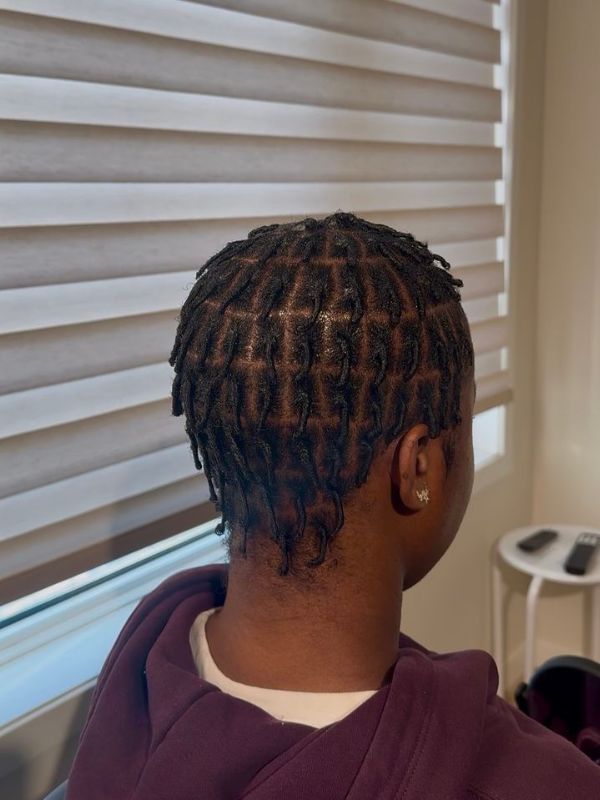
Comb coils are created by sectioning the hair and using a comb to form individual coils.
This method is popular among people who want a defined starting pattern on natural hair. It can work well for certain short lengths, depending on the texture and condition of the hair.
The finished sections usually have a coiled appearance, although they may loosen or become more textured as the locs develop.
One advantage is that comb coils can create a clear parting pattern. This can make it easier to maintain the organization of your locs during the early stages.
However, comb coils are not ideal for every hair type or starting length. They may unravel more readily on hair that does not hold the shape well.
With Starter locs on short hair, the most important consideration is choosing a method that works with your hair rather than trying to force your hair to behave like someone else’s.
Ask your loctician about the expected appearance, washing instructions, and maintenance requirements before installation.
Two-Strand Twists for a Fuller Starting Appearance
Two-strand twists are created by dividing each section into two strands and twisting them around one another.
This method can give starter locs a textured appearance from the beginning. It may also create a fuller-looking result than some smaller coil techniques.
Two-strand twists are suitable for many natural hair types, provided there is enough length to form and secure the sections.
They can be a practical choice if you prefer a twist pattern and want a relatively simple starting style.
Nevertheless, the twists may loosen, particularly during washing or when the hair is manipulated frequently. This is why following appropriate maintenance instructions matters.
Avoid twisting the sections tightly in an attempt to make them appear smaller or neater. Excessive tension can stress the roots and edges.
If you are comparing installation options, consider your desired loc size, natural texture, and how much time you can dedicate to maintenance.
Braids as a Starter Loc Method
Braids can also be used to establish locs.
This technique involves dividing the hair into sections and braiding each one. The resulting locs may have a visible braided pattern during the early stages.
Some people appreciate this appearance because the sections can remain more defined than certain other starter methods.
However, the finished texture and development process may differ from comb coils or two-strand twists. Braided starter locs can also take time to develop a more compact appearance.
The suitability of this method depends on your starting length and hair characteristics.
Discuss your expectations with a loctician, especially if you want a particular size or appearance.
Interlocking for Certain Hair Types and Loc Sizes
Interlocking involves passing the end of a loc through its root in a particular pattern to secure the new growth.
It is often used for maintenance and can also be part of establishing certain types of locs.
The method requires proper technique. Incorrect or overly frequent interlocking can create weak areas, excessive tension, or an undesirable loc structure.
For this reason, professional guidance is particularly important if you are considering interlocking on short hair.
The technique is not automatically suitable for every person, and it should not be chosen simply because it seems less likely to unravel.
Ask about the recommended pattern, maintenance intervals, and how the technique will affect your desired loc size.
Crochet or Instant Locs
Crochet techniques use a small hook to encourage loose hair to form a more compact structure.
They can create a more established appearance immediately after installation, which some people prefer when they do not want to wait for the natural locking process.
However, crochet work is technique-sensitive. Aggressive handling or poor technique can cause breakage and weaken the hair.
It is generally sensible to seek a trained professional, particularly when working with short hair or delicate sections.
Also, remember that an instant-loc appearance does not remove the need for maintenance. Your hair continues to grow, and your scalp still requires regular care.
Before choosing this option, discuss the condition of your hair, the expected result, and the maintenance routine with your loctician.
How to Prepare Your Hair Before Installing Starter Locs
Cleanse Your Hair and Scalp Properly
Begin with clean hair and a comfortable scalp.
A gentle cleansing routine removes excess oil, dirt, and product residue that may interfere with installation. Your loctician can recommend an appropriate shampoo based on your scalp condition and hair needs.
Avoid using heavy products immediately before installation unless your stylist specifically recommends them.
Excessive product residue can make it harder to assess your hair’s natural texture and may contribute to buildup later.
You should also avoid aggressive scrubbing that leaves your scalp sore or irritated.
If your scalp is already inflamed, unusually itchy, or showing signs of a skin problem, seek appropriate advice before installing your locs.
Detangle Gently Before Installation
Your hair should be prepared according to the method being used.
Depending on your texture, this may involve gentle detangling, sectioning, or stretching the hair as recommended by your loctician.
Avoid forceful combing, particularly if your hair is fragile or has areas of breakage.
The goal is to prepare the hair without causing unnecessary damage before the loc journey even begins.
If you are transitioning from chemically treated hair, mention this during your consultation. Different textures along the same strand may require extra care.
For additional guidance, see How to Transition from Relaxed Hair to Locs Without Damaging Your Hair.
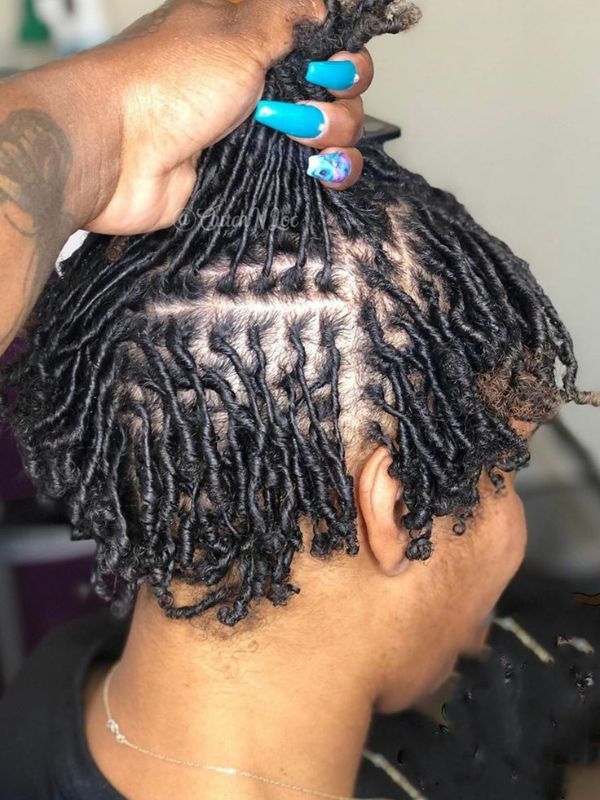
Decide on Your Parting Pattern
Your parting pattern influences the way your locs are distributed across your scalp.
Common options include square, rectangular, diamond, and more irregular parting patterns. Each creates a different visual effect and influences how the locs sit.
The best pattern depends on your desired loc size, hair density, and preferred overall appearance.
Smaller sections generally produce more individual locs, while larger sections produce fewer, thicker locs. However, section size should also account for the amount of hair available in each area.
Avoid choosing an extremely small section size without considering your hair’s density and strength.
A skilled loctician can help you choose a pattern that supports a balanced result.
Set Realistic Expectations Before Installation
Before beginning, understand that your first hairstyle may not resemble the mature locs you eventually want.
Your hair may appear shorter, the parts may be more visible, and the sections may change shape during the early months.
This is especially important if you have chosen Starter locs on short hair because you may have fewer styling options immediately after installation.
Prepare for a gradual process rather than expecting instant length or uniformity.
It can also help to take a photograph of your hair before installation. You can use it to observe changes over time without constantly measuring or comparing yourself with others.
Most importantly, choose a method you feel comfortable maintaining.
How to Care for Starter Locs on Short Hair During the First Few Months
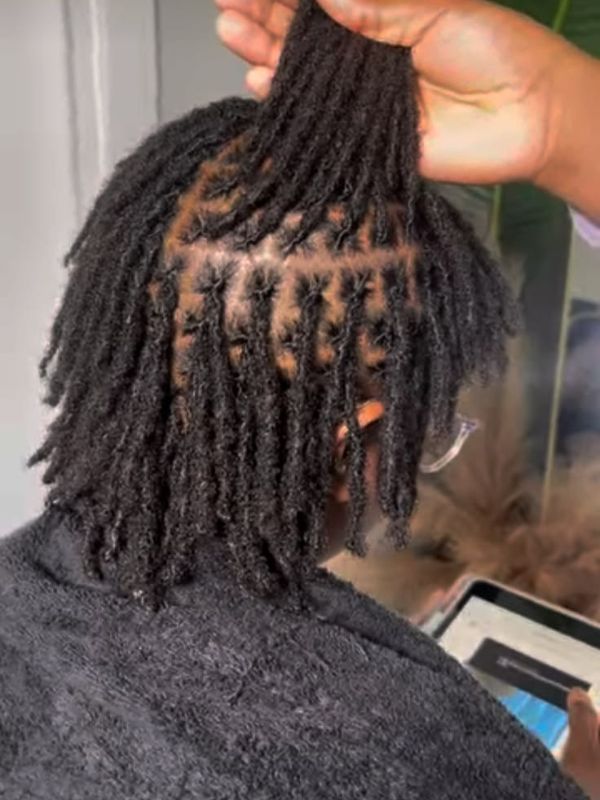
Allow a Suitable Washing Routine
Clean hair and a healthy scalp are essential throughout your loc journey.
However, the washing routine for newly installed locs may differ from the routine used for mature locs. Some starter methods are more prone to unraveling, so technique and timing matter.
Ask your loctician when to wash your hair after installation and how to do it without unnecessarily disturbing the sections.
When washing, focus on gently cleansing the scalp. Avoid rough scrubbing, excessive twisting, or repeatedly pulling on the locs.
You should not interpret this advice as a reason to avoid washing indefinitely. An unclean scalp can become uncomfortable, and product residue may accumulate.
Instead, follow a routine that balances scalp hygiene with the needs of your installation method.
Keep Your Scalp Comfortable
A comfortable scalp is an important part of healthy hair maintenance.
Avoid applying large amounts of oil, grease, or styling products in an attempt to keep your hair moisturized. Too much product can create residue, particularly when it is not removed properly.
If your scalp feels dry, consider whether your washing routine, environment, or products may be contributing to the problem.
Use suitable lightweight products when needed, and avoid applying ingredients that irritate your scalp.
Persistent itching, soreness, redness, or unusual flaking deserves attention rather than repeated application of more products.
If symptoms continue, seek advice from a qualified healthcare professional or dermatologist.
Protect Your Locs While Sleeping
Friction from pillows and bedding can disturb your hair, particularly when your locs are newly installed.
A satin or silk bonnet, scarf, or pillowcase can help reduce friction during sleep.
Choose a covering that fits comfortably without pulling on your edges or placing pressure on your scalp.
Before bed, avoid twisting your locs repeatedly to make them look neat. Instead, arrange them comfortably and allow them to rest.
If you prefer sleeping without a bonnet, a suitable satin pillowcase may be an alternative.
The goal is not to create a complicated nightly routine. A simple, consistent habit is often easier to maintain.
Be Careful With Moisture and Drying
Water is an important part of hair care, but newly installed locs need appropriate handling when wet.
Some starter methods can loosen during washing or when the hair remains damp for long periods.
Follow your loctician’s instructions about cleansing, drying, and managing moisture.
After washing, make sure your hair dries thoroughly. Avoid repeatedly covering damp locs for extended periods.
You should also avoid using excessive heat to speed up drying.
If you want to understand more about moisture management as your locs develop, read How to Steam Your Locs: Everything You Need to Know. Its advice can help you understand why developing locs may need a more cautious approach than mature ones.
Maintain Your Locs Without Over-Manipulating Them
Maintenance helps preserve the organization of your locs, but frequent manipulation is not always beneficial.
Repeatedly twisting the same sections to make them look freshly installed can put unnecessary stress on your roots.
Your maintenance schedule should reflect the method used, your hair’s needs, and the recommendations of your loctician.
Some methods rely on less frequent manipulation, while others require scheduled professional maintenance.
Avoid assuming that every person should retwist or interlock at the same interval.
If you notice thinning, repeated breakage, or discomfort, seek professional guidance rather than tightening your locs.
For more practical advice, explore How to Care for Your Locs the Right Way: A Step-by-Step Guide.
Easy Ways to Style Starter Locs on Short Hair
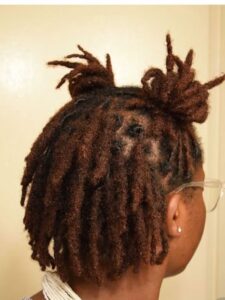
Wear Your Starter Locs Naturally
Sometimes, the easiest hairstyle is simply letting your locs fall naturally.
This option works particularly well when your hair is too short for gathering or pinning. It also allows you to become familiar with your locs’ natural direction and shape.
After your hair is dry, gently arrange the locs with your fingers if needed. Avoid repeatedly pulling individual sections into position.
You can wear your hair with a middle part, a subtle side part, or no obvious part at all, depending on the installation pattern.
The advantage of this style is that it requires very little manipulation.
For people who have just started Starter locs on short hair, wearing the locs naturally can also reduce the temptation to force elaborate styles before enough length has developed.
Try a Soft Side Part
A side part can change the appearance of your hair without requiring you to gather the locs.
Start by identifying where you want the part to sit. Then, gently arrange the front sections toward the preferred side.
Avoid creating a new part by repeatedly separating or pulling through sections that are not intended to be manipulated.
If your locs have a fixed installation pattern, work with the existing sections rather than forcing them into an uncomfortable direction.
A side part can be suitable for everyday activities, school, work, family gatherings, or casual outings.
It is also a practical option when you want a small change without adding products or accessories.
Use a Lightweight Headband
A headband can add color and personality to short starter locs.
Choose a soft, comfortable design that fits without pressing tightly against your scalp.
Position it behind your hairline and allow your locs to sit naturally around it. You can use a neutral color for a simple appearance or a brighter shade when you want your accessory to stand out.
Avoid headbands with rough edges that repeatedly catch on your locs.
If the accessory leaves marks, causes discomfort, or pulls on your hair, remove it.
For more accessory inspiration, explore How to Elevate Your Look with Fashionable Headbands Hairstyles.
Accessorize With Small, Lightweight Clips
Clips can help arrange a small section of hair without requiring a full updo.
For example, you might use a smooth clip to hold back a few locs near the temple. This can create a neat appearance while allowing the rest of your hair to remain loose.
Choose accessories that fit comfortably and do not catch on the locs.
Avoid using clips that are too tight or repeatedly placing them on the same fragile section.
If your starter locs are extremely short, the clips may not hold securely. In that case, choose a headband or leave the hair loose rather than forcing the style.
Create a Mini Half-Up Style
If the front or top sections have enough length, you may be able to gather a small number of locs into a half-up style.
Separate the upper section gently and secure it with a soft band or suitable accessory. Allow the remaining locs to fall naturally.
You do not need to gather every loc for the style to work.
In fact, leaving most of the hair loose can make this option more comfortable for short lengths.
The most important consideration is tension. If you need to pull hard to secure the style, your locs are probably not ready for that particular arrangement.
Try a Scarf Style
A scarf offers another way to change your appearance without manipulating the locs extensively.
Fold a lightweight scarf into a band and position it comfortably around your head. You can leave the front sections visible or arrange the scarf farther back to show more of your hair.
Choose a fabric that does not snag on your locs.
A scarf can work for casual outings, family gatherings, travel, and days when you want a simple hairstyle.
However, avoid wrapping it tightly around your head, particularly if it places pressure on your hairline.
Experiment With Simple Front Twists Only When Appropriate
Some people like the appearance of a small twist near the front of the hair.
If your locs are sufficiently established and your loctician confirms that this type of manipulation is suitable, you may be able to arrange a few front sections into a loose decorative shape.
However, avoid repeatedly twisting newly installed locs simply to make them look neater.
If the style causes the sections to loosen or creates discomfort, stop and allow the locs to rest.
Remember that the goal of styling is to work with your hair’s current condition. Not every technique will suit every stage.
Use Colorful Accessories to Change the Look
Small, lightweight accessories can make a simple hairstyle feel different without requiring an elaborate arrangement.
You might choose a colorful headband, a soft scarf, or a few suitable clips.
If your locs are mature enough for loc cuffs, choose accessories that fit properly and do not squeeze the hair.
Do not force beads or cuffs onto sections that are too thick or too short.
The accessory should sit comfortably rather than pulling on the loc or catching on nearby hair.
Styling Ideas for Different Occasions
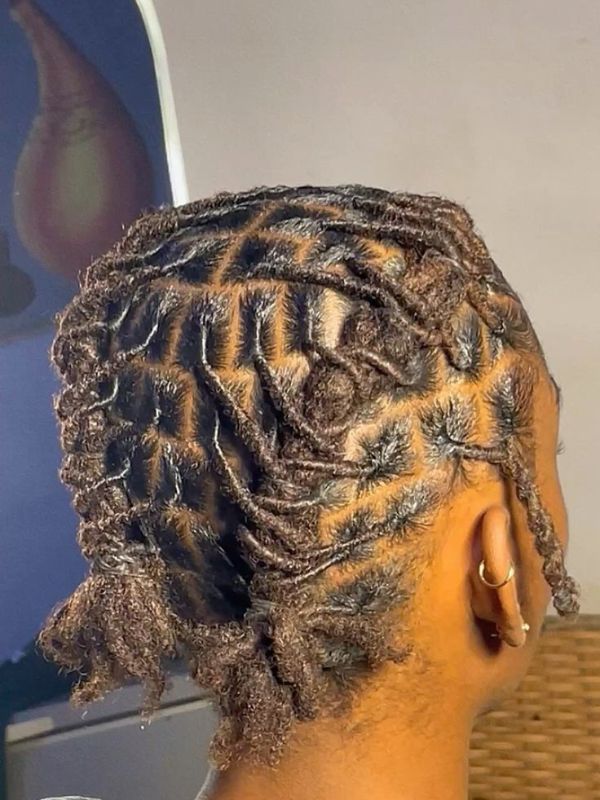
Everyday Styles for School, Work, and Errands
For everyday activities, choose a style that is comfortable and easy to maintain.
Wearing your locs loose is a practical option. A side part or soft headband can create a slightly different appearance without requiring significant manipulation.
If you spend much of your day moving around, choose accessories that remain comfortable and do not repeatedly catch on clothing.
Avoid spending a long time trying to make every loc sit perfectly. Developing locs naturally have texture, and a simple arrangement can still look intentional.
Casual Outings and Family Gatherings
For casual events, you can experiment with a scarf, lightweight headband, or a small half-up arrangement if your locs have enough length.
Choose colors that complement your outfit rather than adding accessories that make the hairstyle uncomfortable.
If you prefer more inspiration for special occasions, 12 Popular Party Hairstyles That Are Easy to Style offers ideas that can help you think creatively about your overall look. Adapt any suitable concept to the length and maturity of your locs rather than copying a style that requires longer hair.
Weddings and Formal Events
You do not need long locs to create a polished appearance for a formal event.
A clean part, comfortable headband, or carefully arranged side sweep can work beautifully with short hair.
If your locs are sufficiently established, a stylist may be able to create a small updo or a more detailed arrangement.
However, avoid choosing a style that requires excessive pulling simply because it looks elegant in a photograph.
You can find additional inspiration in How to Choose Wedding Locs Styles That Make You Look Elegant and Put Together.
The most suitable hairstyle is one that complements your outfit while allowing your locs to remain comfortable.
Special Events When You Want a Different Look
A small change in direction, a decorative scarf, or a few carefully positioned clips can make your usual style feel new.
If your hair is long enough, you may also be able to create a loose half-up arrangement.
You can explore The Most Beautiful Wedding Hair Inspo for Brides-to-Be for broader inspiration on coordinating hair accessories with a formal outfit.
Keep in mind that some examples may be designed for longer or looser hairstyles. Use them as inspiration for colors and accessories rather than instructions to pull your starter locs into an unsuitable style.
Common Mistakes to Avoid With Starter Locs on Short Hair
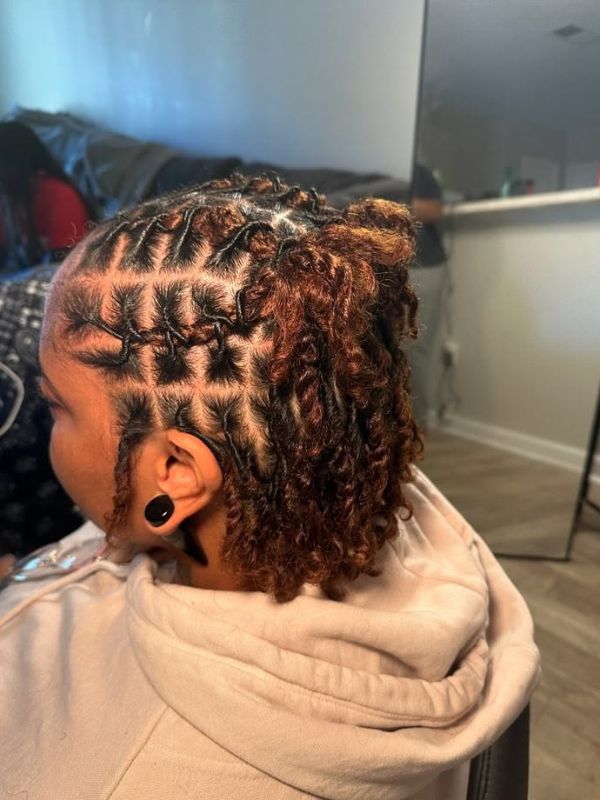
Trying to Make Your Locs Look Mature Too Quickly
One of the most common mistakes is expecting newly installed locs to look like locs that have been developing for years.
You may notice frizz, loose ends, or changes in the shape of the sections. These features can be part of the process.
Repeatedly twisting or tightening your locs to make them look more mature can cause unnecessary stress.
Instead, allow the sections to develop according to your chosen method.
Retwisting Too Frequently
Frequent retwisting can put stress on the roots, especially when the same sections are repeatedly tightened.
Although a fresh retwist may look neat, maintaining that appearance constantly is not always necessary.
Follow the schedule recommended for your loc method and hair condition.
If you are unsure whether your hair needs maintenance, ask your loctician rather than automatically retwisting whenever new growth becomes visible.
For practical guidance, read How to Keep Your Locs Looking Neat All the Time—Even Between Retwists.
Using Too Many Styling Products
It can be tempting to use gels, waxes, creams, and oils to make short locs appear smoother.
However, using too many products can contribute to buildup and make cleansing more difficult.
A simple routine is often easier to maintain.
Choose products according to your scalp and hair needs, and avoid layering several products simply to achieve a temporary appearance.
If a product causes itching or irritation, stop using it.
Forcing Hairstyles That Require More Length
Not every hairstyle you see online will work with short locs.
A large bun, high ponytail, or elaborate updo may require more length than your hair currently has.
Trying to force these styles can place unnecessary tension on your roots.
Instead, choose options that work with the length you have now.
A side part, scarf, or loose style can be just as useful while you wait for additional length.
Comparing Your Loc Journey With Someone Else’s
People often start their loc journeys around the same time and expect their results to look similar.
However, hair texture, density, growth patterns, installation methods, and maintenance routines differ.
One person’s locs may appear compact sooner, while another person’s sections remain soft or fluffy for longer.
These differences do not automatically mean that one person is doing something right and the other is doing something wrong.
Focus on your own hair’s condition and seek advice when you notice genuine concerns.
Ignoring Persistent Discomfort
A hairstyle should not cause ongoing pain or pulling.
If your scalp feels sore after installation or maintenance, let your stylist know.
Repeated tension can contribute to hairline stress and thinning.
Similarly, persistent itching, redness, unusual flaking, or signs of breakage should not be dismissed as a normal part of locking.
For additional guidance, explore How to Fix Common Loc Problems and Keep Your Locs Healthy.
How Long Does It Take for Starter Locs on Short Hair to Mature?

Understanding the Stages of Development
There is no exact timeline that applies to every loc journey.
Some people notice changes in texture and structure within the first few months. Others experience a longer period of softness, frizz, or loosening before their locs become more compact.
The method used to start the locs can influence how they look initially, but the overall development still depends on your hair and maintenance routine.
With Starter locs on short hair, it is useful to think in terms of gradual progress rather than a fixed deadline.
Your locs may pass through several changes as they develop. They might shrink, become fuller in certain areas, or look uneven before becoming more established.
Do not assume that every loc must reach the same stage at the same time.
What Happens During the First Three Months?
The first three months are often an adjustment period.
You may still be learning how to wash your locs, protect them while sleeping, and choose hairstyles that do not disturb the sections.
Some locs may loosen slightly, while others retain their original shape more clearly.
You might also notice frizz or changes in length as your hair shrinks and develops.
During this period, focus on following your maintenance instructions rather than trying to correct every small change.
Keep your scalp clean, avoid unnecessary manipulation, and ask your loctician about anything that concerns you.
What Happens Between Three and Six Months?
During this period, some people notice that their locs begin to feel more established.
However, development is not uniform. Some locs may remain soft, while others begin to compact more noticeably.
Your hair may also appear different after washing or maintenance.
Continue following a routine that suits your method.
Avoid increasing the frequency of retwisting simply because you want your locs to look more uniform.
What Happens After Six Months?
Some locs become more established during this period, while others require considerably longer.
Your hair may have more length, which can create additional styling options. Nevertheless, length and maturity are not the same thing.
A loc can be longer without being fully mature, and a shorter loc can have a more established structure.
Continue to assess your hair according to its actual condition rather than its age alone.
If you want to understand more about visible length and retention, Why Some Locs Grow Faster Than Others and How to Fix Slow Growth offers additional context.
How Can You Tell Whether Your Locs Are Developing Normally?
There is no single visual sign that proves every loc is developing correctly.
The expected appearance depends on the installation technique and your hair characteristics.
Some frizz and changes in texture may be normal. However, repeated breakage, unusually thin sections, persistent discomfort, or significant loosening deserve attention.
Your loctician can assess whether a change is expected for your method or requires a different maintenance approach.
Avoid trying to solve every concern by adding more products or tightening your locs.
How to Maintain Healthy Length While Your Locs Grow
Protect Your Hair From Unnecessary Tension
Healthy length retention involves reducing avoidable breakage.
Avoid repeatedly pulling your locs into tight styles, especially when they are still short.
Choose accessories that fit comfortably, and give your hair breaks between styles that require manipulation.
If a hairstyle pulls at your edges or creates discomfort, remove it.
You do not need to create an elaborate style every day to make your locs look presentable.
Keep Your Scalp and Hair Clean
A consistent cleansing routine supports scalp comfort and helps remove accumulated residue.
Your exact routine should reflect your loc method and scalp needs.
Avoid both extremes: neglecting cleansing because you fear unraveling, or manipulating the locs excessively during every wash.
Ask your loctician to demonstrate a suitable washing technique if you are unsure.
Avoid Excessive Heat and Chemical Processing
Newly installed locs do not need frequent heat styling to look attractive.
Excessive heat can damage hair, while chemical services may affect its strength and texture.
If you want to color your locs, discuss the risks and timing with a qualified professional.
Bleaching and other chemical processes deserve particular caution because damaged hair may be more vulnerable to breakage.
Eat Well and Look After Your General Health
Hair health is influenced by more than styling products.
A varied, balanced diet supports normal hair growth, while adequate sleep and general well-being contribute to overall health.
However, no food or product can guarantee faster loc maturation.
If you experience unusual hair loss or significant changes in your hair, seek appropriate professional advice rather than relying on supplements without guidance.
Read How to Transition from Relaxed Hair to Locs Without Damaging Your Hair before deciding on your next step.
Avoid Measuring Progress Every Day
It can be frustrating when your locs seem to remain the same length for weeks.
However, daily changes are often too subtle to notice.
If tracking progress helps you, take occasional photographs under similar lighting and from similar angles.
This allows you to observe gradual changes without repeatedly handling your locs.
Remember that locs can compact as they develop, so visible length may not reflect every change happening within the hair.
Choosing a Loctician for Short Starter Locs

Look for Experience With Your Hair Length and Texture
Not every stylist specializes in every loc method.
When choosing a loctician, ask whether they have experience installing locs on hair similar to yours.
They should be able to explain the available methods, their limitations, and the maintenance required for each option.
A good consultation should also include a discussion of your desired loc size and parting pattern.
Ask About Maintenance Before Installation
Installation is only the beginning.
Before committing, ask how often maintenance may be required, how washing should be handled, and what to do if a section begins to unravel.
Understanding these details helps you prepare for the time and cost involved.
It also reduces the temptation to correct problems at home without knowing whether a particular technique is appropriate.
Discuss Your Styling Goals Honestly
If you want to wear headbands, small clips, or half-up styles during the early stages, mention this before installation.
Your stylist can explain which options may be realistic at your current length.
However, remember that styling possibilities change as your locs develop.
A method that gives you a certain appearance immediately may not produce the same look several months later.
The aim is to choose a technique that suits your long-term goals while protecting your hair.
Know When to Seek a Second Opinion
If a stylist repeatedly installs locs too tightly, dismisses persistent pain, or recommends aggressive manipulation to solve every issue, consider seeking another qualified professional.
Your comfort matters.
You should be able to ask questions about your hair without feeling pressured to accept a method you do not understand.
A Simple Weekly Routine for Starter Locs on Short Hair
Begin With a Scalp Check
Once a week, take a few moments to assess your scalp and locs.
Look for unusual redness, discomfort, excessive residue, or signs of breakage.
You do not need to handle every loc individually. A gentle visual check is often sufficient for noticing changes.
If something concerns you, seek appropriate guidance.
Follow Your Recommended Washing Schedule
Use the washing schedule recommended for your installation method.
Some starter locs need careful handling to reduce unraveling, but this does not mean avoiding cleansing altogether.
Use a suitable shampoo and follow your stylist’s instructions.
After washing, allow the hair to dry thoroughly.
Keep Styling Simple
Choose one or two easy hairstyles that suit your current length.
You might wear your locs loose during the week and use a soft headband when you want a different look.
Avoid creating a routine that requires repeated tightening or manipulating the same sections.
Protect Your Hair at Night
Use a comfortable bonnet, scarf, or satin pillowcase to reduce friction.
Make sure your chosen covering does not pull on your hairline.
This simple habit can make your nighttime routine easier without requiring additional styling products.
Review Your Maintenance Needs
Your hair’s needs may change as the locs develop.
Follow your scheduled maintenance appointments and ask questions if the appearance or condition of your locs changes unexpectedly.
Avoid retwisting simply because a particular number of weeks has passed. Your method, hair condition, and professional guidance should inform the decision.
FAQs About Starter Locs on Short Hair
Can you start locs on very short hair?
Yes, depending on the available length, texture, condition, and installation method. Some techniques can be used on shorter hair, while others require more length. A professional consultation can help you determine which option is suitable.
How long should hair be for starter locs?
There is no universal minimum length for every method. The amount of hair needed depends on your texture, the technique, and the desired loc size. Your loctician can assess whether your hair is ready.
Can I wash starter locs?
Yes. The timing and technique depend on the installation method and how recently your locs were created. Follow your loctician’s instructions and maintain appropriate scalp hygiene rather than avoiding washing indefinitely.
Why do my starter locs look frizzy?
Frizz can be part of the natural development process. It varies according to hair texture, installation method, and maintenance habits. Avoid repeatedly twisting your locs to remove every loose hair.
Can I style starter locs every day?
Simple styles may be possible, but frequent manipulation is not always beneficial. Choose comfortable, low-tension options and give your locs breaks between more involved styles.
How often should I retwist starter locs?
There is no single schedule for everyone. Your loc method, hair condition, and professional recommendations should determine the timing. Retwisting too frequently can place unnecessary tension on your roots.
Can I sleep without covering my starter locs?
You can, but reducing friction may help protect your hair. A comfortable satin bonnet, scarf, or pillowcase can be useful. Choose whichever option works without pulling on your scalp.
Can I color starter locs?
Chemical coloring, particularly bleaching, can weaken hair. Discuss the risks and suitable timing with a qualified professional before applying color to newly developing locs.
Will starter locs make my hair grow faster?
Starter locs do not automatically accelerate the rate at which hair grows from the scalp. However, a suitable routine that reduces unnecessary breakage may help you retain length over time.
Are starter locs suitable for relaxed hair?
They may be possible, but relaxed hair and natural new growth can behave differently. The condition of the chemically treated hair matters.
Conclusion: Enjoy Your Starter Loc Journey One Stage at a Time
Beginning your loc journey with short hair does not mean you have to wait until your hair is longer before enjoying it. You can work with your current length, experiment with simple accessories, and develop a maintenance routine that supports healthy hair.
The most important thing is to understand that locs change over time. Frizz, shrinkage, and differences between individual sections can occur as the hair develops. Rather than trying to eliminate every change, learn what is normal for your method and seek professional guidance when something concerns you.
When choosing Starter locs on short hair, focus on the installation technique, your hair’s condition, and the maintenance you can realistically manage. A method that suits your texture and starting length provides a better foundation than choosing a technique simply because it looks attractive on someone else.
Keep your scalp clean, avoid unnecessary tension, and choose hairstyles that work with your locs rather than forcing them into shapes they are not ready to hold. You can start with a simple side part, a soft headband, a scarf, or naturally arranged locs. As your hair grows and matures, additional styling possibilities may become available.
Most importantly, remember that a successful loc journey is not defined by how quickly your hair looks mature. It is about learning what your hair needs, maintaining it consistently, and giving the process time.
Your short starter locs are the beginning of a journey, not a finished result. With patience, suitable care, and realistic expectations, you can enjoy each stage while preparing your locs for the future you have in mind.