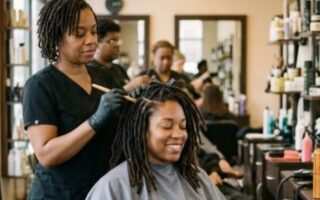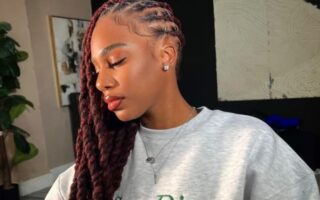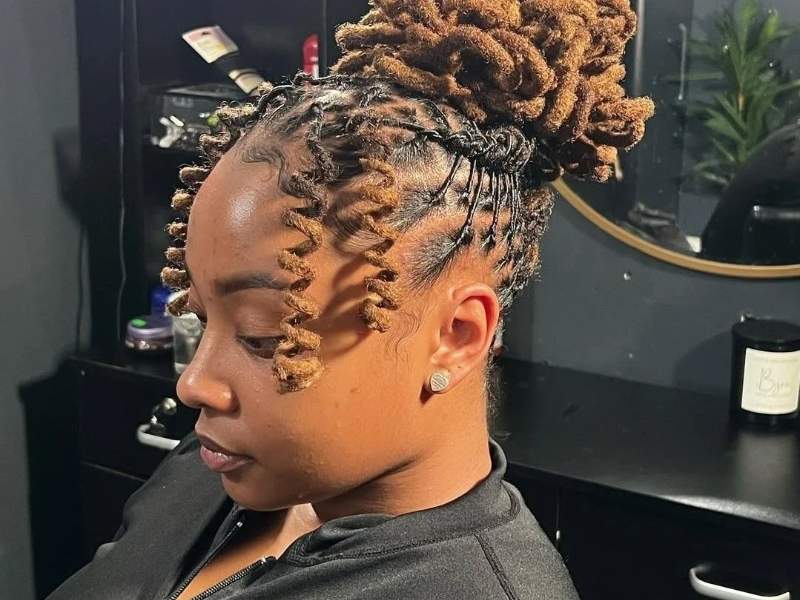
Locs are beautiful, versatile, and easy to style in many different ways. However, maintaining healthy locs requires more than simply allowing your hair to grow. Your locs still need proper care to prevent dryness, breakage, thinning, and damage caused by excessive tension.
One effective way to care for your hair is by choosing hairstyles that keep your locs organised while reducing unnecessary manipulation. Protective styles for locs can help minimise friction, make daily hair care easier, and give you the freedom to enjoy different looks without putting too much stress on your scalp.
Whether you have starter locs, mature locs, traditional locs, sisterlocks, short locs, or long locs, there are hairstyles you can try. The key is to choose options that suit your hair’s length, maturity, thickness, and condition.
In this guide, you will discover beautiful hairstyles for protecting your locs, learn how to choose the right style for your hair, and find practical tips for keeping your locs healthy.
Why Protective Styling Matters for Locs
Although locs are formed by strands of hair becoming intertwined, they can still experience damage. Frequent rubbing against clothing, rough pillowcases, tight hairstyles, and heavy accessories may contribute to breakage and thinning.
Protective styling helps reduce some of these problems by keeping your hair organised and limiting unnecessary handling.
For example, a loose bun can prevent long locs from rubbing repeatedly against your shoulders. A comfortable headwrap can help protect your hair from friction, while a simple ponytail can keep your locs away from your face during daily activities.
However, not every hairstyle is protective. A style that pulls tightly on your roots can cause discomfort and contribute to traction-related hair loss over time.
The best protective styles for locs should feel comfortable, require minimal manipulation, and allow you to maintain proper scalp hygiene.
The Classic Loose Loc Bun
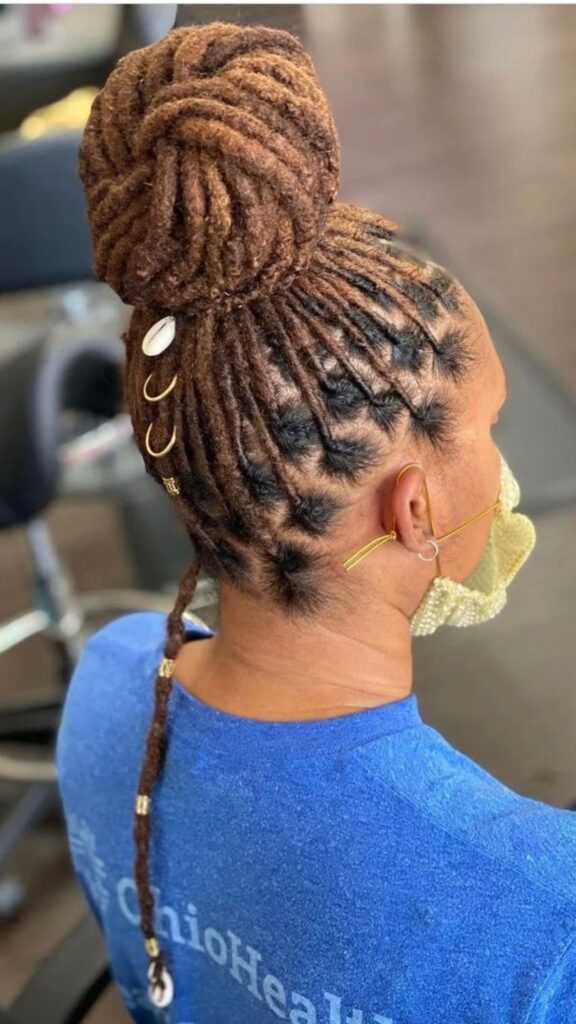
The classic loc bun is one of the easiest hairstyles to create. It works particularly well for people with medium-length or long locs who want a neat appearance without spending too much time styling their hair.
To create this look, gather your locs gently and wrap them into a bun. Use a soft, snag-free hair tie to secure the hairstyle without pulling too tightly.
You can position the bun at the crown of your head or slightly lower, depending on your preference. A high bun creates a bold appearance, while a lower bun offers a more relaxed look.
This is one of the most practical protective styles for locs because it keeps your hair away from your clothing and reduces everyday friction.
The style is suitable for work, school, casual outings, and special occasions. You can also leave a few locs around your face for a softer appearance.
Avoid making the bun too tight, especially if your locs are long and heavy. Change its position occasionally to avoid placing repeated tension on the same areas.
If you have starter locs, consult your loctician before attempting an updo that requires considerable manipulation.
Keeping your locs hydrated without causing dryness or product buildup requires the right balance of moisture and care. Learn how to moisturize and maintain your locs without causing dryness and buildup to discover simple techniques, suitable moisturizing products, and healthy maintenance habits that keep your locs soft, fresh, and healthy.
The Low Loc Bun
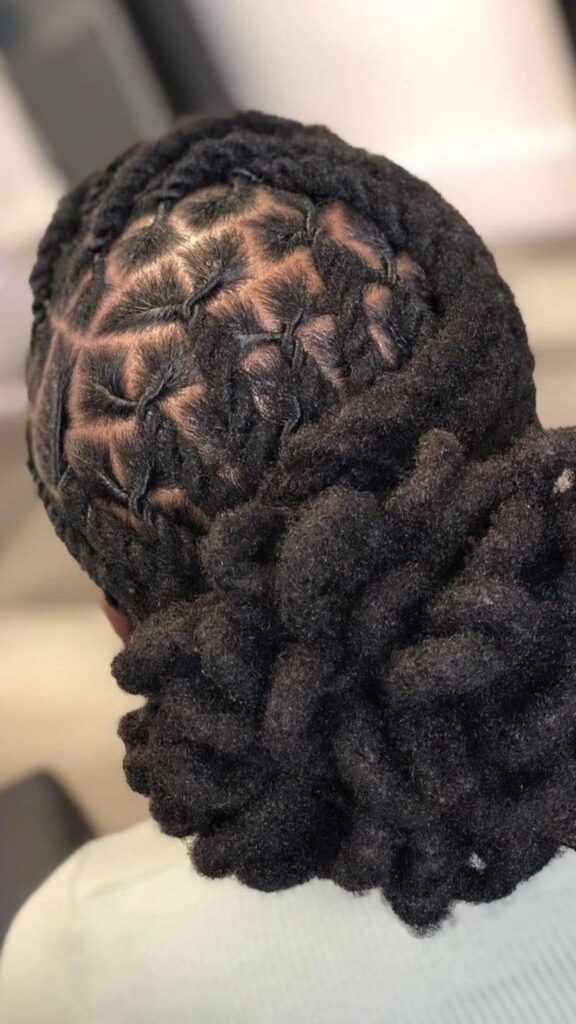
The low loc bun is a simple and elegant alternative to the high bun. Instead of gathering your hair at the crown, you arrange it near the nape of your neck.
This hairstyle is ideal for people who prefer a professional appearance or find high buns uncomfortable.
To achieve the look, gently gather your locs at the back of your head, wrap them into a loose bun, and secure the ends with a suitable accessory.
One advantage of this style is its simplicity. You do not need complicated techniques or several styling products to achieve a neat result.
The low bun is suitable for office settings, church services, meetings, family gatherings, and everyday activities.
If your locs are particularly long or heavy, make sure the bun does not pull downward on your roots. A comfortable hairstyle should not cause headaches or scalp soreness.
You can add a decorative clip or a few lightweight hair cuffs to create a more personalised appearance.
Half-Up, Half-Down Locs
The half-up, half-down hairstyle is perfect for people who want to keep some of their locs away from their face while allowing the rest to fall naturally.
To create this style, separate the upper portion of your locs from the lower portion. Gather the upper section into a loose bun or ponytail, leaving the remaining locs over your shoulders.
This hairstyle works particularly well for medium-length and long locs. It is suitable for casual outings, photographs, social events, and everyday wear.
Although some of your hair remains exposed, this style can still be a useful option when performed gently.
Avoid pulling the upper section too tightly or securing it with an accessory that catches your hair. If your roots feel uncomfortable, loosen the hairstyle.
You can also use a soft headband or a suitable clip to hold the upper section in place.
Remember that protective styling is about reducing unnecessary damage, not simply making your hair look neat. Handle your locs gently and avoid repeatedly restyling them throughout the day.
Two-Strand Twists With Locs
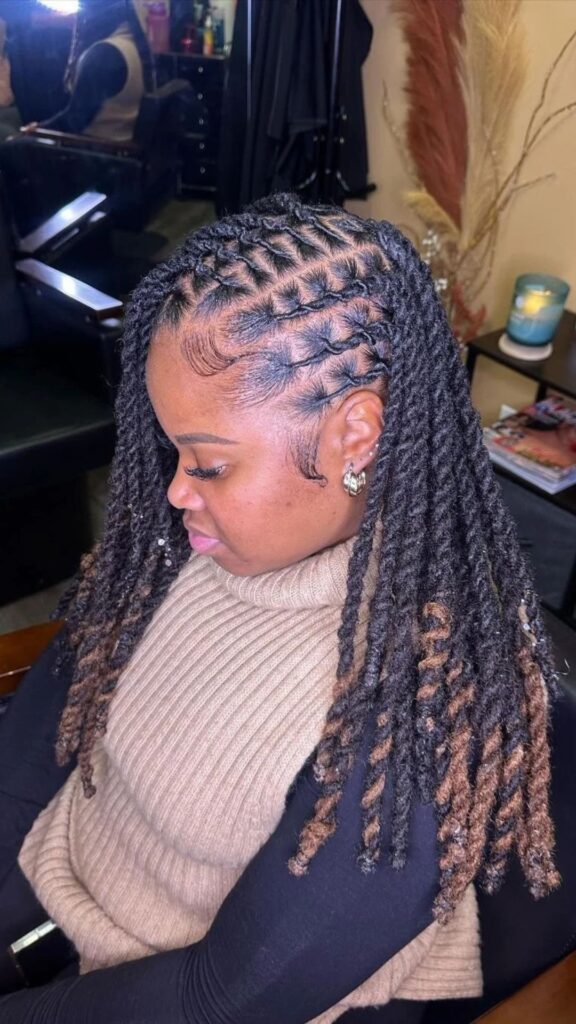
Two-strand twisting involves wrapping two locs around each other to create a textured appearance. It is a good option for people who want something different from a bun or ponytail.
Depending on the length and thickness of your locs, you can create several small twists or a few larger ones.
Start by selecting two locs of similar length. Gently wrap them around each other without pulling the roots or forcing the hair into an uncomfortable position.
This hairstyle is generally more appropriate for mature locs that can tolerate gentle manipulation. Starter locs may require simpler styling options.
Avoid twisting too tightly, as excessive tension can damage vulnerable areas. Check your roots regularly and loosen the style if you notice soreness.
Two-strand twists can create an attractive appearance for casual outings and special occasions. However, avoid excessive twisting or leaving the style in place without checking the condition of your hair.
The Loc Ponytail
A loc ponytail is an easy hairstyle that keeps your hair gathered neatly. You can wear it high, low, or in the middle of your head, depending on your preference and the length of your locs.
To create the hairstyle, gather your locs gently and secure them with a soft hair tie. Avoid ordinary elastic bands that snag individual locs or require excessive pulling during removal.
This style is convenient for exercise, studying, running errands, and other daily activities.
However, wearing a tight ponytail every day may place repeated stress on your roots. To reduce this risk, change the position regularly and avoid pulling your hairline backward.
A low ponytail may feel more comfortable if your locs are long and heavy.
When you finish your activities, consider releasing the ponytail to give your scalp a break. At bedtime, cover your locs with a satin bonnet or use a satin pillowcase to reduce friction.
The loc ponytail is practical, but comfort should always come before appearance.
The Loc Crown
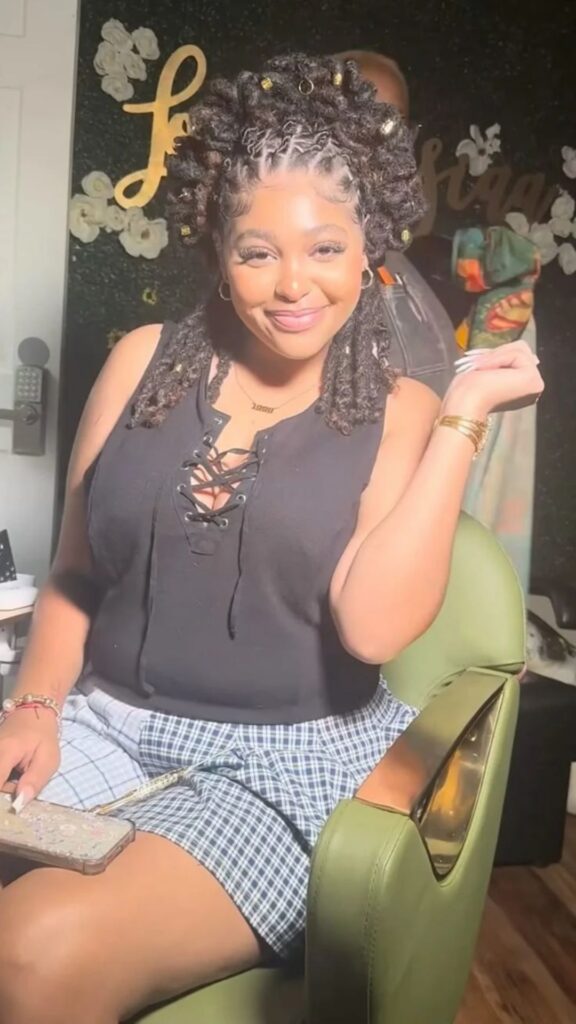
The loc crown is an elegant hairstyle that arranges your locs around the top or sides of your head. It is particularly attractive for weddings, celebrations, religious gatherings, and other special occasions.
Depending on your loc length, you can arrange your locs around your head and secure them with suitable pins or lightweight accessories.
This hairstyle can keep much of your hair away from your shoulders and reduce contact with clothing.
When creating a loc crown, make sure the hairstyle does not pull tightly against your scalp. It should feel secure without causing discomfort.
Use accessories that support your locs without forcing them into unnatural positions. If your locs are short, a partial crown may be easier to achieve than a complete one.
Avoid sharp pins that could catch your hair or damage your locs during removal.
The loc crown is a beautiful choice for anyone who wants an elegant hairstyle while keeping their hair neatly arranged.
Braided Loc Updo
A braided loc updo combines the beauty of an updo with a structured appearance. Depending on your loc length and styling preference, you can create a braided bun, a woven arrangement, or a simple updo with several sections.
This hairstyle can be suitable for formal occasions, professional settings, and celebrations.
However, not every braided updo is protective. If the locs are braided too tightly, the hairstyle may create tension around the roots and hairline.
Choose a style that keeps your hair organised without placing excessive pressure on your scalp.
If you are unfamiliar with this hairstyle, consider asking an experienced loctician to demonstrate a gentle technique.
Pay particular attention to the weight of your locs. Avoid gathering too much weight into one small section of hair.
When removing the style, take your time. Do not pull or cut through your locs simply to release a tight arrangement.
Braided updos are generally better suited to mature locs that can tolerate gentle manipulation.
Loc Pigtails
Loc pigtails offer a playful appearance while keeping your hair organised. You can position the two sections high on your head, near your ears, or lower toward the back.
This hairstyle is suitable for casual outings, festivals, photographs, and everyday wear.
To create it, divide your locs into two sections and secure each section with a soft hair tie. Keep the sections loose enough to prevent unnecessary pulling.
Although pigtails do not protect every part of your hair from friction, they can be a practical option when they reduce tangling and excessive movement.
Avoid placing repeated stress on the same roots. If your hairline is sensitive, choose low pigtails rather than tightly pulled high ones.
You can add soft ribbons or suitable decorative accessories to personalise the look.
When removing the hairstyle, loosen the bands carefully rather than dragging them along the length of your locs.
The Loc Headwrap Style
A headwrap is a versatile accessory that can protect your locs while creating an attractive appearance.
You can wrap a scarf around your head, create a turban-inspired style, or leave a few locs visible at the front.
Headwraps are useful for travelling, running errands, attending events, and days when you want to avoid complicated styling.
Choose a smooth, breathable fabric that feels comfortable against your scalp. Satin-lined wraps may help reduce friction, while rough fabrics can catch loose hairs.
Make sure the wrap is not too tight. Excessive pressure can cause headaches or discomfort around your hairline.
If your scalp becomes hot or sweaty, remove the wrap when appropriate and allow your scalp to breathe.
A headwrap is particularly convenient when you want to protect your hair without using styling gels, heavy creams, or complicated accessories.
Locs Secured With a Satin Scrunchie
A satin scrunchie is a useful accessory for people who want to gather their locs without using harsh elastic bands.
You can use it to create a loose ponytail, a relaxed bun, or a half-up hairstyle.
Choose a scrunchie that is large enough to accommodate the thickness of your hair. Avoid wrapping it so many times that the hairstyle becomes uncomfortable.
If you have very thick locs, select an accessory designed for larger hairstyles rather than forcing your hair into a small band.
Remove the scrunchie gently, especially if you have loose hairs around the roots.
Although a satin scrunchie cannot prevent every form of damage, it can be a useful addition to your hair-care routine.
Side-Swept Locs
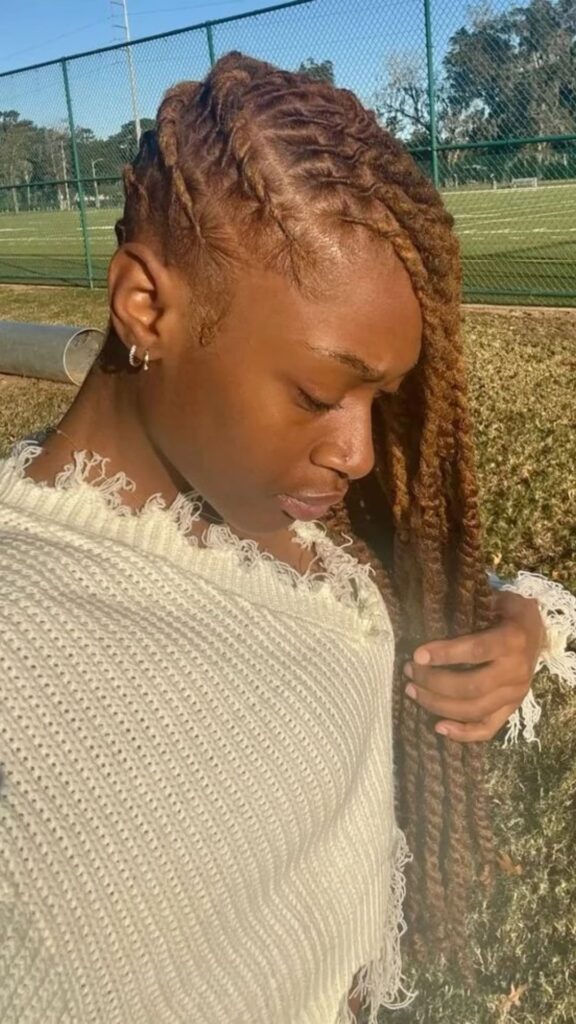
Side-swept locs create an elegant appearance by arranging your hair toward one side of your head.
You can gently position your locs over one shoulder, secure a few behind your ear, or use a suitable clip to maintain the arrangement.
This hairstyle works well for everyday activities, photographs, dinners, and special occasions.
Depending on the length and arrangement of your locs, the style may reduce contact between some sections of your hair and your clothing.
However, avoid pulling all your locs firmly toward one side. Repeatedly directing their weight in the same direction may stress certain roots.
Use a comfortable clip or accessory that holds the style without squeezing your locs.
If your locs are short, try a simple side part instead of forcing them into an elaborate arrangement.
With Decorative Hair Cuffs
Hair cuffs allow you to personalise your locs with different colours, shapes, and finishes. You can use a few cuffs to complement a bun or add them to selected locs for a decorative look.
Choose cuffs that fit comfortably around your locs. Accessories that are too small may squeeze the hair, while rough edges may catch loose strands.
Avoid placing heavy decorations on fragile locs or areas where thinning has already occurred.
Never force a cuff over a loc that is too thick for it. Instead, choose a larger accessory or a different decoration.
Check underneath your cuffs regularly for trapped lint and product residue. Remove them when necessary to clean your hair properly.
A few carefully selected accessories can create an attractive appearance without requiring excessive manipulation.
The Low Side Bun
The low side bun combines the simplicity of a bun with an asymmetrical appearance.
Instead of gathering your locs directly at the back of your head, arrange them toward one side near the nape of your neck.
To create the style, gather your locs gently and wrap them into a loose bun. Secure the ends with a suitable accessory.
If your locs are long or heavy, avoid allowing all their weight to hang from one small section of your scalp. Adjust the placement until the hairstyle feels comfortable.
You can use smooth pins to support the bun, but make sure they do not catch your hair.
The low side bun is suitable for professional settings, special occasions, and days when you want a simple change from your regular hairstyle.
After wearing it, release the bun and give your roots a break before repeating the same arrangement.
Protecting Locs With a Satin Bonnet
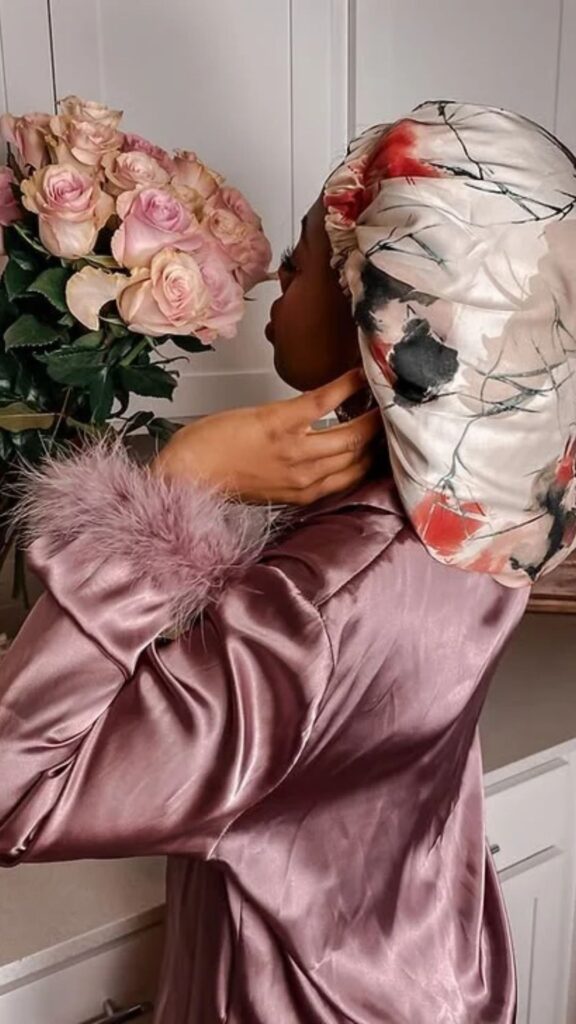
A satin bonnet is an important accessory for protecting locs while sleeping.
During the night, your locs may rub against your pillowcase, become caught in bedding, or experience friction as you move. A properly fitted bonnet can help reduce some of this friction.
Choose a bonnet that comfortably accommodates your loc length and thickness. A bonnet that is too small may compress your locs or pull against your hairline.
If your locs are long, arrange them gently inside the bonnet rather than folding them tightly into an uncomfortable position.
Wash your bonnet regularly to remove sweat, oils, and product residue.
You can also use a satin pillowcase as an additional protective measure if your bonnet slips off during the night.
Remember that a bonnet does not replace cleansing, moisturising, or scalp care. It simply helps reduce friction while you sleep.
Simple Protective Styles for Starter Locs
Starter locs require special attention because they are still developing. Depending on the installation method, they may unravel, shift, or become disturbed when handled too frequently.
For this reason, complicated updos are not always appropriate during the early stages.
Suitable options include gentle headwraps, simple arrangements, and loose styles that require minimal manipulation.
Before styling your hair, consider how your locs were installed and follow your loctician’s advice.
Avoid tight ponytails, heavy accessories, and elaborate twists that place pressure on the roots.
If you want to keep your hair away from your face, use a loose scarf or gently arrange a few locs without pulling them backward.
Do not assume that every hairstyle suitable for mature locs will work for starter locs.
Patience is important. Allow your locs to develop naturally, and gradually explore more styling options as they mature.
Protective Styling for Sisterlocks
Sisterlocks are typically smaller and more numerous than traditional locs. Their size allows for many styling possibilities, but their structure also requires careful handling.
Consider the size, maturity, and condition of each loc rather than focusing only on appearance.
Loose updos, gentle side arrangements, carefully secured ponytails, and suitable headwraps may work well, depending on your hair’s condition.
Avoid rough accessories and tight bands that catch individual locs.
If you notice thinning, weak areas, or concerns about your installation, seek guidance from a qualified sisterlocks consultant or experienced loctician.
Smaller locs may be vulnerable to damage from excessive tension and repeated pulling.
Do not leave a hairstyle in place simply because it looks neat. Check your roots regularly and remove the style if you notice discomfort.
With careful handling, you can enjoy attractive hairstyles while maintaining the structure and appearance of your sisterlocks.
How to Choose the Best Protective Style for Your Locs
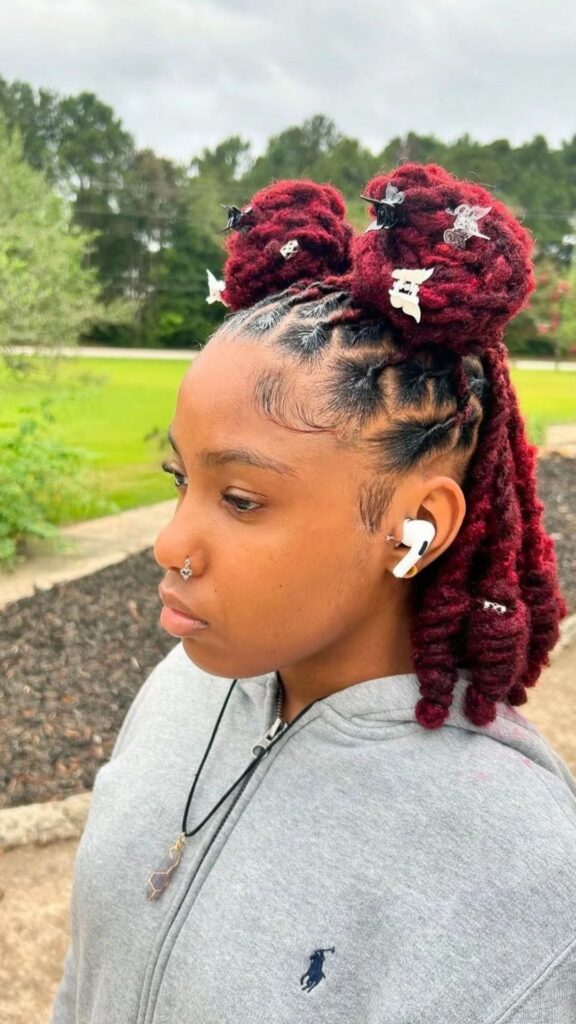
Not every hairstyle will suit everyone. Your best option depends on your loc length, thickness, maturity, scalp condition, and daily activities.
Before choosing protective styles for locs, consider these important factors.
Loc maturity: Starter locs may require simpler arrangements, while mature locs can often accommodate more elaborate styles.
Hair length: Short locs may work well with headwraps and simple accessories. Longer locs offer more options, including buns, ponytails, and crowns.
Scalp condition: If your scalp feels sore or your roots appear thin, avoid tight hairstyles and seek professional advice when necessary.
Daily routine: Someone who exercises frequently may prefer a loose bun or ponytail, while a person attending a formal event may choose an elegant updo.
Comfort: A protective style should feel comfortable throughout the time you wear it. Pain is a reason to loosen or remove the hairstyle.
The best option is one that supports your hair-care goals without creating additional problems.
How to Maintain Your Locs While Wearing Protective Styles
Protective styling is only one part of maintaining healthy locs. Your everyday hair-care habits also influence how your locs look and feel.
- Keep Your Scalp Clean
Wash your locs according to your hair-care routine and your loctician’s advice. Sweat, dust, and product residue can accumulate even when your hair is styled.
Do not allow a hairstyle to prevent you from cleansing your scalp properly.
- Moisturise Appropriately
Locs can become dry, especially when exposed to dry air, sunlight, or frequent friction.
Use suitable lightweight moisturising products when needed. Avoid excessive oils, creams, or heavy products that may accumulate inside your locs.
- Avoid Excessive Tension
One of the most important principles of protective styling is avoiding hairstyles that pull on your roots.
Tight hairstyles may cause discomfort and contribute to traction-related hair loss over time.
If a hairstyle gives you a headache, causes soreness, or pulls at your edges, loosen it or remove it.
- Protect Your Locs at Night
Use a satin bonnet, scarf, or pillowcase to reduce friction while sleeping.
Make sure the fabric is clean and the covering fits comfortably.
- Give Your Hair Breaks
You do not need to keep your locs styled every day.
Allowing your hair to hang naturally between updos can help reduce repeated tension and give your scalp a break.
- Be Careful With Styling Products
Heavy gels, waxes, and thick creams may leave residue that is difficult to remove from locs.
Choose products suitable for your hair and use them sparingly. Cleanse your locs thoroughly according to your maintenance routine.
- Inspect Your Roots and Ends
Regularly check for thinning, weak areas, unusual breakage, and persistent irritation.
Paying attention to these signs can help you adjust your styling habits before problems become more serious.
Common Protective Styling Mistakes to Avoid
Even beautiful protective styles for locs can cause problems when they are performed incorrectly.
Making every hairstyle too tight: Tightness is not necessary for a neat appearance. Excessive tension can weaken your roots.
Wearing the same updo repeatedly: Constantly pulling your locs in the same direction may place stress on the same areas.
Using unsuitable accessories: Sharp clips, rough elastics, and undersized cuffs can catch or damage your hair.
Neglecting scalp hygiene: A hairstyle should never prevent you from cleaning your scalp or inspecting your roots.
Ignoring discomfort: If you experience persistent soreness, loosen or remove the hairstyle.
Forgetting moisture: Protective styling does not eliminate the need for appropriate hydration and regular hair care.
Copying every hairstyle you see online: A style that works for someone with mature, thick locs may not be suitable for your starter locs or finer hair.
Choose hairstyles according to your own needs rather than following trends without considering your hair’s condition.
Frequently Asked Questions
- What Are the Best Protective Styles for Locs?
Popular options include loose buns, low ponytails, half-up hairstyles, headwraps, gentle updos, and loc crowns. The best choice depends on your loc maturity, length, thickness, and scalp comfort.
- Can I Wear Protective Styles With Starter Locs?
Yes, but choose simple styles that require little manipulation. Avoid tight ponytails, heavy accessories, and hairstyles that pull on newly formed locs. Ask your loctician which options are appropriate for your installation method.
- How Long Should I Keep a Protective Style in My Locs?
There is no single duration that suits every hairstyle. Consider the style’s tension, your scalp condition, hygiene needs, and your loctician’s advice. Remove the style if it becomes uncomfortable, causes pulling, or prevents proper cleansing.
- Do Protective Styles Help Locs Grow Faster?
Protective styling does not directly make hair grow faster. However, gentle styling may reduce friction, breakage, and unnecessary manipulation, helping you retain length. Healthy growth also depends on genetics, scalp health, nutrition, and appropriate hair care.
In summary, choosing the right hairstyle can make caring for your locs easier while giving you plenty of opportunities to express your personality.
From classic buns and ponytails to elegant crowns, satin headwraps, and simple side-swept arrangements, there are many options to explore.
The most effective protective styles for locs minimise unnecessary friction and manipulation without placing excessive tension on your roots.
Remember to consider your loc maturity, select suitable accessories, maintain a clean scalp, and moisturise your hair appropriately. Give your locs breaks between tighter arrangements and pay attention to any signs of discomfort.
Beautiful locs do not require complicated hairstyles or constant styling. Sometimes, a simple loose bun or a comfortable headwrap is all you need.
By choosing gentle hairstyles and maintaining consistent hair-care habits, you can enjoy different looks while supporting the long-term health, strength, and appearance of your locs.