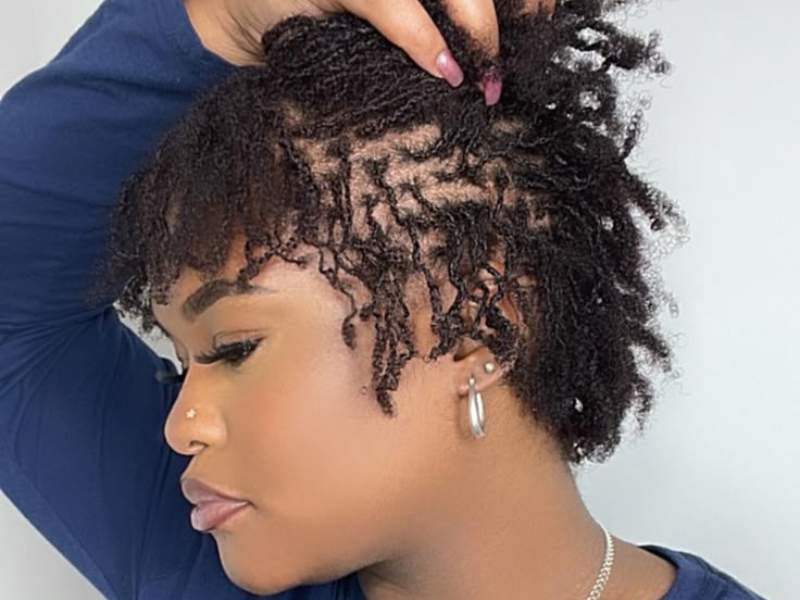
How to Start Sisterlocks on Short Hair
Have you been considering Sisterlocks but aren’t sure if your hair is ready for it? The good news is that Sisterlocks are possible on many different hair types. Hair length is not always a barrier, as you can install Sisterlocks on short hair.
Starting your Sisterlocks journey with short hair can be exciting, especially if you’re ready to embrace your natural texture and build a long-term hairstyle. However, the process requires careful planning. Hair length, density, texture, scalp condition, and your willingness to maintain the locs all play a role in your results.
Because of the small nature of Sisterlocks, they are very versatile when it comes to styling.Your hair can be worn in a variety of styles and up dos, as well as curled with rollers, rods and pipe cleaners.
With the right preparation, suitable hair texture, and a trained Sisterlocks consultant, your short natural hair can be a starting point for a beautiful, low-maintenance loc style.
In this beginner’s guide, you’ll learn how to start Sisterlocks on short hair, how to prepare your hair, what to expect during installation, how to care for your new locs, and which mistakes to avoid as your hair develops.
Whether your hair is only a few inches long or you’re growing out a short natural hairstyle, this guide will help you understand the process and make informed decisions before getting started.
Not sure which loc style is right for you? Read my guide on Sisterlocks vs. Traditional Locs: Which One Is Right for You? to compare their differences and find the best option for your hair and lifestyle.
What Are Sisterlocks?
Sisterlocks are very small, neatly patterned locs created with a specialized interlocking technique. They were developed by Dr. JoAnne Cornwell and are designed to allow natural hair to form small, lightweight locs without requiring traditional waxes or heavy styling products.
One of the reasons Sisterlocks appeal to many women is their versatility. Once mature, they can be styled in various ways, including curls, updos, ponytails, and braided looks, depending on their length and condition.
This hairstyle is often seen as a commitment as the hair will be permanently locked. The installation process is often scheduled in two consecutive 8 hour days. Once installed, new growth should occur every 6–8 weeks depending on how quickly your hair grows.
The beauty of Sisterlocks is that you don’t need to apply any products to have a style. Because the locks are very small in comparison to traditional locks, styling options can be likened to loose natural hair styles except that Sisterlocks is usually worn loose and care-free.
Sisterlocks are different from traditional locs in several more ways:
- Size: Sisterlocks are generally much smaller than traditional locs.
- Installation: They use a specific interlocking technique and patterned grid.
- Styling: Their small size allows for a wide range of styling options.
- Maintenance: They require periodic retightening to maintain the roots and overall structure.
- Installation expertise: A trained Sisterlocks consultant is recommended to establish the correct foundation.
Although Sisterlocks can be started on relatively short natural hair, the installation method and suitability depend on your individual hair.
Can You Start Sisterlocks on Short Hair?
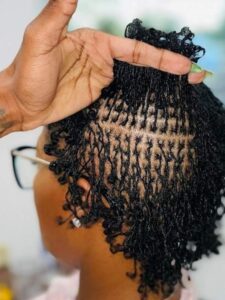
Yes, Sisterlocks can be installed on short hair, but there is no single minimum length that guarantees success for everyone.
Some Sisterlocks practitioners recommend approximately 1.5 to 2 inches of natural hair for installation, although the required length can vary depending on hair texture, condition, and the consultant’s assessment.
Hair length is only one part of the decision. Your hair must also be long enough for the chosen locking technique to hold securely.
Before scheduling your installation, consider these factors:
- Hair texture: Your natural curl pattern and texture influence how the locks form and hold.
- Hair density: The amount of hair you have can affect the size and appearance of your locks.
- Hair condition: Fragile, severely damaged, or thinning hair may need attention before installation.
- Previous chemical treatments: Relaxed or color-treated hair may require additional planning.
- Scalp health: Irritation, persistent itching, or unexplained hair loss should be assessed before starting.
If your hair is currently shorter than the recommended length, be patient. You can use the time to develop a gentle hair-care routine and prepare for your consultation.
How to Prepare Your Short Hair for Sisterlocks
Preparing your hair before installation can make the process smoother and help your consultant assess your natural hair accurately.
1. Understand Your Hair’s Current Condition
Start by examining your hair and scalp. Look for excessive breakage, thinning around the hairline, persistent irritation, or areas where your hair seems significantly weaker.
If you notice unexplained thinning or ongoing scalp problems, consult a dermatologist before proceeding.
Repeated tension from tight hairstyles can contribute to traction alopecia, which may become permanent if the cause continues.
2. Establish a Gentle Washing Routine
Keep your scalp clean and avoid rough handling.
Use a gentle shampoo and follow your usual conditioning routine before installation. Avoid aggressive scrubbing, excessive heat, or anything that leaves your hair feeling unusually dry or brittle.
The goal is to maintain healthy hair, not to make it perfectly straight or change its natural texture.
3. Avoid Excessive Styling
In the weeks leading up to installation, minimize styles that pull tightly on your roots.
Avoid repeatedly wearing tight braids, ponytails, or other styles that place stress on your hairline. If a style causes pain or stinging, loosen it or remove it.
4. Discuss Chemical Treatments With Your Consultant
If your hair is relaxed, transitioning from relaxed hair, or recently color-treated, explain this during your consultation.
Your consultant can assess how the different sections of your hair may respond to locking and whether you should postpone installation or adjust your plan.
Do not assume that every section will lock in the same way simply because it belongs to the same head of hair.
5. Take Clear Photos of Your Hair
Photograph your hair from the front, sides, back, and top.
These photos can help you document your starting point and compare your progress over time. They may also help you identify changes in density, length, and overall appearance.
Step-by-Step: How to Start Sisterlocks on Short Hair
The safest approach is to have Sisterlocks installed by a trained, qualified consultant rather than attempting the full process yourself.
Step 1: Book a Sisterlocks Consultation
Your first appointment is an opportunity to discuss your hair history, lifestyle, preferred styles, and maintenance expectations.
Ask questions like:
- Whether your hair is long enough
- How many locks may suit your hair
- How much the installation will cost
- How long the appointment may take
- How often you will need retightening
- What products and washing routine you should follow
A good consultation should give you a realistic idea of what starting Sisterlocks on short hair will involve.
Step 2: Have Sample Locks Installed
It is advisable to visit your consultant with sample locks installed. These allow the consultant to assess how the locking technique works with your hair and discuss details such as sizing and appearance.
This is particularly helpful when your hair is short because the sample can reveal whether your hair holds the pattern securely.
Ask your consultant to explain how to care for the sample locks and when they should be reviewed.
Step 3: Confirm Your Installation Plan
After evaluating your hair, your consultant can recommend an appropriate grid pattern and locking technique.
The grid determines how the hair is divided into individual sections. Careful sectioning is important because it influences the consistency, size, and overall arrangement of your Sisterlocks.
The number of locks will vary with hair density, head size, sectioning, and the consultant’s recommendations. Avoid choosing a target number based solely on someone else’s results.
Step 4: Complete the Installation
During the installation, your consultant creates the locks section by section using the appropriate Sisterlocks technique.
Short hair can require particular care because there is less length to work with. The process may take several hours or more than one session, depending on your hair and the amount of work involved.
Bring water, snacks, and anything else your consultant recommends for a lengthy appointment.
Important: The installation should not cause significant pain or excessive tension. Tell your consultant immediately if you feel pulling, sharp discomfort, or unusual scalp tenderness.
Step 5: Follow Your Initial Care Instructions
After installation, your consultant will explain how to care for your new locks.
Follow the specific instructions you receive, particularly regarding washing, product use, and your first maintenance appointment.
New Sisterlocks are still developing, so avoid repeatedly manipulating them or experimenting with unfamiliar products.
Step 6: Attend Your Follow-Up Appointment
There is need for a follow-up retightening session after at least two shampoos. Your consultant will explain the appropriate timing for your particular installation.
This appointment helps your consultant assess how the locks are settling and address any concerns before they become more difficult to manage.
How to Care for Sisterlocks After Installation
Starting your Sisterlocks journey is only the beginning. Consistent maintenance helps you protect your hair, preserve the locking pattern, and support healthy growth.
1. Follow the Recommended Washing Schedule
Keeping your scalp clean is important, but newly installed Sisterlocks need careful handling.
Follow your consultant’s washing instructions and ask when to begin your regular washing routine. Avoid rubbing, scrubbing, or manipulating the locks aggressively, especially during the early stages.
If your scalp becomes persistently itchy, painful, or irritated, seek professional advice rather than relying on additional products to mask the problem.
2. Avoid Heavy Products and Excessive Buildup
Heavy creams, waxes, butters, and oils can accumulate on your hair and scalp. Sisterlocks generally benefit from a maintenance routine tailored to the locking system rather than frequent application of heavy styling products.
Ask your consultant which products are appropriate for your hair and how to address dryness without creating unnecessary buildup.
3. Protect Your Hair at Night
Consider using a satin or silk bonnet, scarf, or pillowcase to reduce friction while sleeping.
A comfortable covering can help protect your hair from unnecessary rubbing. Make sure it does not pull tightly around your hairline.
4. Keep Up With Retightening Appointments
Retightening helps maintain the roots and structure of your Sisterlocks as your hair grows.
Your consultant will recommend an appropriate schedule based on your hair and the condition of your locks. Avoid repeatedly tightening your roots yourself or postponing maintenance until the locks become difficult to manage.
Retightening should not be excessively tight. Persistent soreness, bumps, or thinning around the hairline are reasons to have the tension assessed.
5. Be Patient With the Budding Stage
Your Sisterlocks may look different as they develop. Some locks may appear fuzzy, shrink, swell, or form small bumps as the hair begins to establish its structure.
These changes do not automatically mean something is wrong.
Avoid comparing your early results with someone whose Sisterlocks have been established for several years. Your hair’s texture, length, density, and locking pattern all influence its appearance.
How Long Does It Take to Mature?
There is no universal timetable for Sisterlocks maturation. Your hair may pass through several developmental stages, and each person’s experience is different.
These stages are approximate descriptions, not strict deadlines. Your consultant can help you understand the changes you observe.
Remember that hair growth and lock maturation are not the same thing. Your hair can gain length while the locks are still developing their internal structure.
Common Mistakes to Avoid
Even with a good installation, certain habits can make your Sisterlocks journey more challenging.
Starting Before Your Hair Is Ready
Wanting to begin immediately is understandable, but installing Sisterlocks before your hair is suitable can lead to frustration.
If your hair is too short for the recommended technique, discuss your options with a qualified consultant instead of forcing the process.
Attempting the Installation Without Proper Training
Sisterlocks use a specialized system involving sectioning, locking techniques, and maintenance. Incorrect installation can result in inconsistent sizing, weak locks, or unnecessary tension.
If your goal is authentic Sisterlocks, choose a trained professional familiar with the system.
Constantly Manipulating Your Starter Locks
Repeated twisting, pulling, or restyling can interfere with the early development of your locks.
Keep your routine simple and give your hair time to settle.
Using Too Many Hair Products
Applying multiple products in an attempt to make your Locks look smoother can create buildup and make maintenance more difficult.
Follow your consultant’s recommendations rather than copying every product routine you see online.
Ignoring Scalp Discomfort
Sisterlocks should not cause persistent pain. If you notice soreness, bumps, broken hair, or thinning, have the installation and maintenance tension assessed promptly.
The American Academy of Dermatology recommends avoiding hairstyles that repeatedly pull on the hair because prolonged tension can contribute to hair loss.
Can You Start Sisterlocks on Short Relaxed Hair?
It may be possible, but the distinction between relaxed hair and natural new growth matters.
Relaxed hair has a chemically altered structure, while new growth has your natural texture. These different sections may respond differently during the locking process.
Some Sisterlocks practitioners accept clients with relaxed hair, provided they have sufficient new growth and understand the transition involved. One practitioner, for example, recommends approximately 1.5 to 2 inches of new growth, with more length preferred.
Discuss your chemical history honestly with your consultant before booking. They can assess whether to proceed or recommend waiting for additional natural growth.
Do not apply a relaxer simply to make installation easier, and avoid making major chemical changes without professional guidance.
How to Choose the Right Sisterlocks Consultant
Your consultant plays an important role in establishing your Sisterlocks correctly.
Before booking, consider the following:
- Training: Ask about their Sisterlocks training and qualifications.
- Experience: Look for examples of installations on hair with a similar length and texture to yours.
- Consultation: Choose someone willing to examine your hair and discuss realistic expectations.
- Maintenance: Confirm that they offer follow-up appointments or can recommend a qualified maintenance professional.
- Communication: Make sure they explain the process, pricing, aftercare, and any potential challenges clearly.
FAQs
What are the best Sisterlocks styles for short hair?
Some of the best Sisterlocks styles for short hair include side-parted locs, middle-part styles, curly Sisterlocks, headband styles, and accessorized locs. These options allow you to look stylish while keeping manipulation and tension to a minimum.
How do you maintain Sisterlocks on short hair?
Maintain Sisterlocks on short hair by following your consultant’s washing and retightening schedule, keeping your scalp clean, and avoiding heavy products that cause buildup. Minimize excessive styling and tension to support healthy loc development as your hair grows.
What is the minimum hair length for Sisterlocks?
Some practitioners recommend approximately 1.5 to 2 inches of natural hair, but the suitable length depends on your texture, hair condition, and the installation technique. A consultation is the best way to determine whether your hair is ready.
Can I start Sisterlocks on 1 inch of hair?
One inch may be too short for some installations. Rather than assuming it will work, consult a qualified Sisterlocks professional who can assess your hair and advise whether you should wait.
Can I install Sisterlocks myself?
Authentic Sisterlocks require specialized training and a specific installation system. Working with a trained consultant is the recommended approach, particularly when your hair is short.
Do Sisterlocks make hair grow faster?
Sisterlocks do not make hair grow faster than its natural growth rate. They can help you wear your natural hair without daily manipulation, but actual growth and length retention depend on factors such as genetics, health, hair care, and breakage.
Are Sisterlocks suitable for every hair type?
Sisterlocks were developed primarily for tightly textured hair. Suitability depends on your individual hair characteristics, and a trained consultant can help assess whether the system is appropriate for you.
How often should Sisterlocks be retightened?
Your consultant will recommend a schedule based on your hair and how your locks develop. Follow that guidance rather than using a fixed interval that may not suit your hair.
Start Your Sisterlocks Journey With Confidence
Starting Sisterlocks on short hair can be an exciting step toward embracing your natural texture and developing a versatile, long-term hairstyle. You don’t need to wait until your hair is long, but you do need to make sure it is suitable for the installation process.
Begin by assessing your hair’s condition, establishing a gentle care routine, and finding a qualified Sisterlocks consultant. Ask questions, understand the maintenance commitment, and give yourself realistic expectations about how your locks will develop.
Most importantly, remember that your journey does not have to look like anyone else’s. Your hair will grow and mature at its own pace, and the early stages are simply part of the process.
Schedule a consultation with a trained Sisterlocks consultant to determine whether your short hair is ready. With proper preparation, professional installation, and consistent care, you can begin your Sisterlocks journey with greater confidence.