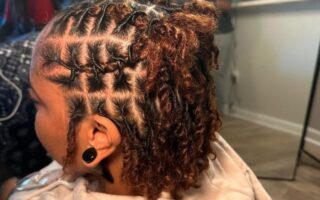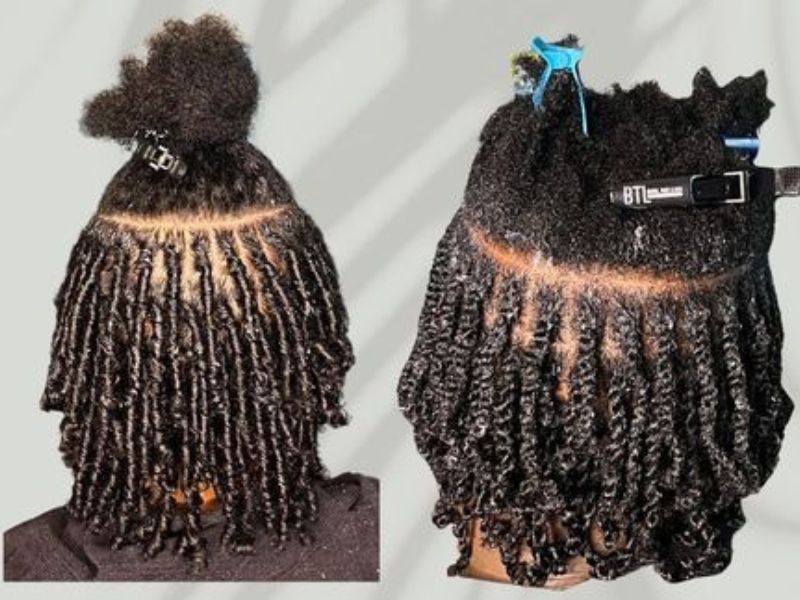
If you have recently started your loc journey, you have probably wondered, how long do starter locs take to mature, and when will your hair finally begin to look like the beautiful, established locs you see online? The answer depends on your hair texture, installation method, maintenance routine, and how your locs develop over time. For many people, the process takes approximately 18 to 24 months, although some locs mature sooner while others need two to three years or longer.
Starting locs is exciting, but the early months can test your patience. Your hair might look neat immediately after installation, only to become frizzy, puffy, uneven, or completely different a few weeks later. You may notice that some locs appear to be growing while others seem stuck in the same stage. Sometimes, your hair might even look less mature several months after installation than it did on the first day.
These changes can feel confusing, especially when you are unsure whether your locs are developing normally. However, the locking process involves several stages, and each one changes the way your hair looks and feels.
Understanding the timeline can help you approach your journey with realistic expectations. Instead of worrying about every change, you will know what usually happens during the first few months, what to expect as budding begins, and how to recognize signs of maturity.
In this guide, we will explain how long do starter locs take to mature, why the timeline varies, and what happens during each stage. We will also explore the differences between starter locs and mature locs, the factors that influence development, and the maintenance habits that help protect your hair.
Whether you started with comb coils, two-strand twists, braids, or interlocking, this guide will help you understand the process and know what to expect as your locs develop.
How Long Do Starter Locs Take to Mature?
The Typical Timeline for Starter Locs to Become Mature
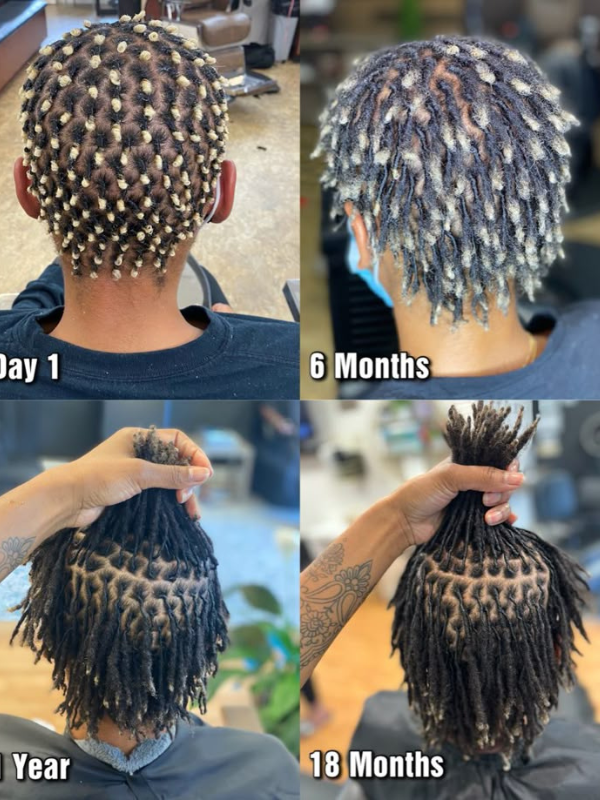
For many people, starter locs take approximately 18 to 24 months to become well established. However, this is a general estimate rather than a deadline that every head of locs must meet.
Some locs begin to feel more compact within the first year. Others remain soft, fluffy, or uneven for longer. Your installation method, hair texture, loc size, and maintenance habits can all influence the process.
When asking how long do starter locs take to mature, it helps to distinguish between the early locking process and complete maturity.
Your locs may begin to hold their structure within several months. However, that does not necessarily mean they have finished developing.
During the first year, your hair may experience changes in texture, thickness, and shape. The sections gradually become more established as the hair intertwines and compacts.
By the second year, many people notice that their locs feel firmer and are easier to manage. Nevertheless, some sections may continue developing beyond this point.
The important thing is to assess your locs according to their condition rather than their age alone.
Can Starter Locs Mature in Six Months?
Some people notice considerable changes within six months. Their locs may begin to feel firmer, show signs of budding, and hold their shape more consistently.
However, six months is generally too early to assume that every loc has reached full maturity.
Your hair may still be developing internally, even when the outside looks relatively compact.
The installation method also matters. Locs started through interlocking or crochet techniques may appear more established immediately than locs started with comb coils or two-strand twists.
That difference in appearance does not necessarily mean they have completed the same amount of natural development.
If your locs are six months old and still look fluffy, do not assume that something is wrong.
Instead, consider whether the sections are gradually changing, whether your scalp is comfortable, and whether your maintenance routine suits your installation method.
Is It Normal for Starter Locs to Take Three Years to Mature?
Yes, some loc journeys take three years or longer to reach the level of maturity a person expects.
The timeline depends on several factors, including hair texture, loc size, installation technique, and individual differences in how the hair locks.
Some people also have different levels of maturity across their heads. The locs near the crown may develop differently from those around the nape or hairline.
This does not automatically mean that the slower sections are unhealthy.
However, if particular locs repeatedly unravel, break, or develop unusually weak areas, it is worth consulting an experienced loctician.
There is a difference between gradual development and a problem that needs attention.
Ultimately, the answer to how long do starter locs take to mature will be different for different people. Your locs do not need to follow another person’s timeline to develop successfully.
The Difference Between Looking Mature and Being Fully Mature
Appearance can make it difficult to judge loc maturity.
Some locs look compact shortly after installation because the technique creates a firm structure. Others appear loose or fluffy even as the hair begins locking internally.
Therefore, a neat appearance does not automatically prove that your locs are mature.
Likewise, frizz does not automatically mean that your locs are immature or unhealthy.
Maturity involves the development of the hair structure over time. Your locs may become more compact, hold their shape more consistently, and require less careful handling than they did during the earliest stages.
For a closer look at these changes, read What Do Mature Locs Look Like? 11 Signs Your Locs Are Fully Mature.
Understanding these differences helps you set realistic expectations instead of relying entirely on photographs.
Understanding the Different Stages of Loc Maturity
The Starter Stage: What Happens During the First Three to Six Months?
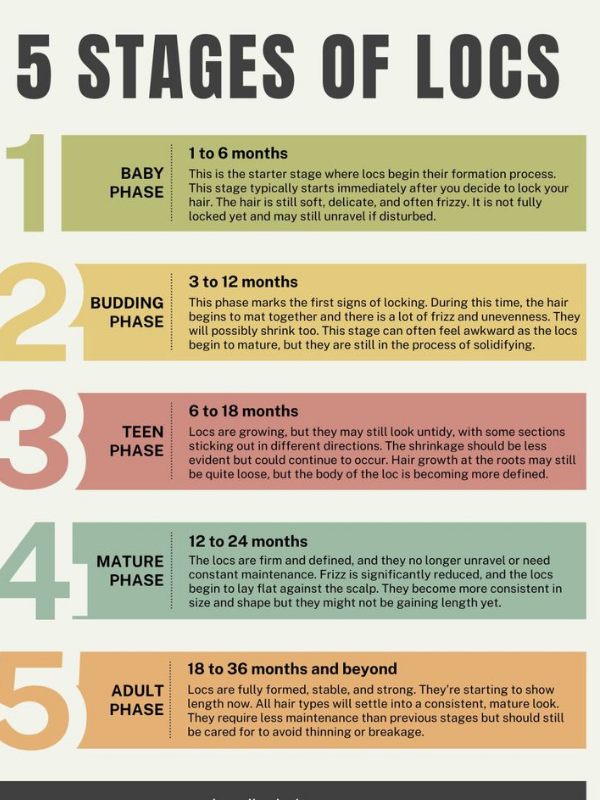
The starter stage begins when your locs are installed.
At this point, your hair has been divided into sections and formed into coils, twists, braids, or another starting pattern. However, the sections have not necessarily developed the compact structure associated with mature locs.
During the first few weeks, your hair may look neat and well defined. As time passes, you might notice frizz, loose ends, shrinkage, or changes in the shape of individual sections.
These changes are common because the hair is beginning its locking journey.
The starter stage also requires you to learn how your particular installation method behaves. Some methods are more prone to unraveling than others, especially during washing or frequent manipulation.
You may need to adjust your expectations and resist the temptation to make every loc look freshly installed.
Instead, focus on suitable cleansing, gentle handling, and following your loctician’s maintenance instructions.
During this stage, the question of how long do starter locs take to mature may come up repeatedly because the changes are not always easy to recognize.
Remember that the first few months establish the foundation for your future locs. Your goal is to protect that foundation while allowing the hair to develop.
The Budding Stage: When Your Locs Begin to Feel Fuller
The budding stage is an important part of the locking process.
During this period, parts of your locs may become thicker, fuller, or slightly spongy. You may feel small bumps along the length of individual sections.
These changes occur as the hair becomes more intertwined and begins forming a more established structure.
Budding does not happen at exactly the same time for everyone. Some locs may show these changes earlier than others.
You might also notice that your hair looks less uniform during this stage.
One loc may appear compact, while another looks puffy or uneven. The difference can be frustrating, but it does not automatically indicate a problem.
Avoid squeezing, pulling, or repeatedly twisting the budding areas to make them look smoother.
The hair needs time to develop, and excessive manipulation can interfere with the process.
If you want to understand why developing locs sometimes look uneven, read How to Fix Frizzy Locs Without Retwisting: Easy Tips That Work.
The key is to allow your hair to change naturally while maintaining a routine that supports scalp comfort and hair health.
The Teenage Stage: Why Your Locs May Look Uneven
The teenage stage is often described as one of the most challenging parts of the loc journey.
By this point, your locs may be more established than they were during the starter stage. However, their shape, thickness, and texture may still be inconsistent.
Some sections may look fuller in the middle, while others appear thinner toward the ends. You may also notice frizz, changes in length, and different levels of compactness.
This stage can be confusing because your hair no longer looks like freshly installed starter locs, yet it may not resemble the mature locs you hoped to achieve.
The good news is that unevenness can be part of normal development.
Your hair does not need to look identical from root to tip for the locking process to continue.
Avoid trying to correct every difference through frequent retwisting or excessive manipulation.
Instead, pay attention to the overall condition of your hair. If a loc is repeatedly breaking, developing a weak spot, or becoming unusually thin, ask a qualified loctician to assess it.
Otherwise, patience and consistent care are important during this transitional period.
The Mature Stage: When Your Locs Become More Established
Mature locs generally have a more established structure than starter locs.
They often feel firmer, hold their shape more consistently, and tolerate ordinary handling more easily.
However, mature locs do not all look the same.
Some remain soft and flexible, while others feel relatively firm. Their thickness, texture, and appearance depend on the installation method, hair characteristics, and maintenance routine.
Maturity also does not mean that your locs stop changing.
Your hair continues to grow, new growth continues to appear, and the overall length and weight of your locs can change over time.
You will still need to cleanse your scalp, manage product buildup, and maintain your locs appropriately.
When considering how long do starter locs take to mature, remember that maturity is a gradual process rather than a specific birthday for your locs.
The goal is to allow the hair to develop while maintaining healthy roots and a comfortable scalp.
What Happens to Starter Locs Month by Month?
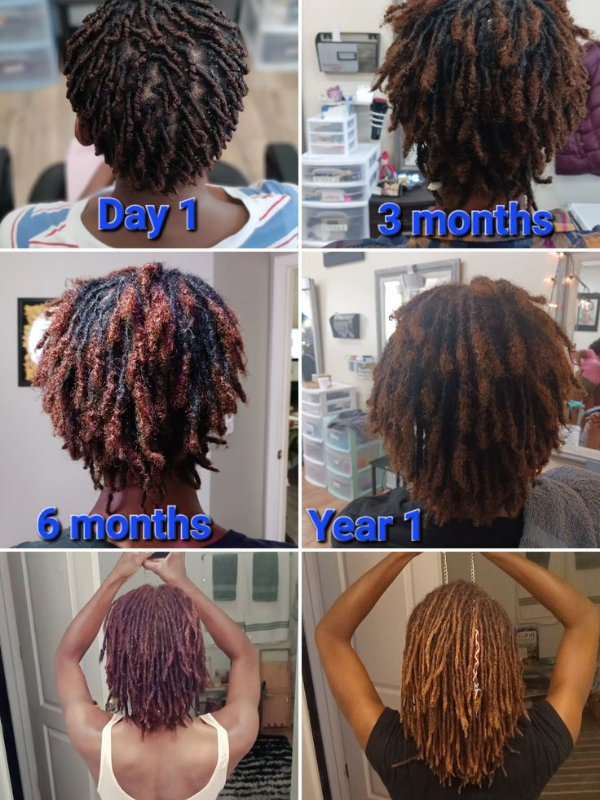
What to Expect During Months One to Three
The first three months introduce you to the early changes that happen after installation.
Immediately after your appointment, your locs may look neat and clearly defined. Depending on your installation method, the sections may resemble twists, coils, or braids.
After several weeks, you might notice that the hair becomes softer or frizzier.
Some ends may loosen, and individual sections may appear less uniform than they did on installation day.
Your locs may also shrink as your natural texture becomes more noticeable.
These changes can make it seem as though your hair is moving backward. In reality, the appearance of newly installed locs can change considerably during the early stages.
Your main priority should be following an appropriate maintenance routine.
Ask your loctician when and how to wash your hair. Keep your scalp clean, avoid unnecessary manipulation, and protect your locs while sleeping.
Do not assume that every loose hair needs to be twisted back into place.
The first few months are an opportunity to learn what your locs need and become comfortable with their natural appearance.
What to Expect During Months Four to Six
Between four and six months, some people begin noticing more obvious signs of budding.
Individual locs may feel fuller or develop small, compact areas along their length.
However, the process can remain uneven.
Some sections may look more established, while others still resemble their original twists or coils.
Your hair may also become frizzier during this period.
Although you might feel tempted to retwist more frequently, doing so simply to achieve a neat appearance can place unnecessary stress on your roots.
Instead, follow the maintenance schedule recommended for your method.
If your locs began with comb coils, you may notice different changes from someone whose locs began with braids or interlocking.
This is one reason there is no universal answer to how long do starter locs take to mature.
Your hair is developing according to its characteristics and the way your locs were established.
What to Expect During Months Seven to Nine
By months seven to nine, your locs may look noticeably different from the way they appeared immediately after installation.
Some sections may have become fuller and more compact. Others may still have loose ends or uneven textures.
You might also notice that your hair is becoming easier to arrange into simple hairstyles, depending on its length.
However, do not assume that all your locs should be mature by this point.
The process is still developing, and differences between individual sections are common.
Continue to focus on scalp cleanliness, gentle handling, and appropriate maintenance.
If your hair looks frizzy, avoid automatically assuming that you need a retwist.
Frizz alone does not tell you whether a loc is developing normally.
What to Expect During Months Ten to Twelve
As you approach the end of your first year, you may begin to recognize a more established pattern in your locs.
Some sections may feel firmer, while others continue to change.
You might notice that the hair looks fuller in certain areas or that the locs have developed a more consistent shape.
However, your hair may still be in a transitional stage.
It is entirely possible to reach your first anniversary and still have locs that look fluffy or uneven.
This does not automatically mean that you have done something wrong.
Rather than judging your progress against a strict timeline, consider how your hair has changed since installation.
Are the sections gradually becoming more established? Is your scalp comfortable? Are you following suitable maintenance practices?
These questions provide a more useful picture of your progress than age alone.
What to Expect During the Second Year
The second year is when many people begin to see more established loc structures.
Your hair may feel firmer, and some sections may hold their shape more consistently.
You may also have more styling options as your locs gain length.
Nevertheless, the second year is not a guarantee that every loc will be fully mature.
Some sections can continue developing beyond 24 months.
Your hair texture, installation method, and loc size all influence the process.
You should also remember that the appearance of your locs can change after washing or maintenance.
Do not assume that a temporary change in texture means your hair has lost its progress.
What to Expect After Two Years
After two years, many people have locs that feel considerably more established than they did during the first few months.
However, the degree of maturity varies.
Some people may still notice soft sections, uneven areas, or differences between individual locs.
If your hair continues to develop gradually and remains reasonably healthy, there may be no reason to worry simply because it has not reached your personal idea of maturity.
On the other hand, persistent breakage, significant thinning, or repeated unraveling may require professional assessment.
At this stage, it is useful to focus on long-term maintenance rather than trying to force every loc into a uniform shape.
Your locs can continue changing even after they become well established.
Why Some Starter Locs Mature Faster Than Others
Your Natural Hair Texture Influences the Locking Process
Hair texture can influence how quickly locs begin to hold their structure.
Tightly coiled hair may form compact sections differently from hair with a looser curl pattern.
However, texture alone does not determine the entire timeline.
Two people with similar curl patterns may experience different results because their hair density, strand thickness, installation methods, and maintenance routines differ.
This is why comparing your locs with someone else’s can be misleading.
Their hair may be responding differently to the same amount of time.
Instead of focusing only on texture, consider the full picture of your hair’s characteristics and how your locs were installed.
A professional can help you understand what is realistic for your particular hair.
Your Starter Loc Method Makes a Difference
The method used to establish your locs can influence their early appearance and development.
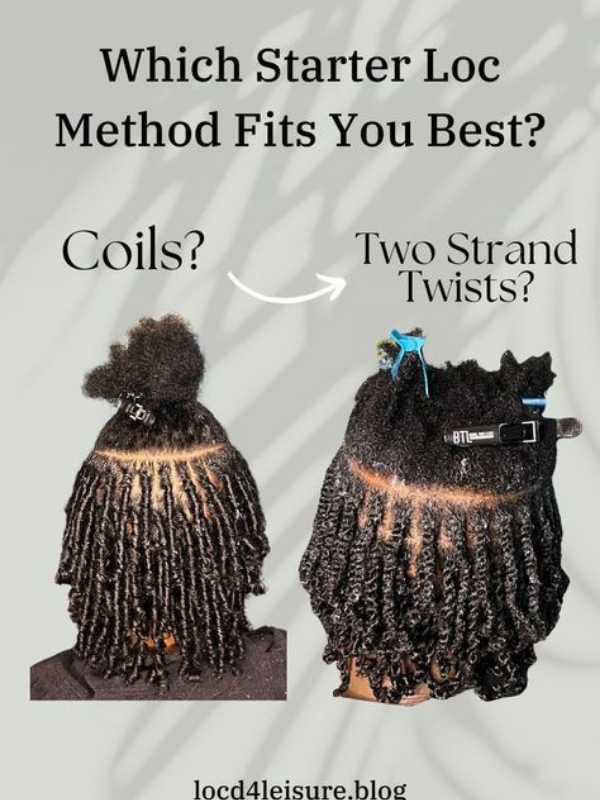
Comb coils, two-strand twists, braids, and interlocking create different starting structures.
For example, comb coils may look compact immediately after installation but can loosen as the hair is washed or manipulated.
Two-strand twists may retain a visible twist pattern for a while as the hair begins to develop.
Braided starter locs can also take time to develop a more compact appearance because the original braid pattern may remain visible during the early stages.
Interlocking can create a more secure structure from the beginning, depending on the technique used.
However, a secure initial appearance does not automatically mean that the locs have completed the natural maturation process.
When considering how long do starter locs take to mature, always account for the installation method rather than assuming every technique follows the same timeline.
Loc Size and Parting Pattern Can Affect Development
Loc size influences the amount of hair contained within each section.
Smaller locs and larger locs can develop differently because they contain different amounts of hair.
The parting pattern also determines how your hair is distributed across the scalp.
However, there is no universal rule that one loc size always matures faster than another.
The outcome depends on your hair’s characteristics, the installation technique, and how the locs are maintained.
Choosing a suitable size is more important than trying to select one solely to speed up maturity.
If you are planning your loc journey, read How to Choose the Best Parting Pattern for Locs.
Understanding your parting pattern can help you establish realistic expectations before installation.
Maintenance Habits Influence How Your Locs Develop
Your maintenance routine can influence the condition of your locs throughout the locking process.
Frequent manipulation may disturb developing sections, especially when the installation method is prone to unraveling.
Excessive tension can also weaken roots and contribute to breakage.
On the other hand, neglecting scalp hygiene can allow sweat, dirt, and product residue to accumulate.
The aim is to find a balance between appropriate cleansing and gentle handling.
Follow the maintenance instructions recommended for your loc method.
Avoid repeatedly retwisting your locs simply because you want them to look neat.
If you are unsure about your routine, ask your loctician to review it.
Hair Density and Strand Thickness Also Matter
Hair density refers to how much hair you have across your scalp, while strand thickness describes the size of individual hairs.
These characteristics can influence the appearance and structure of your locs.
For example, two people may have the same number of locs but different levels of fullness because their hair density and strand thickness differ.
The way your locs swell, compact, and develop can also vary.
If your locs appear thinner or fuller than expected, do not automatically assume that their maturity is progressing too quickly or too slowly.
Consider the characteristics of your hair and the way the sections were established.
Your loctician can help you determine whether the changes are expected or require attention.
How to Know When Your Starter Locs Are Maturing
Your Locs Begin to Feel More Compact
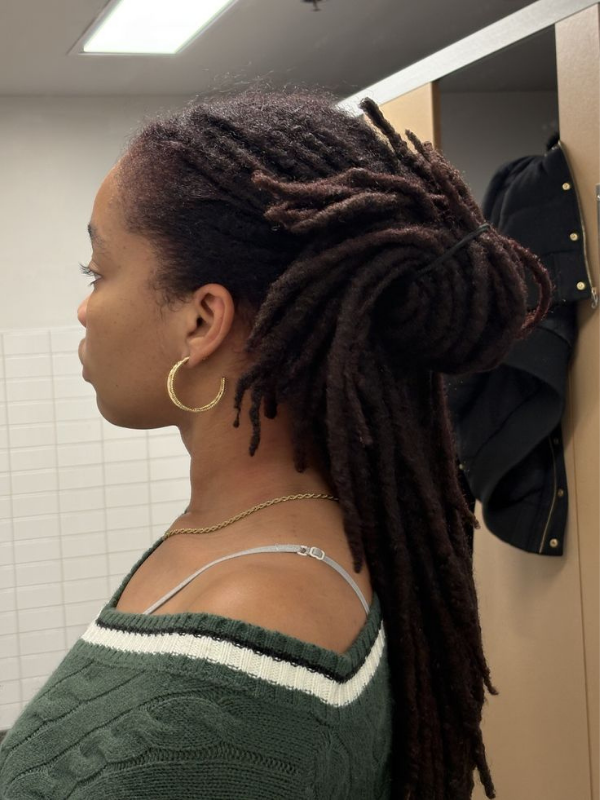
One sign of developing maturity is a change in how your locs feel.
Sections that once felt soft or loose may become more compact as the hair intertwines.
However, the amount of firmness varies between individuals.
Some locs remain relatively flexible even when they are well established.
You should not squeeze or repeatedly manipulate your locs to test whether they have matured.
Instead, pay attention to gradual changes in their overall structure.
If your locs are growing longer, How to Style Medium Length Locs offers more inspiration for everyday wear and special occasions.
Your Locs Hold Their Shape More Consistently
Newly installed locs may change shape frequently, especially after washing.
As they develop, some sections begin holding their shape more consistently.
You may notice that the locs are less prone to unraveling or that their overall structure becomes more established.
However, the result depends on the installation method.
Certain methods create a more secure appearance from the beginning, while others rely on gradual locking over time.
This means that shape retention alone cannot tell you whether every loc is fully mature.
The Texture Becomes More Established
As your locs develop, their texture may become more consistent.
You might notice that certain areas feel firmer or that the hair no longer separates as easily within the section.
However, mature locs can still have surface frizz.
Frizz is not necessarily a sign that your locs are immature.
Likewise, smooth-looking locs are not automatically mature.
Focus on the overall structure and condition rather than expecting a perfectly uniform appearance.
Your Locs Become Easier to Manage
As your locs become more established, you may find that ordinary handling becomes easier.
Washing, arranging, and maintaining the sections may feel less complicated than during the starter stage.
However, your locs still require care.
You will need to cleanse your scalp, avoid excessive tension, and follow a maintenance routine appropriate for your method.
Mature locs can also become heavy as they grow longer.
Therefore, maturity should not be confused with being able to ignore maintenance.
Not Every Loc Needs to Mature at the Same Time
Your locs may develop at different rates across your head.
Some sections may become compact sooner, while others remain softer for longer.
Differences in hair texture, density, friction, and installation can contribute to this variation.
You do not need to make every loc look identical to consider your journey successful.
However, if an individual loc becomes unusually thin, repeatedly breaks, or develops a weak area, ask an experienced loctician to examine it.
Healthy development matters more than uniformity.
What Happens to the Length and Thickness of Your Locs as They Mature?
Why Starter Locs May Look Shorter After Installation
Your locs may appear shorter immediately after installation because natural hair often shrinks.
The amount of shrinkage depends on your texture and the method used to form the sections.
As your hair develops, its appearance may change again.
Some locs may swell during budding before becoming more compact later.
These changes can make it difficult to judge your progress by length alone.
If your locs look shorter than you expected, do not automatically assume that your hair has broken.
Consider whether the change may be related to shrinkage or the developing structure of the locs.
Why Locs May Look Thicker During Budding
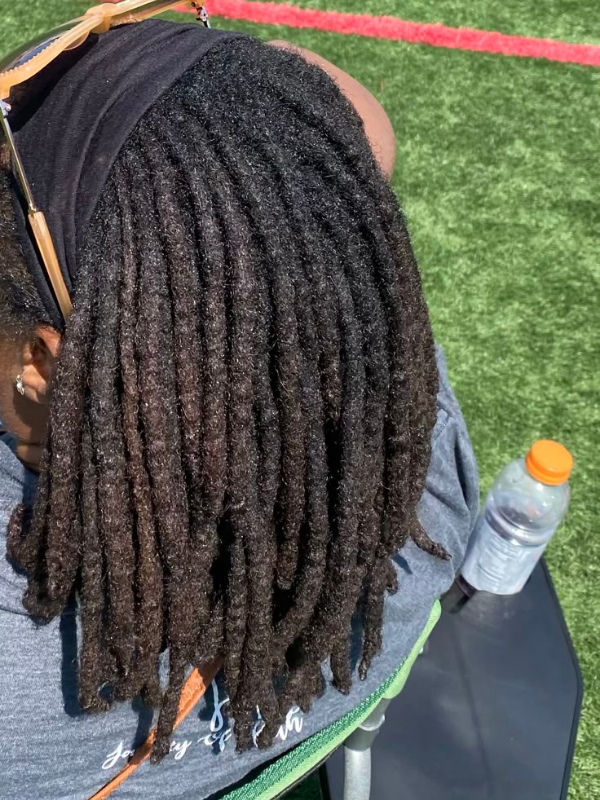
During budding, some sections become fuller or develop a spongy texture.
This can make your locs appear thicker than they did immediately after installation.
The change varies according to your hair and installation method.
Not every loc will swell to the same degree.
You may also notice that the middle of a loc looks fuller than the ends.
This can be part of the developing structure, although significant thinning or weakness should be assessed professionally.
Avoid squeezing or repeatedly manipulating the fuller areas to make them look more uniform.
Do Mature Locs Become Thinner Again?
Some locs may become more compact as they mature, which can change their overall appearance.
However, this does not mean that every loc will become thinner.
The outcome depends on the amount of hair in each section, the installation method, and the way the loc develops.
If your locs appear to be becoming progressively thinner, particularly near the roots, it is worth investigating the cause.
Repeated tension, aggressive maintenance, and breakage can affect loc thickness.
For more information, read Why Are My Locs Thinning at the Roots? 9 Causes and How to Fix Them.
Will My Locs Continue Growing After They Mature?
Yes. Your hair continues growing from the scalp after your locs become mature.
However, the visible length of your locs can change as the hair compacts and develops.
Some people notice that their locs seem to grow slowly because the hair is also changing in structure.
Length retention matters too.
If your hair breaks at a similar rate to which it grows, you may not notice much increase in visible length.
A gentle maintenance routine can help reduce avoidable breakage, although it cannot guarantee a particular growth rate.
How to Care for Starter Locs While They Mature
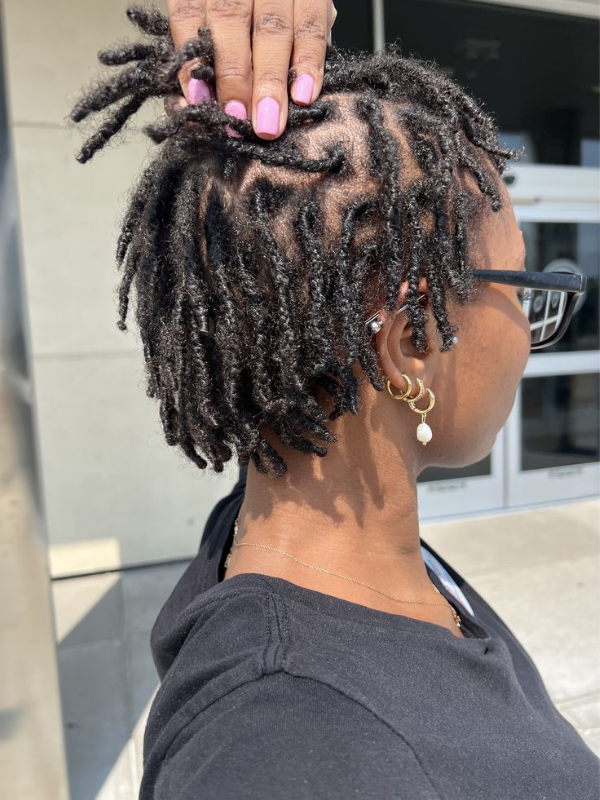
Keep Your Scalp Clean Without Disturbing Developing Locs
Scalp hygiene matters throughout your loc journey.
Sweat, dirt, excess oil, and product residue can accumulate over time, so cleansing remains important even when your locs are new.
However, the washing technique should suit your installation method.
Some starter locs are more likely to loosen during washing, especially during the early weeks.
Ask your loctician when to wash your hair and how to cleanse it without unnecessarily disturbing the sections.
Avoid rough scrubbing or pulling on the locs.
At the same time, do not avoid washing indefinitely out of fear that your locs might unravel.
If you need additional guidance, explore How to Do a Deep Cleanse for Locs: A Step-by-Step Guide.
A consistent cleansing routine helps support scalp comfort while your locs develop.
Use Products Carefully to Avoid Buildup
It is easy to assume that your locs need several oils, creams, and styling products to mature properly.
However, using more products does not automatically improve the locking process.
Heavy products can contribute to residue, especially when they are repeatedly applied without adequate cleansing.
Choose products according to your scalp and hair needs.
If your locs feel dry, consider whether your routine needs adjusting instead of automatically layering more oil or cream.
Avoid using thick waxes to force your locs to hold a particular shape unless a qualified professional has recommended an appropriate product for your method.
For guidance on managing accumulated residue, read How to Detox Your Locs at Home: A Step-by-Step Guide.
Avoid Retwisting Too Frequently
Retwisting can help maintain the appearance of certain loc methods, but doing it too frequently can place stress on your roots.
Your maintenance schedule should depend on your installation method, hair condition, and the recommendations of your loctician.
Do not retwist simply because your roots look loose.
New growth is a normal part of the process.
If you repeatedly tighten the same areas to create a freshly maintained appearance, you may weaken the roots over time.
Your locs can develop without looking perfectly neat every day.
For more information about maintenance choices, read What Happens When You Stop Retwisting Your Locs.
Protect Your Locs While Sleeping
Friction from bedding can disturb developing locs and contribute to breakage.
A comfortable satin or silk bonnet, scarf, or pillowcase can help reduce friction.
Choose a covering that fits properly without pulling on your hairline.
You do not need a complicated nighttime routine.
Simply protect your locs in a way that feels comfortable and works with your installation method.
If your covering leaves marks or creates pressure around your edges, choose a looser option.
Allow Your Locs to Dry Thoroughly After Washing
Proper drying is an important part of loc maintenance.
Locs can retain moisture, particularly when they are dense or tightly packed.
After washing, allow your hair enough time to dry thoroughly.
Avoid covering damp locs for extended periods.
You should also avoid excessive heat in an attempt to speed up the process.
If your hair repeatedly remains damp for long periods, ask your loctician whether your drying routine needs adjusting.
Keep Your Styling Routine Gentle
You do not have to avoid every hairstyle while your locs mature.
However, newly installed locs may be more vulnerable to unraveling or disturbance than established locs.
Choose styles that suit your hair’s current length and maturity.
Avoid tight ponytails, heavy accessories, or elaborate arrangements that require pulling on the roots.
As your locs develop, your styling options may increase.
For inspiration, explore How to Style Starter Locs Without Unraveling or Weakening Them.
The goal is to enjoy your hair while allowing it to develop naturally.
Can You Make Starter Locs Mature Faster?
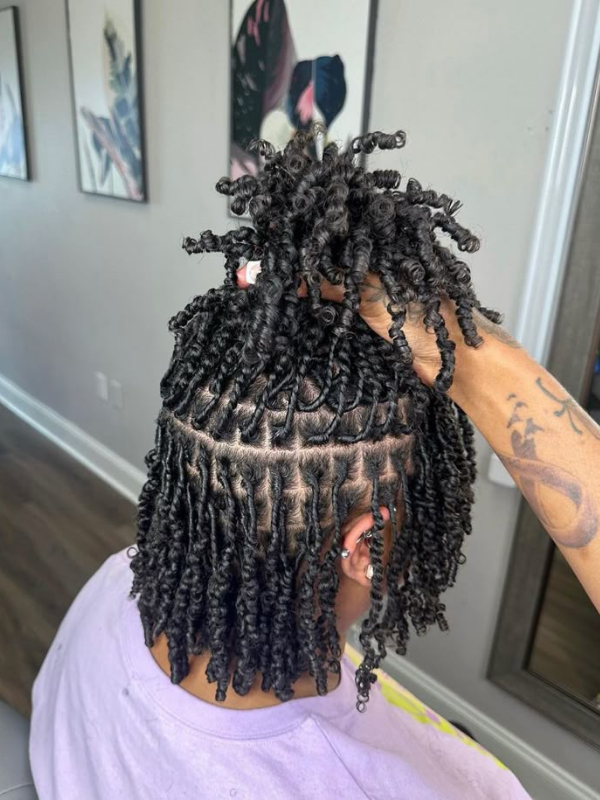
Understand What You Can and Cannot Control
It is natural to want your locs to mature quickly.
You may be eager to enjoy the appearance and styling options associated with established locs.
However, there is no reliable shortcut that guarantees mature locs within a specific timeframe.
Your hair’s texture, the installation method, and individual differences all influence development.
You can support your loc journey by maintaining a suitable routine, but you cannot force every section to mature on demand.
Be cautious of advice that promises to make locs mature in a few weeks.
Some techniques create a more established appearance immediately, but appearance and natural maturation are not necessarily the same thing.
Choose an Appropriate Installation Method
The installation method influences the starting structure of your locs.
Some methods produce a more secure appearance from the beginning, while others allow the hair to develop its structure gradually.
Your choice should reflect your hair’s characteristics, preferred loc size, and maintenance preferences.
Do not select a technique solely because someone claims it will make your locs mature faster.
An unsuitable method can create maintenance challenges or place unnecessary stress on your hair.
Discuss your options with an experienced loctician before installation.
Maintain a Consistent Routine
Consistency can help you avoid problems that interfere with your loc journey.
Follow appropriate cleansing instructions, protect your locs from unnecessary tension, and avoid repeated manipulation.
Your scalp also needs attention.
If you experience persistent irritation, redness, or unusual flaking, seek appropriate advice rather than covering the symptoms with additional products.
A healthy routine supports your hair’s condition, although it cannot guarantee a particular maturation date.
Avoid Constantly Manipulating Your Locs
Repeatedly twisting, pulling, separating, or squeezing your locs will not necessarily make them mature faster.
In some cases, excessive manipulation can weaken the roots or disturb developing sections.
Allow the hair to change naturally between maintenance appointments.
If you notice a loose section, ask your loctician whether it needs attention rather than automatically tightening it yourself.
Patience is part of the process.
Why Your Starter Locs May Seem Stuck in the Same Stage
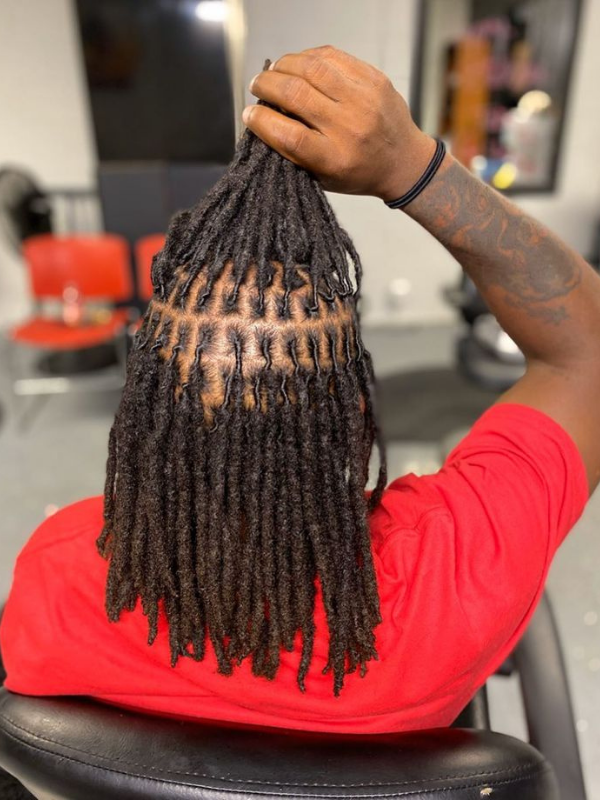
Your Locs Look the Same Every Month
Sometimes, changes in loc structure happen gradually enough that they are difficult to notice.
You may look at your hair every day and feel that nothing has changed.
However, small changes in texture, compactness, and shape may become more noticeable when you compare photographs taken several months apart.
If tracking progress helps you, take occasional photographs in similar lighting.
Avoid checking your hair constantly or repeatedly manipulating the locs to look for changes.
Your hair does not need to show obvious progress every week for the locking process to continue.
Some Locs Are Maturing While Others Are Not
Uneven development is common.
Your scalp does not necessarily produce identical hair in every area, and different sections may respond differently to the installation method.
Friction, density, and hair texture can also vary across your head.
Therefore, some locs may look more established than others.
Do not automatically assume that every slower section needs extra tightening.
If a loc remains unusually weak, repeatedly unravels, or shows signs of breakage, seek professional advice.
Otherwise, give the developing sections time.
Your Locs Look Frizzier Than Before
Frizz can become more noticeable as your hair develops.
This may happen because loose hairs begin moving away from the original shape of the section.
Although frizz can make locs look less neat, it does not automatically mean that they are unhealthy.
Avoid repeatedly retwisting the locs simply to remove surface frizz.
Instead, follow your maintenance routine and allow the hair to develop.
If you want to keep your locs looking presentable without unnecessary manipulation, the guidance in How to Fix Frizzy Locs Without Retwisting: Easy Tips That Work may help.
Your Locs Appear to Be Getting Shorter
Locs can appear shorter when the hair shrinks or the sections change shape.
Some locs also become more compact as they develop.
This means that visible length does not always tell the whole story.
However, if you notice sudden changes accompanied by breakage, thinning, or weak areas, arrange a professional assessment.
It is important to distinguish ordinary changes in appearance from signs of damage.
Styling Your Locs as They Mature
Hairstyles for the Starter Stage
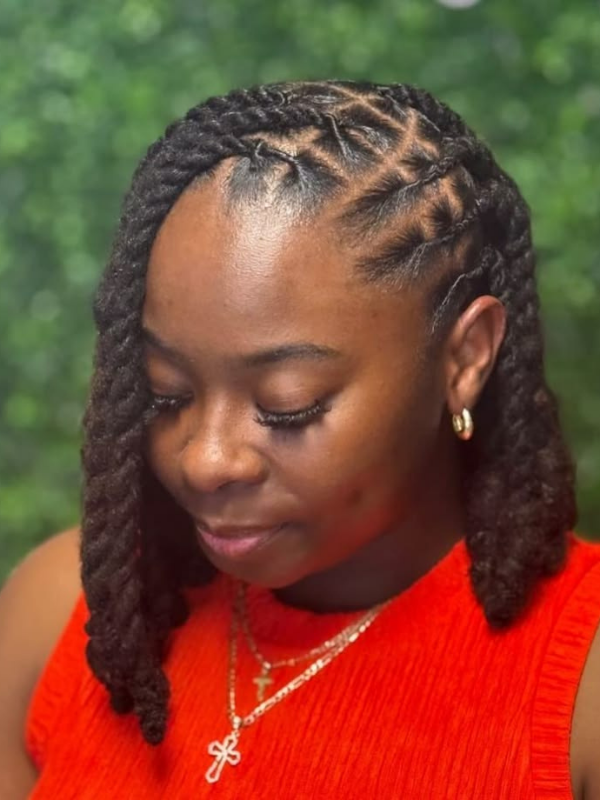
During the starter stage, simple hairstyles are often the most practical.
Depending on your hair length, you may be able to wear your locs naturally, use a comfortable headband, or arrange a small section away from your face.
Avoid styles that require pulling tightly on the roots.
Your locs may still be developing, so repeated manipulation can disturb the sections.
The goal is to enjoy your hairstyle without making maintenance more difficult.
Hairstyles for Budding and Teenage Locs
As your locs become more established, you may have additional styling options.
Depending on their length, you might try simple side parts, loose ponytails, or comfortable half-up styles.
However, styling flexibility depends on your hair rather than the stage name alone.
If your locs are still short, you may need to wait before attempting certain updos.
You should also consider the weight of your hair.
A style that looks attractive may not be comfortable if it pulls tightly on your roots.
Hairstyles for Mature Locs
Mature locs may offer greater flexibility because their structure is more established.
Depending on their length and size, you may be able to create buns, ponytails, twists, and elaborate updos.
However, mature locs still need gentle handling.
Long locs can become heavy, and tight hairstyles may place additional stress on your roots.
Choose styles that distribute the weight comfortably.
For ideas, read 10 Two Strand Twist Loc Styles That Are Too Beautiful to Ignore.
Common Mistakes That Can Make Your Loc Journey More Difficult
Comparing Your Locs With Someone Else’s
Comparing your locs with someone else’s can create unnecessary frustration.
You may have started your journey at the same time, yet your hair can develop differently because of texture, density, installation method, and maintenance habits.
One person’s locs may become compact earlier, while another person’s remain soft for longer.
Neither outcome automatically means that one person is doing something right and the other is doing something wrong.
Focus on your hair’s condition and seek guidance when you notice genuine concerns.
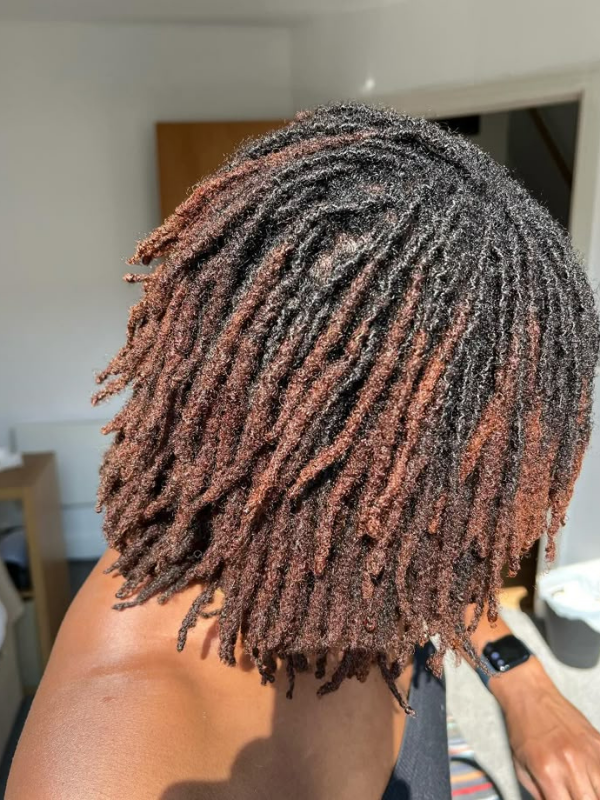
Retwisting Every Time Your Roots Look Loose
New growth is a normal part of the loc journey.
You do not need to tighten your roots every time they become visible.
Frequent retwisting can place unnecessary stress on the same sections.
Follow a maintenance schedule suited to your method and hair condition.
If you are unsure whether your locs need maintenance, ask your loctician.
Using Heavy Products to Force Your Locs Into Shape
Heavy products may temporarily change the appearance of your hair, but they do not guarantee faster maturity.
Some products can also contribute to buildup.
Choose products according to your hair’s needs and avoid layering them simply to create a smoother appearance.
A simple routine is often easier to maintain.
Ignoring Signs of Hair or Scalp Problems
Although frizz and unevenness can be normal, persistent discomfort should not be ignored.
If your scalp becomes painful, irritated, or unusually itchy, investigate the cause.
Similarly, thinning roots, repeated breakage, and weak sections may require professional attention.
Do not assume that every problem is part of the locking process.
Expecting Perfect Locs Within a Specific Timeframe
There is no universal date when every person’s locs become mature.
Your hair may need more time than you expected.
Instead of treating a particular month as a deadline, observe the changes happening over time.
The most useful goal is healthy, well-maintained locs rather than a specific maturity date.
FAQs About How Long Starter Locs Take to Mature
How long do starter locs take to mature completely?
Many locs take approximately 18 to 24 months to become well established. However, some mature sooner, while others require two to three years or longer. The timeline depends on hair texture, installation method, loc size, and maintenance.
Do starter locs mature faster with interlocking?
Interlocking can create a more secure structure from the beginning, but this does not automatically mean that the locs have completed their natural maturation. The overall timeline still depends on your hair and maintenance routine.
Do two-strand twist locs take longer to mature?
Two-strand twist locs may retain a visible twist pattern during the early stages. However, there is no universal timeline that applies to everyone who uses this method. Hair texture, loc size, and maintenance also matter.
Why are my locs frizzy after one year?
Frizz can remain visible during the first year and beyond. It is a normal feature of many loc journeys and does not automatically mean that your locs are unhealthy or immature.
Why are some of my locs maturing faster than others?
Your hair texture, density, friction, and installation method can vary across your scalp. These differences may cause individual locs to develop at different rates.
Do mature locs stop changing?
No. Mature locs can continue growing and changing in length, weight, and appearance. They still require cleansing and maintenance, even when their structure is well established.
Can starter locs mature in three months?
Three months is generally early in the loc journey. You may notice changes in texture or the beginning of budding, but that does not necessarily mean the locs are fully mature.
What is the difference between budding and mature locs?
Budding is a stage in which sections may become fuller, softer, or more compact in certain areas. Mature locs generally have a more established structure and hold their shape more consistently.
Can I speed up the maturation process?
There is no guaranteed way to make every loc mature faster. You can support the process by following a suitable maintenance routine, keeping your scalp clean, and avoiding unnecessary tension and manipulation.
When should I worry about my starter locs?
Consider seeking professional advice if your locs repeatedly break, become unusually thin, develop weak areas, or continue unraveling in ways that concern you. Persistent scalp irritation or pain also deserves attention.
Do starter locs shrink before they mature?
They can. Natural hair shrinkage and changes in the structure of the locs may affect visible length. A shorter appearance does not automatically mean that your hair has broken.
Will my starter locs look different after two years?
They may. Many people notice that their locs become more established over time, although the degree of change varies. Some sections may continue developing beyond two years.
Conclusion
Understanding how long do starter locs take to mature can help you approach your loc journey with greater confidence.
For many people, maturity takes approximately 18 to 24 months. However, some locs develop sooner, while others need two to three years or longer. Your hair texture, installation method, loc size, and maintenance routine all influence the process.
During the first few months, your locs may look neat, become frizzy, develop budding, or change shape several times. These changes can be surprising, but they are often part of the natural locking process.
As your hair develops, you may notice that some locs become more compact while others remain softer for longer. This unevenness does not automatically mean that something is wrong.
The best approach is to focus on healthy development rather than trying to reach a particular maturity date.
Keep your scalp clean, follow a suitable maintenance routine, avoid excessive tension, and choose hairstyles that work with your current loc stage. If you notice persistent breakage, thinning, or scalp discomfort, seek professional advice rather than assuming that every change is normal.
Most importantly, remember that your loc journey is personal. Your hair does not need to mature at the same speed as someone else’s.
With patience, consistent care, and realistic expectations, you can enjoy each stage while allowing your locs to develop naturally.