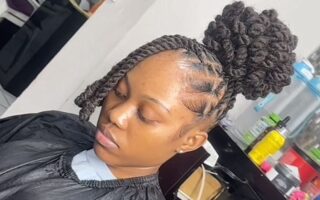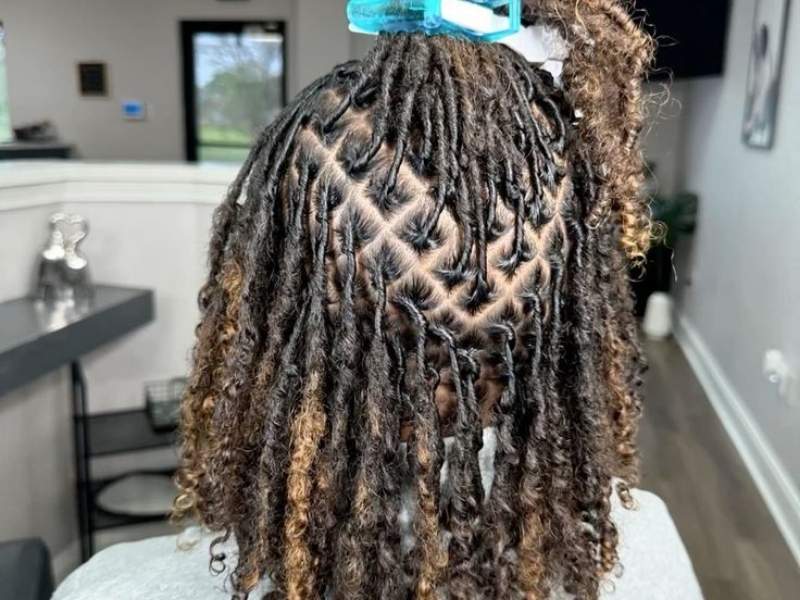
Deciding on a parting method begins with thinking on how you like to style your hair and loc styles you think you may want to try.
Starting your loc journey involves several important decisions, and choosing the right parting pattern is one of them.
Although you might focus on the size, length, and appearance of your future locs, the way your hair is sectioned at the beginning can influence how your locs look and fall as they mature.
The best parting pattern for locs depends on your preferred hairstyle, hair density, desired loc size, and maintenance routine. Some patterns create a neat, uniform appearance, while others offer a fuller look with less visible scalp.
Thinking of locing your short hair? Check out everything you need to know in our guide Starter Locs on Short Hair: What to Expect and How to Style Them
Whether you are starting traditional locs, micro locs, or another loc style, understanding your options can help you make a confident decision.
In this guide, you will discover the different loc parting patterns, their advantages and disadvantages, and how to choose the best one for your natural hair.
What Is a Parting Pattern for Locs?
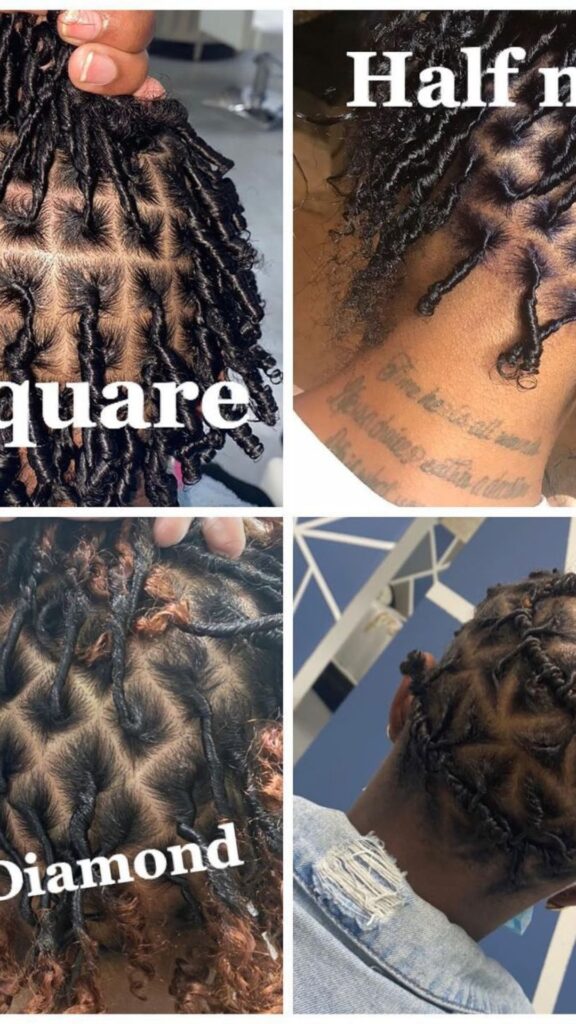
A parting pattern is the arrangement of sections created in your hair before individual locs are started. Think of it as the foundation that determines where each loc begins and how the locs are distributed across your scalp.
Common loc parting patterns include square, diamond, brick-lay, triangle, and organic or freeform sectioning.
Each pattern creates a different visual effect. For example, square parting produces straight rows and a structured appearance, while brick-lay parting staggers the sections to create a less aligned pattern.
To keep your locs fresh and free of product buildup, regular deep washing is essential. Check out our step-by-step instructions in How to Do a Deep Cleanse for Locs: A Step-by-Step Guide
Your parting pattern also influences how your scalp looks between your locs and how easily your hair can be styled. Because changing an established pattern can be difficult, it is worth discussing your options with an experienced loctician before installation.
Why Is Choosing the Right Loc Parting Pattern Important?
Choosing the right patterns isn’t just for aesthetics. Your patterns influences your scalp health and maintenance routine. Choosing the right parting pattern can make your locs look uniform, reduce tension on the scalp, and make retwisting easier.
Looking for some creative inspiration for your next big event or celebration? Explore our favorite ideas in Beautiful Loc Styles for Special Occasions That Will Make You Stand Out
So, selecting a suitable loc parting pattern is about more than achieving a beautiful hairstyle. It can influence several aspects of your loc journey.
1. It Influences the Appearance of Your Locs
Your parting pattern helps determine whether your locs have a structured, symmetrical appearance or a more natural, irregular look.
If you prefer neat rows and clearly defined sections, a square grid may suit you. If you want a fuller appearance with staggered parting lines, a brick-lay or diamond pattern may be more appealing.
2. It Helps Determine Loc Size and Distribution
The size of each section affects the amount of hair available to form an individual loc. Smaller sections generally create smaller locs, while larger sections typically produce thicker ones.
However, your hair density, texture, starter method, and the skill of your loctician also affect the final result.
Want to remove stubborn buildup and give your hair a deep, thorough cleanse? Learn how to do it safely with our guide on How to Detox Your Locs at Home: A Step-by-Step Guide
3. It Affects Styling Options
Certain parting patterns make it easier to create symmetrical hairstyles, defined parts, and neatly arranged updos.
Other patterns allow the locs to fall in a less uniform arrangement. Your preferred hairstyles should therefore be considered before selecting a pattern.
4. It Influences Long-Term Maintenance
An organized parting pattern can make individual locs easier to identify during maintenance. Nevertheless, the amount of maintenance required depends more broadly on your installation method, hair growth, and chosen routine.
Trying to decide between Sistelocks and traditional locs? Weigh the differences to see which method fits your lifestyle in our guide on Sisterlocks vs. Traditional Locs: Which One Is Right for You?
Most importantly, a parting pattern should never be so tight that it causes discomfort or places excessive tension on your scalp.
5 Popular Parting Patterns for Locs
Here are five common parting patterns to consider when starting your loc journey.
1. Square Parting Pattern
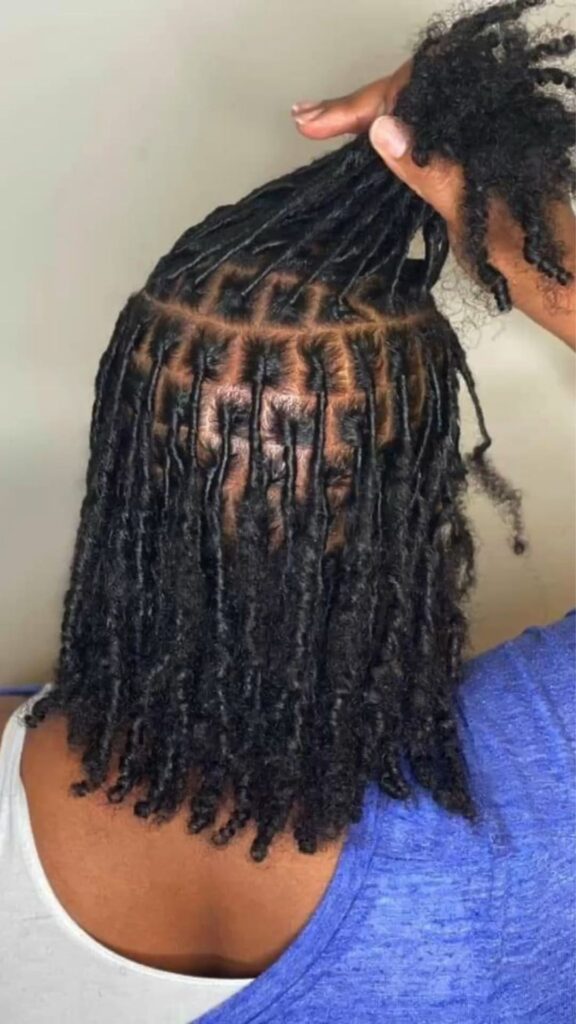
The square parting pattern, also known as the grid pattern, divides the hair into square or rectangular sections arranged in orderly rows.
It is one of the most recognizable options for traditional locs because it creates a clean, structured foundation.
If you are leaning toward this parting pattern for a bolder look, maintain the hair’s volume and scalp health using our Thick Locs: 9 Tips for Fuller, Healthier-Looking Locs
Benefits of square parting:
- Creates a neat, organized appearance.
- Makes individual loc sections easy to identify.
- Works well for people who prefer uniform rows.
- Can simplify maintenance when the sections are planned consistently.
Potential drawbacks:
- Straight parting lines may make the scalp more noticeable.
- Uneven section sizes can affect the uniformity of the finished locs.
- It may not provide the less structured appearance some people prefer.
Who should choose it?
Square parting is ideal for people who enjoy clean lines, symmetrical hairstyles, and a structured loc foundation. It can work for various hair textures and loc sizes when the sections are designed appropriately.
2. Diamond Parting Pattern

Diamond parting divides the hair into diamond-shaped sections rather than squares. The arrangement creates a distinctive geometric pattern across the scalp.
Depending on the section size and how the locs fall, this pattern can create a visually balanced appearance and help reduce the prominence of continuous straight parting lines.
Benefits of diamond parting:
- Creates an attractive geometric design.
- Offers an alternative to traditional square grids.
- Can help the locs fall in a more staggered arrangement.
- Works well for people who want a distinctive foundation.
Potential drawbacks:
- Requires careful sectioning to maintain consistency.
- Can take more planning than a simple square grid.
- The final appearance depends on hair density, loc size, and installation technique.
Who should choose it?
Diamond parting may suit people who want a structured pattern with a little more visual interest than a conventional grid.
Wondering what’s really behind those stubborn flakes? Find out the root causes and best treatments in What Really Causes Dandruff with Locs and How to Treat It.
3. Brick-Lay Parting Pattern
Brick-lay parting uses staggered sections, similar to the arrangement of bricks in a wall. Instead of placing each section directly above the one beneath it, the rows are offset.
This arrangement can reduce the appearance of long, continuous parting lines and may help create the impression of fuller coverage.
Benefits of brick-lay parting:
- Creates a staggered, balanced arrangement.
- Can make straight scalp lines less noticeable.
- Offers a neat appearance without a conventional square grid.
- Can work with different loc sizes.
Potential drawbacks:
- Requires thoughtful section placement.
- May be less suitable for someone who specifically wants straight, aligned rows.
- The finished look varies depending on how the locs naturally fall.
Who should choose it?
Brick-lay parting is a good option if you want an organized foundation but prefer the sections to appear less rigidly aligned.
4. Triangle Parting Pattern
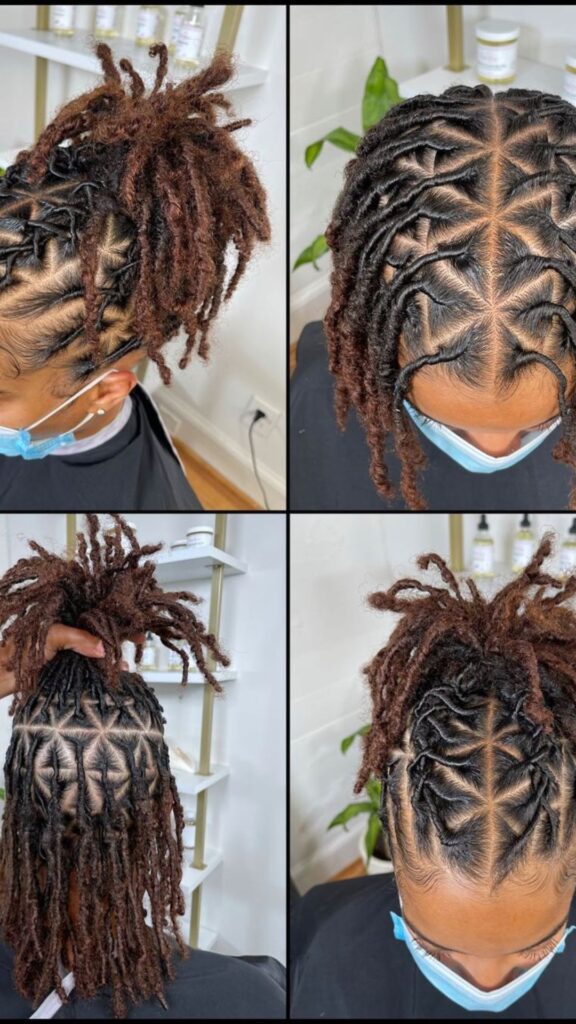
Triangle parting involves dividing the hair into triangular sections before creating the locs. The resulting arrangement gives the scalp a geometric appearance that differs from square and diamond patterns.
Triangle parting can be used to create a distinctive loc foundation, especially for people who enjoy creative sectioning.
Benefits of triangle parting:
- Creates a unique geometric design.
- Provides an alternative to conventional grids.
- Can complement carefully planned loc sizes.
- Offers a distinctive look when the locs are styled or separated.
Potential drawbacks:
- Requires precision to keep the sections balanced.
- May be more complicated to plan around the hairline and crown.
- The final appearance may differ from the original pattern as the locs mature.
Who should choose it?
Consider triangle parting if you enjoy creative hairstyles and want a distinctive sectioning pattern. Ask your loctician to show you examples on hair with a similar density and loc size.
5. Organic or Freeform Parting
Organic parting does not follow a strict geometric arrangement. Depending on the approach, the hair may be sectioned more freely or allowed to form locs with minimal deliberate parting.
This approach generally produces a less uniform appearance, with locs that may vary in size, shape, and spacing.
Benefits of organic parting:
- Creates a natural, less structured appearance.
- Allows greater variation in loc size and placement.
- Appeals to people who prefer a more individual look.
- Can suit a less uniform loc aesthetic.
Potential drawbacks:
- Loc sizes and spacing may be less predictable.
- Uniform, symmetrical hairstyles can be more challenging.
- Maintenance needs vary according to the method used and the desired result.
Who should choose it?
Organic or freeform approaches may suit people who value individuality and prefer their locs to develop without a highly structured grid.
Keep in mind that freeform locs do not automatically require zero maintenance. The amount of separation, washing, and intervention depends on your chosen approach and hair needs.
Thinking about breaking away from the maintenance routine and letting your roots do their own thing? Read all about it in our guide What Happens When You Stop Retwisting Your Locs
How to Choose the Best Parting Pattern for Your Hair
Now that you understand the main options, consider the following factors before making your decision.
1. Consider Your Desired Loc Size
Your preferred loc size is one of the first things to discuss with your loctician.
If you want small locs, your hair will generally need smaller sections. If you prefer thick, chunky locs, larger sections may be appropriate.
However, the size of each section should also account for your hair density and the strength of the hair in that area. A professional can help you choose a pattern that distributes the hair appropriately.
2. Think About Your Hair Density
Hair density refers to how much hair you have across your scalp. People with lower-density hair may want a pattern that provides a balanced appearance without exposing more scalp than they are comfortable with.
Brick-lay and diamond patterns may help soften the appearance of straight parting lines, but they cannot increase actual hair density.
People with dense hair have more flexibility in how their sections are arranged, although the appropriate loc size still depends on individual hair characteristics.
3. Consider Your Hair Texture
Your hair texture affects how it behaves during installation and as the locs develop. Curl pattern, strand thickness, and the hair’s ability to hold a starter method can all influence the installation process.
There is no single parting pattern that is best for every hair texture. Square, diamond, brick-lay, and other patterns can work across different hair types when planned properly.
Discuss your texture and preferred starter method with an experienced loctician before choosing.
4. Think About Your Favorite Hairstyles
Do you enjoy wearing middle parts, side parts, ponytails, buns, or braided loc styles?
Your preferred hairstyles should influence how the hair is sectioned, especially around the front, crown, and sides of your head.
For example, if you frequently wear a middle part, tell your loctician before installation so the overall sectioning can accommodate your preference.
Remember that your parting pattern and your everyday styling part are related but not identical. A particular grid does not guarantee that your hair will always fall in one direction.
5. Consider Your Lifestyle and Maintenance Routine
Think about how much time you can dedicate to your locs. A neat, organized pattern may make individual sections easier to identify during maintenance, while organic approaches offer a different appearance and management experience.
Neither option is automatically maintenance-free. Your routine should reflect your installation method, scalp needs, and the stage of your loc journey.
Choose a pattern that you can comfortably maintain over time rather than one that looks attractive only on installation day.
6. Discuss Your Options With a Professional Loctician
Before installation, ask your loctician to explain the advantages and disadvantages of your preferred patterns.
A professional should consider your hair density, desired loc size, hairline, scalp condition, and preferred hairstyles.
If you are considering Sisterlocks specifically, seek a consultant trained in the official Sisterlocks system rather than assuming that any traditional loc grid is interchangeable with its specialized installation pattern.
Common Mistakes to Avoid
Choosing your pattern carefully can help you avoid disappointment later. Watch out for these common mistakes.
Choosing a pattern based only on pictures: A pattern that looks beautiful on someone else may not produce the same appearance on your hair. Consider differences in density, loc size, texture, and length.
Ignoring your preferred hairstyles: If you frequently wear your hair in a particular direction, discuss this before installation.
Making sections too small or too large without professional guidance: Section size should be appropriate for your hair and the type of locs you want.
Expecting the pattern to improve hair growth: Parting patterns influence appearance and section placement, but they do not determine how quickly your hair grows.
Ignoring scalp discomfort: Installation should not involve excessive pulling or persistent pain. Repeated tension can contribute to hair loss, so address discomfort promptly.
Forgetting that the decision is long-term: Changing the parting arrangement after your locs mature can be difficult. Review the pattern carefully before installation begins.
Can You Change Your Loc Parting Pattern Later?
Yes, some adjustments may be possible, particularly while your locs are still in their early stages. However, changing the original pattern becomes more difficult as the locs mature and become established.
Depending on the situation, a loctician may be able to adjust how certain locs are separated or positioned. A major change may require substantial manipulation or restarting parts of the loc journey.
If you are unhappy with your current pattern, consult an experienced professional before attempting to combine, split, or reposition your locs yourself.
It is best to choose a pattern you are comfortable with from the beginning.
FAQs
1. What is the best parting pattern for starter locs?
The best parting pattern depends on your desired loc size, hair density, preferred appearance, and maintenance routine. Square parting suits people who like uniform rows, while brick-lay and diamond patterns offer staggered arrangements. A loctician can help you decide which option suits your hair.
2. Which loc parting pattern makes hair look fuller?
Brick-lay and diamond parting may make scalp lines less noticeable because their sections are staggered. However, the appearance of fullness also depends on hair density, loc size, and how your hair falls. No parting pattern can increase the actual amount of hair you have.
3. Can I choose my own parting pattern for locs?
Yes. You can discuss your preferred parting pattern with your loctician before installation. Sharing reference pictures and explaining your favorite hairstyles can help you agree on a pattern that suits your hair and long-term goals.
4. Does a loc parting pattern affect hair growth?
A parting pattern does not determine your natural hair growth rate. However, section size, installation technique, and tension can affect how well your hair is maintained. Avoid tight installations and styles that repeatedly pull on the scalp.
5. Can I change my parting pattern after starting locs?
Changing your pattern may be possible in some cases, especially during the early stages, but it becomes more difficult as locs mature. Consult a professional before attempting major adjustments to avoid unnecessary manipulation or damage.
Choice-based Pattern
Choosing the best parting pattern for locs is an important step in creating a hairstyle that reflects your personality and fits your lifestyle. Square, diamond, brick-lay, triangle, and organic patterns each offer different visual effects and styling possibilities.
Before making your choice, consider your desired loc size, hair density, texture, favorite hairstyles, and maintenance preferences. Most importantly, work with an experienced loctician who can create suitable sections without placing unnecessary tension on your scalp.
Your loc journey is personal, and the best parting pattern is one that supports the look you want while allowing you to care for your hair comfortably as your locs mature.