Mature locs are an important milestone in a loc journey because they show how your hair has changed from newly formed sections into more established, compact strands. However, knowing when your locs are fully mature can be confusing, especially when your hair still looks frizzy, feels soft in certain areas, or develops new growth around the roots. You may wonder whether your locs need more time, whether their texture should feel different, or whether their appearance is a reliable sign of maturity.
The truth is that loc maturity is not determined by length alone. Your locs can grow longer without becoming fully mature, and some shorter locs can develop a stable structure before they reach a particular length. Hair texture, installation method, maintenance habits, and individual growth patterns all influence how the process unfolds.
Understanding these differences helps you care for your hair more confidently. Instead of comparing your locs with someone else’s, you can learn to recognize the physical changes that indicate your locs are becoming more established.
You may notice that your locs feel firmer, hold their shape more consistently, and become less likely to unravel. Their texture may also change as loose hairs gradually intertwine and compact. However, these changes do not happen at exactly the same time for everyone.
In this guide, we will explore the signs of mature locs, the stages of development, the factors that affect maturity, and the maintenance habits that support healthy hair. You will also learn how to distinguish normal frizz from potential problems, understand why some locs mature more slowly, and recognize when your hair needs professional attention.
Whether you started your locs several months ago or have been growing them for years, this guide will help you understand your progress and make informed decisions about your loc journey.
What Are Mature Locs and How Do They Differ From Locs That Are Still Developing?
Understanding the Meaning of Fully Mature Locs

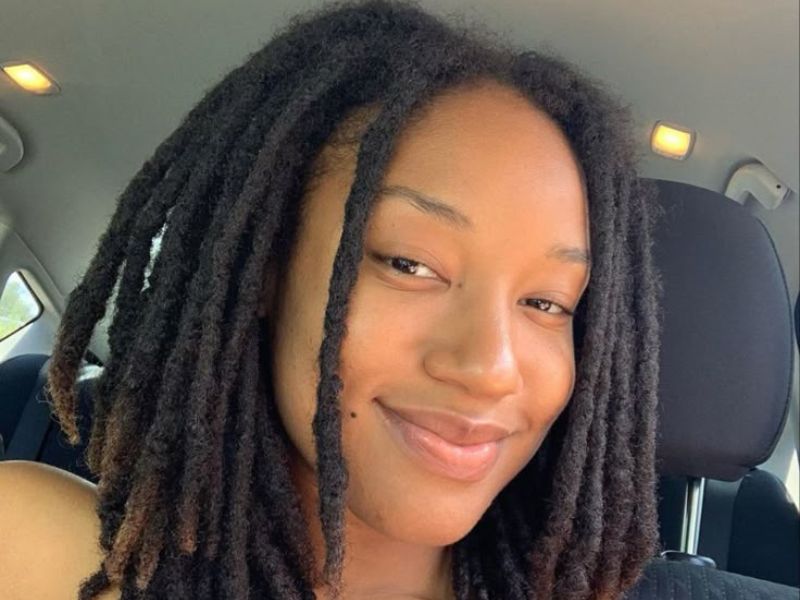
Mature locs are locs that have developed a more established internal structure through the natural interlocking and compaction of hair strands. During this process, loose hairs gradually become incorporated into each loc, creating a more stable form.
However, maturity does not mean that every strand has become perfectly smooth or that every loc has the same thickness. Natural hair varies, and individual locs may develop slightly different textures even when they belong to the same person.
When you examine mature locs, you may notice that they retain their shape more consistently. They can feel firmer than newly installed locs, and their internal structure is generally more established.
Mature locs also continue to change as your hair grows. New growth appears at the roots, the length may increase, and the surface can develop some frizz. These changes do not automatically mean your locs have lost their maturity.
The important distinction is between a loc that has developed a stable structure and one that is still forming its shape.
Your hair does not need to look perfect to be mature. Instead, look at its overall structure, consistency, and ability to maintain its form.
How Mature Locs Differ From Starter Locs
Starter locs are newly formed sections that have not yet developed the same level of internal compaction as established locs.
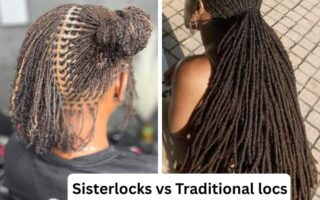
Depending on the installation method, starter locs may look like comb coils, two-strand twists, braids, or small sections of textured hair.
At this stage, they can be more vulnerable to unraveling or changes in shape. They may also appear shorter because of shrinkage.
As the hair develops, loose strands gradually become more integrated into the sections. The locs may feel firmer, become fuller in certain areas, and develop a more established appearance.
By comparison, mature locs generally retain their structure more consistently, although the amount of visible frizz and the feel of each loc can vary.
If you are still learning how to care for newly formed sections, read How to Style Starter Locs Without Unraveling or Weakening Them. It explains why gentle styling matters while locs are developing.
Why Length Alone Does Not Determine Loc Maturity
Long locs are not necessarily mature locs.
Your hair can gain length while the strands inside each section continue to develop. Similarly, locs that are relatively short may already have a more established structure.
This distinction is important because many people use length as their main measure of progress.
However, the length of your locs does not tell you everything about their internal structure. You also need to consider how compact the hair feels, whether the sections retain their form, and how consistently they behave during normal care.
For example, a long loc that still has a loose structure may need more time to mature. A shorter loc that has developed a stable structure may be further along in the process.
The best approach is to consider several signs together rather than relying on a single measurement.
The Main Signs That Show Your Locs Are Becoming Fully Mature
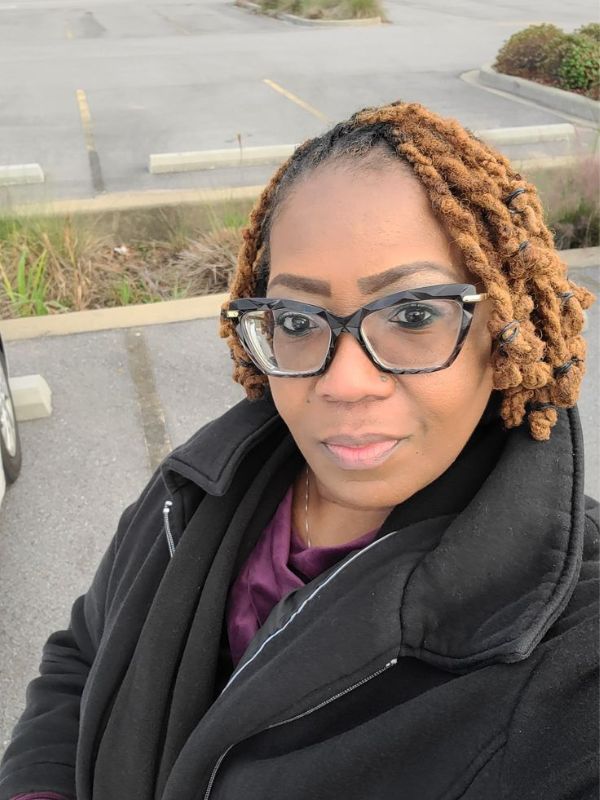
Your Locs Feel Firmer and More Established
One of the clearest signs of maturity is a change in how your locs feel.
Newer locs may feel soft, fluffy, or relatively loose because their internal structure is still developing. As the hair gradually compacts, the locs can become firmer and more cohesive.
You may notice that the strands feel more integrated instead of behaving like separate sections of hair.
However, firmness varies according to hair texture, loc size, and installation method. Not every mature loc feels hard or dense.
You should also avoid squeezing your locs repeatedly to test their structure. Excessive handling is unnecessary and can disturb the surface.
Instead, pay attention to how your hair behaves during ordinary washing, drying, and styling.
If your locs generally retain their shape and feel more established than they did during the early stages, they may be progressing toward maturity.
Remember that firmness is only one indicator. It becomes more meaningful when combined with other signs of development.
Your Locs Hold Their Shape More Consistently
Developing locs can change shape when they become wet, are manipulated, or experience friction.
Depending on your installation method, individual sections may loosen or appear less defined after washing.
As your locs mature, their structure generally becomes more stable. They are more likely to retain their overall form during ordinary hair care.
This does not mean that mature locs never change shape. Water, styling, new growth, and friction can still affect their appearance.
However, the internal structure is usually more established than it was during the early stages.
Mature locs may also become easier to arrange because their sections are less dependent on the original installation pattern.
Avoid using tight retwisting or excessive manipulation to force your hair to hold a particular shape.
Instead, observe whether your locs naturally maintain their structure over time.
Your Locs Become Less Prone to Unraveling
Another useful sign is reduced unraveling.
Newly installed coils, twists, and braids can loosen because the hair has not yet developed a stable internal structure. Some methods are more prone to this than others.
As the locs develop, loose hairs become more integrated into the sections. This can make the locs less likely to unravel during normal activities.
However, the absence of unraveling does not automatically prove that your locs are fully mature. Certain installation methods create a secure appearance from the beginning.
Similarly, mature locs may still have loose ends or surface hairs.
The key is to consider how your locs behave over time and whether their structure has become more established.
If you continue to experience significant unraveling, ask your loctician whether it is expected for your method.
Avoid repeatedly tightening your locs to solve the problem without understanding its cause.
Your Locs Feel More Compact Throughout Their Length
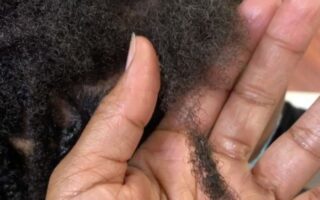
During the development process, some locs may feel loose in the middle or have areas that are more compact than others.
As the hair matures, the internal structure often becomes more integrated.
You may notice fewer areas that feel unusually soft or loosely formed. The locs may also feel more consistent along their length.
However, mature locs do not need to have a perfectly uniform texture.
Some locs naturally develop thicker areas, narrower sections, or differences in density. These variations can reflect hair texture, section size, and the way individual locs have developed.
Do not attempt to make every section identical by pulling, squeezing, or tightening it.
Instead, focus on the overall condition of your hair and whether the locs are developing a stable structure.
If a section becomes unusually thin, weak, or starts breaking, seek professional advice rather than assuming that the change is part of normal maturation.
Your Locs Develop a More Established Appearance
The appearance of your locs may change considerably as they mature.
Newer locs can look fluffy, separated, or similar to the twists and coils used during installation.
Over time, the hair may become more compact, creating a more established loc shape.
Some people notice that their locs appear fuller during certain stages, while others observe more visible shrinkage or changes in thickness.
These differences are normal because hair textures and installation methods vary.
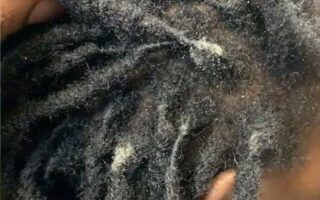
Mature locs can also have surface frizz, especially around the roots or along the length. Frizz alone is not a reliable sign that your locs are immature.
Instead, consider whether the internal structure is stable and whether your locs have developed beyond their original installation form.
The most useful assessment combines appearance with texture, structure, and behavior.
How Long Does It Take for Locs to Become Fully Mature?

Understanding Why There Is No Exact Maturity Deadline
Locs do not mature according to a universal timetable.
Some people notice substantial structural changes within the first year, while others require longer before their locs develop the density and stability they expect.
The timeline depends on several factors, including hair texture, section size, installation method, and maintenance habits.
For example, smaller locs may develop differently from larger traditional locs. Interlocked locs may also have a different initial structure from locs formed through twists or coils.
This is why you should avoid deciding that your locs must be mature by a particular birthday or anniversary.
The age of your locs provides useful context, but it does not establish maturity on its own.
Instead, look for consistent changes in structure, compactness, and stability.
If your locs still seem to be developing, that does not necessarily mean anything is wrong.
Give your hair time and seek professional guidance when you are uncertain about its progress.
What You May Notice During the First Six Months
The first six months often involve considerable changes in appearance and texture.
Your locs may shrink, develop frizz, loosen in certain areas, or begin forming compact sections.
Some people notice budding during this period. Others experience a more gradual transition.
The process depends on your hair and the method used to establish the locs.
During these early months, it is helpful to focus on gentle maintenance rather than trying to make the locs look mature immediately.
Avoid repeatedly twisting the roots or pulling loose hairs into place simply to create a uniform appearance.
Your priority should be keeping your scalp comfortable and following a routine suitable for your installation method.
If you want to understand how shorter starting lengths affect the early stages, explore Starter Locs on Short Hair: What to Expect and How to Style Them.
What May Change Between Six and Twelve Months
Between six and twelve months, some locs begin to feel more established.
You may notice that the sections hold their shape more consistently or that the hair inside each loc feels more compact.
However, this is not a guarantee that every loc will mature within the first year.
Some sections may develop faster than others, especially when the hair has different textures across the scalp.
Your maintenance method can also affect the appearance of your locs during this period.
Continue following appropriate care instructions, and avoid increasing manipulation simply because you want a neater result.
The most important question is whether your locs are developing a stable structure, not whether they have reached a particular month.
What Happens After the First Year?
After the first year, many people notice that their locs have changed significantly from their original appearance.
The sections may be more compact, their texture may feel different, and their length may have increased.
However, the first anniversary does not automatically mean your locs are fully mature.
Some locs continue developing well beyond the first year, while others establish their structure earlier.
You may also find that your roots remain softer because new hair continues to grow.
That is normal. New growth does not need to have the same texture as the mature length of your locs.
Continue caring for your scalp and roots while allowing the established sections to retain their natural structure.
How the Budding Stage Helps Your Locs Develop Their Mature Structure
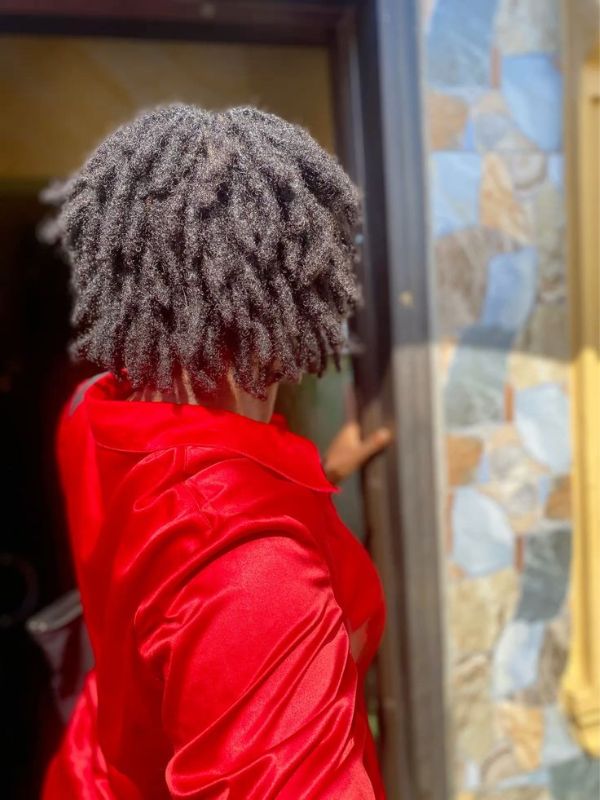
What Budding Means During the Loc Journey
Budding is a stage in which sections of hair may develop fuller or more compact areas as strands begin to intertwine.
You might notice that a loc feels thicker in the middle or has an uneven texture compared with its original shape.
This can be part of the normal development process.
However, not every person experiences budding in exactly the same way. The timing and appearance depend on the hair and installation method.
During budding, you may feel tempted to squeeze the fuller areas or pull the surrounding hairs into place.
Avoid doing this repeatedly.
The hair needs time to develop, and excessive manipulation can disturb the sections.
If you are unsure whether a change represents normal budding or a structural problem, ask an experienced loctician to assess it.
Why Budding Can Make Your Locs Look Uneven
Budding does not always occur uniformly across the head.
Some locs may develop fuller areas earlier than others. One section may feel compact while another remains relatively soft.
This can create an uneven appearance that makes people wonder whether their locs are developing correctly.
However, variation does not automatically indicate a problem.
Different hair textures, section sizes, and levels of friction can influence the way individual locs develop.
Instead of trying to force every section into the same shape, observe the overall progress.
If a loc has a weak point, begins breaking, or develops a narrow section that appears to be worsening, seek professional advice.
The aim is to distinguish normal texture changes from changes that may affect the strength of your locs.
How to Care for Your Locs During Budding
The best approach during budding is gentle, consistent maintenance.
Keep your scalp clean, avoid excessive product buildup, and follow a suitable washing routine.
You should also avoid repeatedly retwisting the same sections simply because their appearance has changed.
Your loctician can recommend a maintenance schedule that suits your method and the condition of your hair.
If you notice frizz around budding areas, remember that frizz is not automatically a problem.
For more guidance, read How to Fix Frizzy Locs Without Retwisting: Easy Tips That Work.
This can help you understand why frequent retwisting is not always necessary to maintain a tidy appearance.
How Hair Texture and Loc Size Influence Maturity
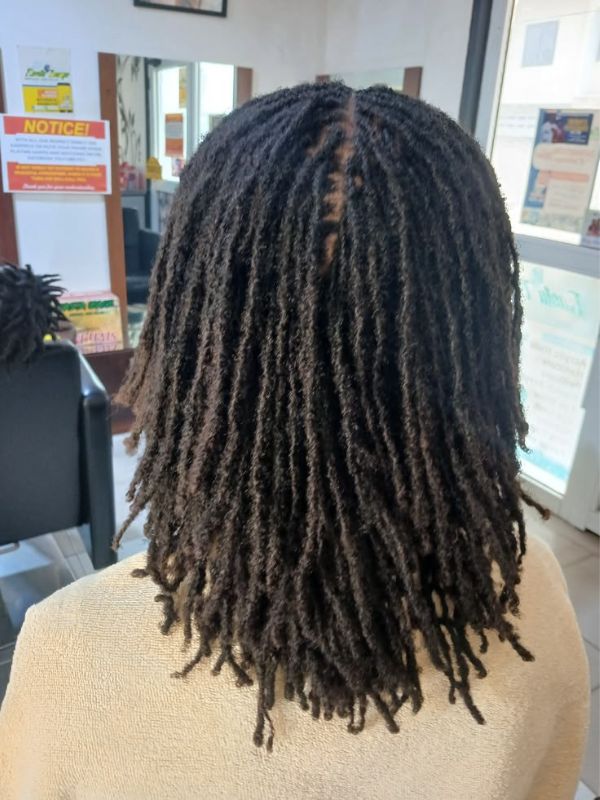
How Natural Hair Texture Affects the Process
Hair texture can influence how locs form and develop.
Tightly coiled hair may hold certain starter techniques differently from hair with a looser curl pattern.
This can affect how quickly the sections appear to compact and how they respond to washing or manipulation.
However, texture alone does not determine the exact maturity timeline.
Your installation method, section size, maintenance habits, and individual hair characteristics also matter.
Two people with similar curl patterns may experience different development stages.
For this reason, avoid assuming that your locs should mature at the same rate as someone else’s.
Focus on the structure of your own hair and ask a professional for guidance when needed.
How Smaller Locs May Develop Differently From Larger Locs
Loc size can affect the appearance and maintenance of your hair.
Smaller locs contain less hair in each individual section, while larger locs contain more.
This difference can influence the way the locs feel, how they are maintained, and how their internal structure develops.
However, smaller locs do not automatically mature faster, and larger locs do not necessarily take longer.
The result depends on several factors rather than size alone.
Your preferred loc size should also reflect your hair density, styling goals, and ability to maintain the sections.
If you are still deciding which structure suits your hair, read How to Choose the Best Parting Pattern for Locs.
The article can help you understand how parting patterns influence loc distribution and overall appearance.
Why Different Locs on the Same Head May Mature at Different Rates
Your hair does not necessarily behave identically across the scalp.
Some areas may have a tighter curl pattern, while others may feel softer or have a different density.
Friction also varies. For example, the hair around the back of your head may experience more contact with pillows or clothing.
These differences can affect the appearance and development of individual locs.
Consequently, you may have several locs that feel compact while others remain softer.
This is not automatically a reason to change your maintenance routine.
Observe the overall condition of your hair and avoid tightening individual locs unnecessarily.
If the differences involve progressive thinning, breakage, or persistent discomfort, seek an assessment from a qualified professional.
The Difference Between Mature Locs and Locs That Are Simply Longer
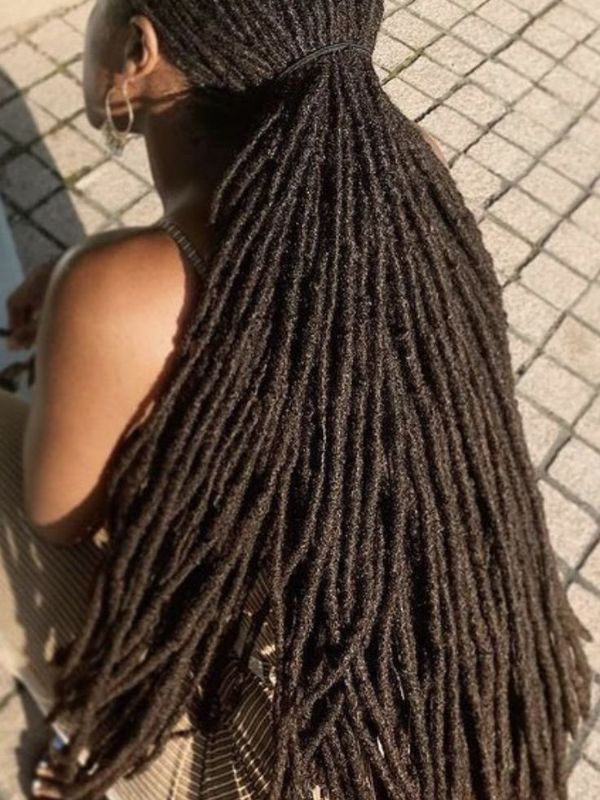
Why Length Can Be Misleading
It is easy to assume that longer locs are more mature because they have been growing for a while.
However, length and maturity describe different things.
Length refers to how far your hair extends from the scalp. Maturity refers to how established the internal structure of each loc has become.
Your hair can continue gaining length while the strands inside each loc undergo further compaction.
Similarly, some shorter locs may already have a relatively stable structure.
When assessing mature locs, consider more than the length visible in the mirror.
Look at whether the sections retain their form, whether the internal structure feels established, and whether the locs behave consistently during normal maintenance.
This approach gives you a more realistic understanding of your progress.
Why Mature Locs Can Still Look Shorter After Washing
Natural hair can shrink, and locs may appear shorter after washing or drying.
This does not automatically mean they have lost length or become less mature.
The amount of visible shrinkage varies according to hair texture, loc structure, and the way the hair responds to moisture.
Some locs may appear fuller or more compact after washing, while others may look temporarily different.
Avoid pulling your locs to measure their length while they are wet.
Instead, allow them to dry thoroughly and observe their natural appearance.
If you are concerned about changes in length, compare photographs taken under similar conditions rather than relying on daily visual impressions.
How Mature Locs Continue to Change Over Time
Maturity does not mean that your locs stop changing.
Your hair continues to grow, and the roots develop new sections that need suitable care.
The length of your locs may also change as they become more established.
Some people notice variations in thickness, texture, or overall appearance as their locs age.
These changes can be normal, but significant thinning or breakage should not be ignored.
The goal is to maintain healthy hair while allowing the locs to continue developing naturally.
How to Maintain Mature Locs Without Damaging Their Structure
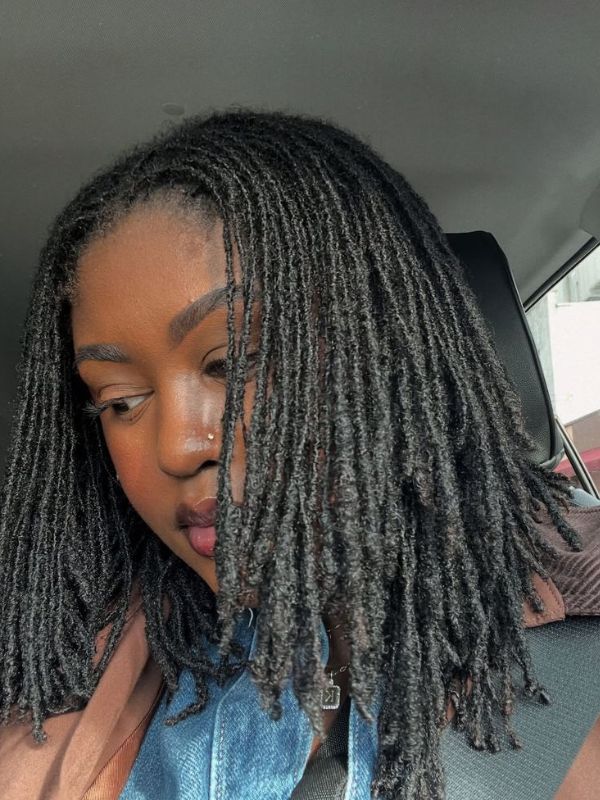
Establish a Consistent Washing Routine
Cleanliness remains important after your locs mature.
Your scalp can collect sweat, natural oils, dirt, and product residue. Washing helps remove these substances and supports scalp comfort.
Choose a shampoo suitable for your hair and scalp needs.
During washing, focus on cleansing the scalp and rinsing thoroughly. Avoid rough handling that creates unnecessary friction or pulling.
Afterward, make sure your locs dry completely.
The appropriate washing frequency varies according to your lifestyle, scalp condition, and product use.
For additional guidance, read How to Do a Deep Cleanse for Locs: A Step-by-Step Guide.
Deep cleansing should be appropriate for your hair and should not involve harsh mixtures or aggressive scrubbing.
Avoid Excessive Retwisting
Retwisting can help organize new growth, but frequent manipulation is not necessary for every person.
Repeatedly tightening the same roots can place unnecessary tension on your hair.
This is especially important if you notice thinning around your hairline or weak areas near the roots.
Your maintenance schedule should reflect your loc method and hair condition.
If you prefer a less structured approach, you may also want to understand what happens when you allow your new growth to develop without frequent retwisting.
Read What Happens When You Stop Retwisting Your Locs for more information.
The article can help you understand how different maintenance choices influence the appearance of your locs.
Keep Product Use Simple
Heavy styling products can leave residue in your hair.
Gels, waxes, creams, and oils may contribute to buildup when used excessively or when they are difficult to remove.
A simple routine is often easier to maintain.
Choose products according to your scalp and hair needs, and avoid adding several new products at once.
If you notice persistent residue, discuss an appropriate cleansing method with your loctician.
Do not assume that applying more oil will solve every hair problem.
Products may improve the feel of your hair, but they cannot repair every type of structural damage.
Protect Your Roots During Styling
Mature locs can support a range of hairstyles, but their roots still need gentle handling.
Avoid pulling your hair tightly into buns, ponytails, or elaborate updos.
Longer locs can place additional weight on the roots, especially when gathered into a tight style.
Choose arrangements that feel comfortable and allow your hairline to rest.
If a hairstyle causes pain, tenderness, or persistent pulling, remove it.
Healthy locs do not require painful styling to look attractive.
Common Problems That Can Make Mature Locs Look Less Established
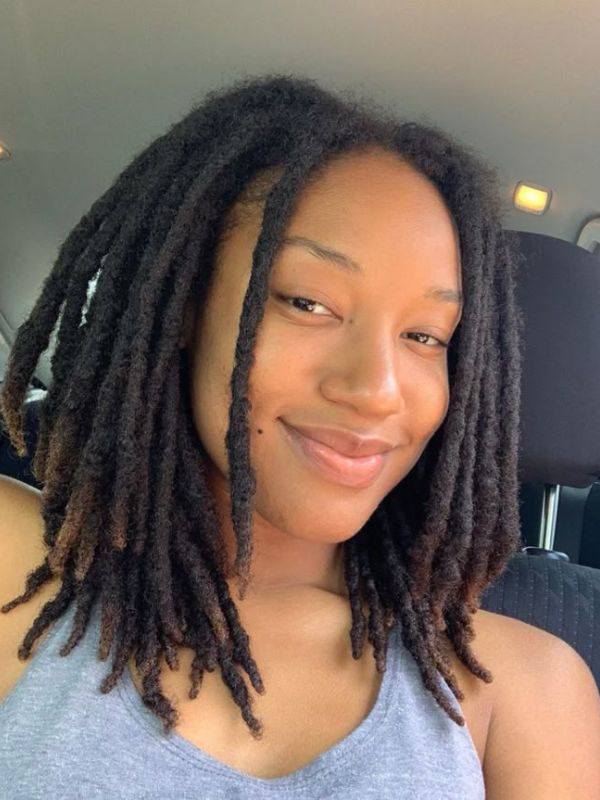
Frizz Does Not Automatically Mean Your Locs Are Immature
Frizz is common throughout the loc journey.
Loose hairs can appear around the surface, at the roots, or near the ends.
Even established locs can develop frizz after washing, sleeping, or wearing certain hairstyles.
Therefore, you should not use a perfectly smooth surface as your definition of maturity.
Repeatedly retwisting your locs to remove every loose hair can cause unnecessary tension.
Instead, assess the overall structure and condition of your hair.
If the locs remain stable and the frizz is limited to the surface, it may simply be part of their natural texture.
Product Buildup Can Affect the Appearance of Locs
Residue may accumulate inside locs when products are used heavily or are not rinsed out thoroughly.
You might notice a coating, flakes, or areas that feel different from the surrounding hair.
However, buildup does not automatically mean your locs are immature.
It is a maintenance issue that may require changes to your cleansing routine.
Avoid trying to remove stubborn residue with aggressive scrubbing or harsh homemade mixtures.
A qualified loctician can recommend a suitable approach based on the condition of your locs.
You can also explore How to Detox Your Locs at Home: A Step-by-Step Guide for additional information about buildup and cleansing.
Thinning at the Roots Is Not a Normal Sign of Maturity
Some people mistake thinning at the roots for a normal stage of loc development.
However, progressive thinning should not automatically be attributed to maturity.
Possible causes include repeated tension, excessive retwisting, breakage, and scalp conditions.
If a loc becomes noticeably thinner at its base, avoid tightening it repeatedly in an attempt to make it look fuller.
Reduce tension and seek professional advice.
Persistent thinning, scalp tenderness, unusual redness, or patches of hair loss may require assessment by a dermatologist.
For more guidance, read Why Are My Locs Thinning at the Roots? 9 Causes and How to Fix Them.
Dandruff and Scalp Irritation Need Appropriate Care
Flaking can affect the appearance of locs, but it does not determine whether the locs are mature.
Dandruff and other scalp conditions may cause visible flakes, itching, or irritation.
Avoid assuming that every white particle is product buildup or that every itchy scalp needs additional oil.
The cause matters because different scalp conditions require different approaches.
Keep your scalp clean and avoid applying irritating products.
If symptoms persist, seek advice from a qualified healthcare professional.
You can learn more in What Really Causes Dandruff with Locs and How to Treat It.
How to Style Mature Locs While Protecting Their Health
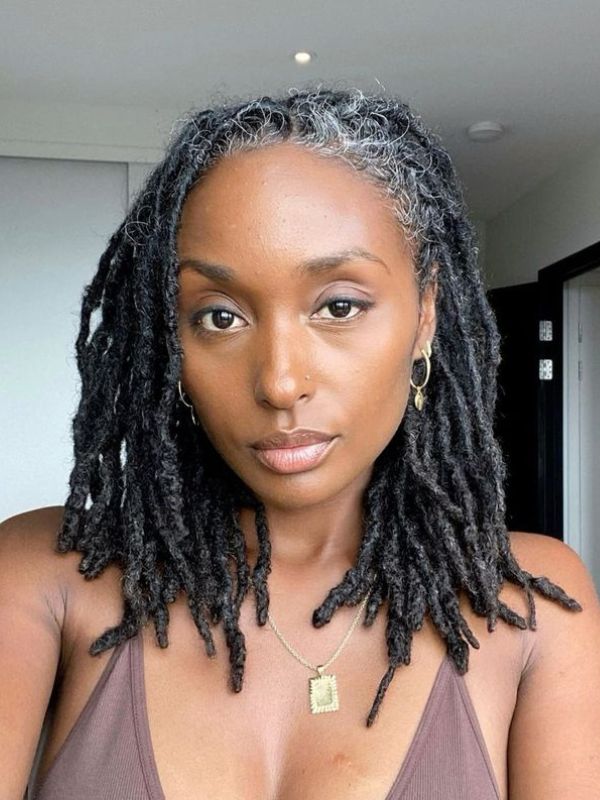
Wear Your Locs Loose for Everyday Comfort
One of the easiest ways to wear mature locs is to let them fall naturally.
This option requires little manipulation and allows you to appreciate the texture and shape of your hair.
You can wear a middle part, a side part, or a natural arrangement that suits your preference.
If your locs are long, allow them to rest comfortably rather than gathering them tightly every day.
Loose styles can also give your roots a break between more elaborate hairstyles.
Try Simple Styles for Medium-Length Locs
Medium-length locs offer several styling possibilities without requiring the same arrangement techniques as very long locs.
Depending on their length and structure, you may be able to create a half-up style, a loose ponytail, or a simple updo.
Choose accessories that fit comfortably and avoid pulling on the roots.
For more inspiration, explore How to Style Medium Length Locs.
Remember that the most suitable style depends on your loc length, thickness, and condition.
Experiment With Two-Strand Twist Loc Styles
Mature locs can be arranged in different ways for everyday activities and special occasions.
Two-strand twist styles may create a different appearance while allowing you to work with the structure of your locs.
However, the style should be appropriate for your loc length and should not require excessive tension.
If you want additional ideas, read 10 Two Strand Twist Loc Styles That Are Too Beautiful to Ignore.
Use the examples as inspiration and adapt them to your own hair.
Choose Elegant Styles for Special Occasions
Mature locs can be styled for weddings, celebrations, family gatherings, and other formal events.
Depending on your length, you may be able to wear an updo, a half-up arrangement, or a decorative style with suitable accessories.
Avoid choosing a hairstyle that puts excessive tension on your roots.
If you want more inspiration, explore Beautiful Loc Styles for Special Occasions That Will Make You Stand Out.
The best style is one that complements your outfit while keeping your locs comfortable.
How to Tell Whether Your Locs Need More Time or Professional Attention

Signs That Your Locs May Still Be Developing
Some signs suggest that your locs are still moving through the maturation process.
For example, the sections may remain relatively soft, develop compact areas at different times, or show changes in texture after washing.
You may also notice that certain locs retain their shape more consistently than others.
These differences do not automatically indicate a problem.
The important consideration is whether your locs are gradually developing a more established structure.
If they are changing slowly but remain reasonably strong, you may simply need to give them more time.
Avoid comparing your progress with someone else’s timeline.
Signs That Deserve a Closer Assessment
Some changes require more attention than ordinary frizz or uneven texture.
Look out for progressive thinning, repeated breakage, weak areas, or locs that appear to be losing support at the roots.
Persistent scalp pain, redness, unusual scaling, or patches of hair loss also deserve professional attention.
Do not try to solve these problems by tightening your locs.
Instead, reduce unnecessary manipulation and arrange an assessment with an experienced loctician.
If the problem involves scalp symptoms or ongoing hair loss, consult a dermatologist or another qualified healthcare professional.
Early assessment can help identify the cause and determine the most appropriate next steps.
Why Professional Guidance Can Help You Understand Maturity
An experienced loctician can assess your loc structure, installation method, and maintenance routine.
They can help you understand whether your locs appear to be developing normally or whether a particular section needs attention.
This can be especially useful when your locs have different textures or maturity levels across the scalp.
A professional assessment is more reliable than trying to judge maturity by appearance alone.
However, remember that a loctician cannot diagnose every scalp condition.
If you experience persistent irritation or progressive hair loss, seek medical advice as well.
How Your Original Installation Method Can Influence Mature Locs

Mature Locs Started With Two-Strand Twists
Two-strand twists create a visible pattern when locs are first installed.
As the hair develops, the original twist pattern may become less prominent or remain visible in certain areas.
The final appearance depends on your hair texture, section size, and maintenance habits.
Some locs develop a relatively compact structure, while others retain a more textured surface.
The presence of a visible twist pattern does not automatically mean your locs are immature.
Instead, assess whether the internal structure is stable and whether the locs maintain their form during normal care.
Mature Locs Started With Comb Coils
Comb coils begin with a coiled structure.
During development, they may loosen, develop frizz, or form compact areas.
As the hair matures, the original coil pattern may change.
However, the amount of visible change varies from person to person.
Do not assume that every mature loc must have a completely uniform surface.
The more useful indicators are stability, internal compaction, and the way the locs behave during maintenance.
Mature Locs Started With Interlocking
Interlocking creates a structured pattern by passing hair through the root area.
This can produce a relatively secure appearance during the early stages.
Consequently, the initial firmness of interlocked locs does not automatically indicate that they are fully mature.
The internal structure continues to develop over time.
Your maintenance method also matters because repeated or overly tight interlocking can weaken certain sections.
Follow suitable maintenance guidance and pay attention to the condition of your roots.
Caring for Mature Locs Through Different Stages of Growth
Adjust Your Maintenance Routine as Your Locs Change
Your hair’s needs may change as your locs become longer and more established.
You may find that your washing routine, preferred products, or styling options need occasional adjustments.
However, avoid changing several parts of your routine at once without understanding why.
If your locs are healthy and your scalp feels comfortable, a simple and consistent approach may be sufficient.
If you notice buildup, irritation, or thinning, identify the likely cause before adding new products.
Protect Mature Locs During Sleep and Daily Activities
Friction can affect locs regardless of their maturity.
A satin bonnet, scarf, or pillowcase may help reduce friction during sleep.
During the day, choose clothing and accessories that do not repeatedly catch on your hair.
If your locs are long, consider how their weight and movement affect your roots during styling.
Avoid keeping them in tight arrangements for extended periods.
Maintain Healthy Roots as Your Locs Get Longer
Mature locs still depend on the hair growing from your scalp.
The roots require gentle handling, and repeated tension can contribute to thinning.
Avoid using tight hairstyles simply because your locs are long enough to support them.
Instead, alternate between loose styles and comfortable arrangements.
If you notice persistent thinning, do not assume that it is an unavoidable consequence of having mature locs.
Seek appropriate advice to determine the cause.
Frequently Asked Questions About Mature Locs
How do I know when my locs are fully mature?
Look for several signs together. Mature locs generally have a more established internal structure, retain their shape more consistently, and are less prone to unraveling during normal care. Their texture may feel more compact, although some frizz can remain. There is no single visual sign or exact timeline that applies to everyone.
How long does it take for locs to mature completely?
The timeline varies according to hair texture, loc size, installation method, and maintenance habits. Some locs become more established within the first year, while others continue developing for longer. The age of your locs alone does not determine whether they are fully mature.
Why do my locs feel soft in some areas?
Different sections may develop at different rates. Hair texture, section size, and installation method can affect how individual locs feel. If a section is unusually weak, repeatedly breaks, or becomes progressively thinner, ask a loctician to assess it.
Do mature locs become thicker?
Some locs may appear fuller as their internal structure develops. However, thickness depends on several factors, including section size, hair density, and individual hair characteristics. Mature locs do not automatically become thicker than they were during every earlier stage.
Can mature locs become thinner?
Yes. Thinning can occur because of repeated tension, excessive manipulation, breakage, or scalp conditions. Progressive thinning should not automatically be considered part of normal maturation. Reduce unnecessary tension and seek professional advice if the problem continues.
Should I retwist mature locs?
Retwisting is a maintenance choice rather than a requirement for proving maturity. Some people prefer regular retwisting, while others choose less frequent maintenance. The appropriate approach depends on your loc method, scalp condition, and desired appearance. Avoid excessive tension.
Do all locs mature at the same rate?
No. Individual locs can develop differently because of variations in texture, density, section size, and friction. Differences are not automatically a sign of a problem, but progressive thinning or breakage deserves attention.
Can I style mature locs in an updo?
Yes, provided your loc length and condition allow it. Choose a style that does not pull excessively on the roots. If an updo causes discomfort or tension around your hairline, loosen or remove it.
Does interlocking make locs mature faster?
Interlocking can create a more secure structure during installation or maintenance, but that does not mean the locs are automatically mature. Internal development continues over time. The technique should be performed appropriately to avoid unnecessary tension or weak areas.
What should I do if my locs have not matured after a long time?
First, remember that maturation varies. Assess your locs’ structure and overall condition rather than relying on a fixed deadline. If you are concerned about persistent looseness, breakage, or other changes, consult an experienced loctician. Seek medical advice for ongoing scalp symptoms or progressive hair loss.
Conclusion
Understanding mature locs means looking beyond length, age, and surface appearance. Your locs may be fully established even when they have some frizz, while longer locs may still be developing their internal structure.
The clearest signs of maturity include increased structural stability, more consistent shape retention, and a more established internal texture. However, no single feature proves that every loc has reached its final stage.
Your hair texture, installation method, section size, and maintenance habits all influence the process. Some locs mature sooner than others, even when they belong to the same person.
The best approach is to observe your hair over time and maintain a routine that supports its condition. Cleanse your scalp appropriately, avoid excessive retwisting, use styling products thoughtfully, and protect your roots from unnecessary tension.
Remember that mature locs continue to grow and change. New growth will appear, surface frizz may develop, and your styling options may expand as your locs become longer.
You do not need to eliminate every loose hair or make every section look identical to have healthy, mature locs.
Instead, focus on stability, comfort, and consistent care. If you notice progressive thinning, repeated breakage, or persistent scalp irritation, seek appropriate professional guidance.
With realistic expectations and a suitable maintenance routine, you can recognize the progress your locs have made and continue caring for them confidently at every stage of your journey.