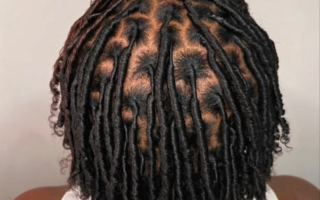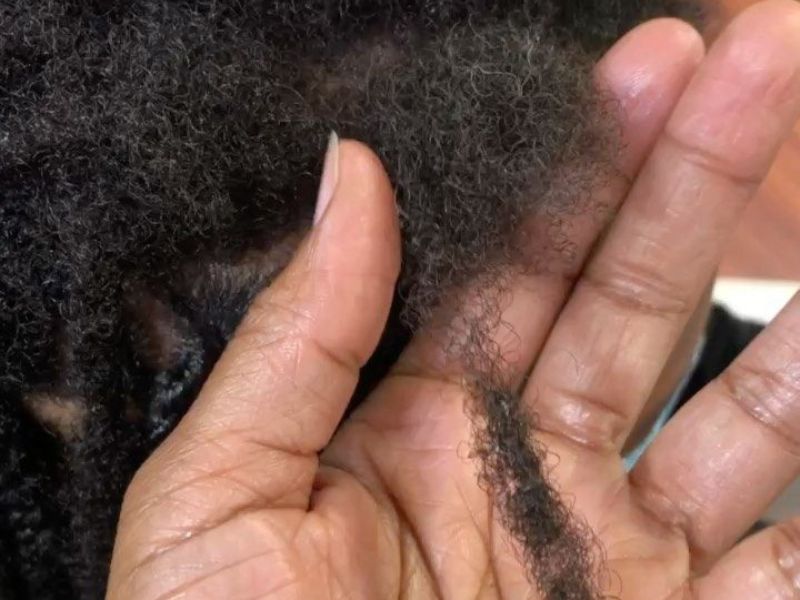
Noticing that your locs are becoming thinner can be worrying, especially when you have spent months or years growing and maintaining them. If you are searching for How to fix thinning locs, you probably want to understand why your locs are losing thickness, what you can do to protect them, and whether the affected areas can become stronger again. The good news is that some causes of thinning can be addressed when you identify the problem early and change the habits contributing to it.
However, thinning locs do not always have the same cause. Sometimes, the roots become weak because of frequent retwisting, tight hairstyles, or the weight of long locs. In other cases, the locs become thinner along their length because of breakage, friction, or damage. Hair loss caused by a scalp condition or another health issue may require professional treatment rather than a change in your styling routine alone.
Understanding the difference matters because the solution depends on where the thinning occurs and what is causing it.
For example, a loc that is becoming thin at the root needs a different approach from one that has a weak spot in the middle. Similarly, if your hairline is gradually becoming thinner, simply adding oil or retwisting your locs more frequently will not necessarily solve the problem.
The first step in learning How to fix thinning locs is to stop the habits that may be weakening your hair. You can then work toward a gentler maintenance routine, protect vulnerable areas, and seek professional help when necessary.
In this guide, we will examine the common causes of thinning locs, explain how to identify the problem, and discuss practical ways to prevent further damage. You will also learn when loc repair may be appropriate, which habits to avoid, and how to maintain healthier roots as your locs grow.
Whether your locs are thinning at the roots, around the edges, in the middle, or near the ends, this guide will help you understand your options and make more informed decisions about your hair.
For additional care guidance, explore Why Are My Locs Thinning at the Roots? 9 Causes and How to Fix Them
Understanding Why Locs Become Thin Before Trying to Repair Them
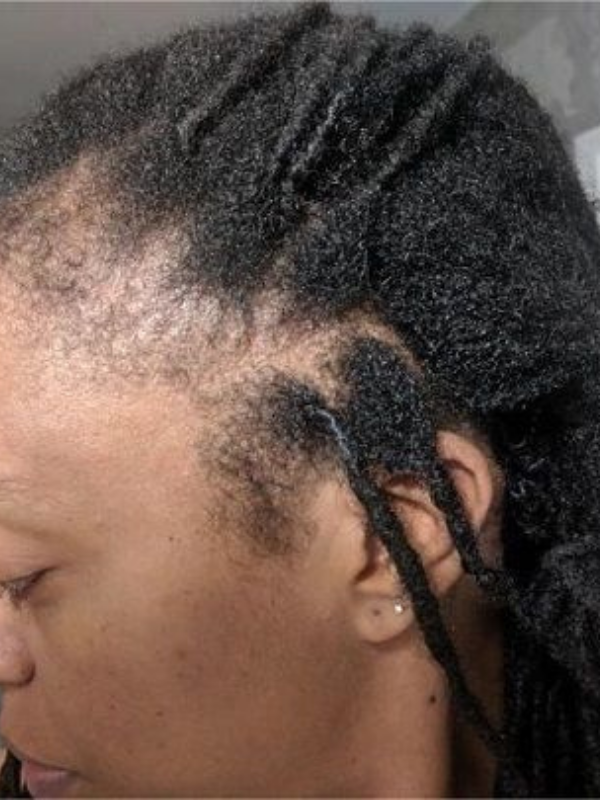
What Does It Mean When Your Locs Start Thinning?
Thinning locs are locs that have lost some of their usual thickness or density. This change may happen gradually or become noticeable after a particular hairstyle, retwist, or period of breakage.
You might notice that a loc looks smaller near the root, has a narrow section along its length, or feels less substantial than the surrounding locs.
Sometimes, the change affects only one or two locs. In other cases, several locs become thinner, particularly around the hairline, temples, crown, or nape.
It is important to distinguish between naturally small locs and locs that are becoming thinner over time.
Some people have naturally fine strands or lower hair density. Their locs may remain relatively small without being damaged.
However, if a loc was previously thicker and now has a noticeably weaker section, it deserves attention.
When considering How to fix thinning locs, look at the location of the thinning, whether it is progressing, and whether you have noticed other changes.
For example, visible scalp, a widening part, broken hairs, or a receding hairline may suggest that the issue involves more than the loc itself.
Do not automatically assume that every thin loc needs to be combined with another one. First, identify what is causing the change.
The Difference Between Thinning Locs and Normal Loc Development
Locs can change shape and texture as they mature.
Newly established locs may look uneven, while mature locs can develop different textures along their lengths. Shrinkage and changes in the way the hair compacts may also affect their appearance.
Consequently, a loc that looks narrower in one area is not necessarily damaged.
The important question is whether the loc is becoming weaker or losing hair.
For example, a loc that has always been small may simply reflect its original section size. By contrast, a loc that has developed a narrow, fragile area after repeated tight styling may be experiencing damage.
You should also consider your hair’s natural density. Not every person will have locs of identical thickness.
If you are uncertain whether your locs are thinning, compare their current appearance with older photographs. Look for changes in the same areas rather than comparing your hair with someone else’s.
This can help you recognize gradual changes without repeatedly manipulating your locs.
For additional information about loc development, read What Do Mature Locs Look Like? 11 Signs Your Locs Are Fully Mature.
Why Identifying the Cause Matters More Than Making Locs Look Thicker
It is tempting to focus on making thinning locs appear fuller immediately.
You might consider adding hair, using thick styling products, or tightening the roots so that the affected areas look neater.
However, these approaches may conceal the problem without addressing its cause.
If excessive tension is responsible, adding more weight or tightening the locs can make the situation worse.
Similarly, if a scalp condition is contributing to hair loss, a styling change alone may not resolve it.
The most effective approach to How to fix thinning locs begins with understanding what is happening.
Look at your styling habits, maintenance schedule, and hair-care routine. Consider whether the thinning began after a change in hairstyle or whether it has continued despite adjustments.
If the thinning is progressing, affects the hairline, or occurs alongside scalp symptoms, seek an assessment from a qualified healthcare professional or dermatologist.
An experienced loctician can help evaluate the loc structure, but a medical professional is better placed to diagnose conditions affecting the scalp or hair follicles.
How to Fix Thinning Locs and Prevent Them From Getting Worse
The Common Causes of Thinning Locs and What They Mean for Your Hair
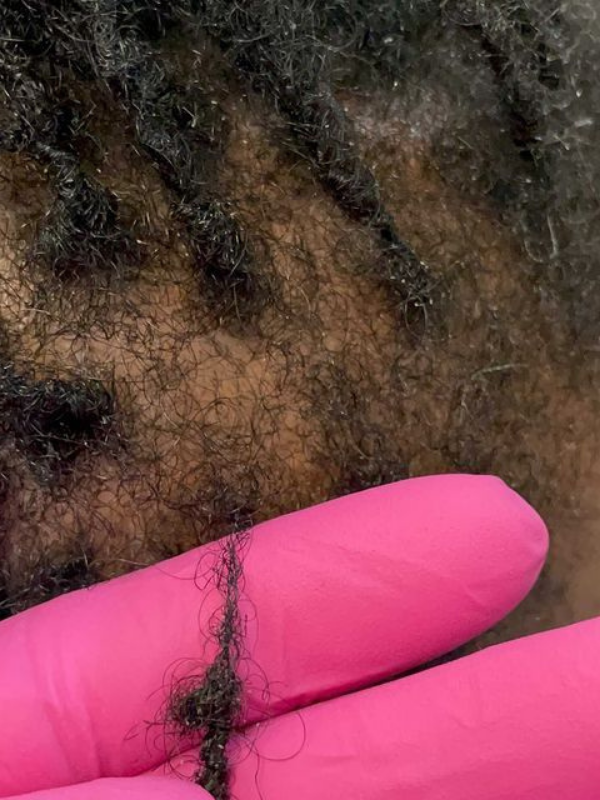
Frequent Retwisting and Excessive Tension at the Roots
Frequent retwisting is one possible contributor to thinning locs.
During retwisting, new growth is manipulated to create a neater appearance. However, repeatedly tightening the same areas can place stress on the hair roots.
Over time, excessive tension may contribute to breakage or traction alopecia, a type of hair loss associated with repeated pulling.
You may notice that the roots look unusually tight after maintenance. Your scalp may also feel sore, or small bumps may appear around the hairline.
These are warning signs that the style or technique needs to change.
If you are trying to understand How to fix thinning locs caused by excessive retwisting, begin by reducing tension.
Ask your loctician to assess the affected roots and recommend a suitable maintenance schedule.
Avoid repeatedly retwisting the same locs between appointments.
A neat appearance should never come at the expense of your scalp or hair.
Tight Hairstyles That Pull on Your Locs
Ponytails, buns, barrel styles, and other updos can look attractive. However, styles that pull tightly on the roots may contribute to thinning.
The risk can increase when you wear the same tight hairstyle repeatedly or keep it in place for an extended period.
Long locs can create additional tension because their weight pulls on the roots.
You may notice thinning around the temples, forehead, or areas where the hairstyle places the most pressure.
If a style causes pain, soreness, bumps, or a pulling sensation, loosen or remove it.
Do not assume that a hairstyle is safe simply because it looks neat.
Choose loose arrangements that distribute the weight comfortably, and give your hair breaks between more involved styles.
If your locs are already thinning, avoid styles that place additional stress on the affected areas until you have received appropriate advice.
Heavy Locs and Weak Roots
As locs grow longer, their weight increases in How to Fix Thinning Locs and Prevent Them From Getting Worse.
Healthy roots may support that weight comfortably, but some areas can become vulnerable when the locs are unusually heavy relative to the amount of hair supporting them.
This can happen when a loc is very long, contains added hair, or has a weak section near the root.
If the roots are already thin, the extra weight may increase the risk of breakage.
You might notice that the loc bends sharply near the scalp or that a narrow area becomes more visible as the hair grows.
In this situation, adding more hair to the loc is not automatically the best solution.
A professional should assess whether the loc needs temporary support, a carefully planned repair, or another approach.
When considering How to fix thinning locs caused by excess weight, focus on reducing stress rather than making the loc heavier.
Incorrect Interlocking and Repeated Root Manipulation
Interlocking is a maintenance technique in which the end of a loc is passed through its root in a particular pattern.
When performed appropriately, it can help maintain the loc structure.
However, incorrect technique, excessive tightening, or repeatedly working the same section can create stress.
This may lead to weak areas, uneven roots, or a loc that becomes thinner over time.
If you maintain your own locs, make sure you understand the technique recommended for your hair.
Avoid repeatedly passing the loc through the root to make it appear tighter.
If you notice a narrow section or unusual tension after interlocking, consult an experienced loctician before continuing.
The goal is to maintain the loc without creating unnecessary stress.
Hair Breakage Along the Length of a Loc
Not all thinning begins at the root.
A loc may become thinner in the middle because of friction, repeated bending, chemical damage, or previous breakage.
For example, you might frequently rub the same area against a rough collar, bag strap, or headrest.
Repeated friction can weaken the hair over time.
Chemical processing, particularly bleaching, can also affect the strength of the hair.
If the affected area is already weak, additional pulling or styling may cause further damage.
When learning How to fix thinning locs along their length, identify what repeatedly affects the area.
Reduce friction where possible, avoid aggressive handling, and ask a qualified loctician whether the loc can be repaired safely.
Do not pull loose hairs into a weak section using excessive tension. The repair technique should protect the remaining hair rather than stress it further.
Hair Loss and Scalp Conditions
Sometimes, thinning locs are a sign of a scalp or hair-loss condition.
Conditions such as traction alopecia, alopecia areata, and certain inflammatory scalp disorders can affect hair growth.
The symptoms and treatment differ depending on the underlying cause.
For example, traction alopecia may develop when repeated pulling damages the hair follicles. Other conditions can cause patchy hair loss or inflammation without being directly related to styling.
You may notice a widening part, smooth patches, persistent itching, redness, scaling, or a change in the amount of hair around the hairline.
These symptoms deserve professional assessment.
Do not rely on oils, home remedies, or loc repairs to treat unexplained hair loss.
A dermatologist can help identify the cause and discuss appropriate treatment.
Product Buildup and Poor Scalp Care
Product buildup does not automatically cause every case of thinning, but heavy residue and scalp irritation can complicate your hair-care routine.
Thick creams, waxes, gels, and repeated layers of styling products may accumulate in locs.
This can make cleansing more difficult and may leave the scalp uncomfortable.
If you use products to hide thinning areas, you may also be overlooking the underlying problem.
Choose products according to your hair’s needs and avoid layering several products unnecessarily.
Cleanse your scalp regularly using a suitable shampoo and follow a routine appropriate for your loc method.
For more information about keeping your hair clean, read How to Do a Deep Cleanse for Locs: A Step-by-Step Guide.
Natural Hair Density and the Original Size of Your Locs
Sometimes, the appearance of thin locs reflects your natural hair density rather than damage.
People have different numbers of hair strands, strand thicknesses, and growth patterns.
Consequently, locs created from small sections may remain relatively thin even when they are healthy.
This does not necessarily mean that your locs need repair.
However, if a loc becomes noticeably thinner than it was before, investigate the change.
Avoid assuming that every person should have thick locs.
Your hair’s natural characteristics should guide your expectations.
If you want thicker locs in the future, discuss the available options with a professional before combining or modifying existing sections.
How to Fix Thinning Locs at the Roots Without Causing More Damage
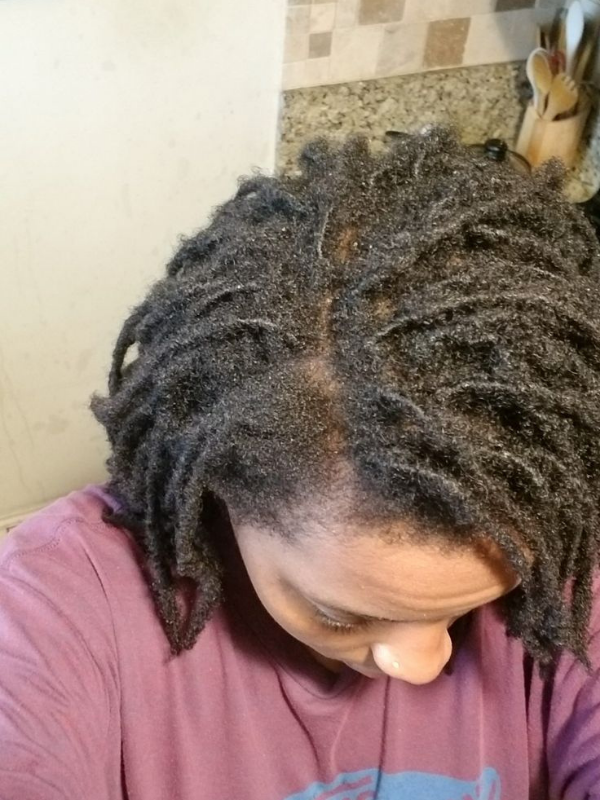
Give the Affected Roots a Break From Tight Maintenance
When the roots begin to thin, reducing tension is an important first step.
If frequent retwisting or tight styling appears to be contributing to the problem, stop repeating those practices.
Ask your loctician to assess the affected areas and recommend a suitable maintenance approach.
The goal is to give the roots a chance to recover from unnecessary mechanical stress.
Avoid trying to make the roots look fuller by tightening them more aggressively.
A tightly retwisted root may look neater temporarily, but it does not mean the hair has become stronger.
If you have pain, visible thinning around the hairline, or other signs of hair loss, seek medical advice.
Early assessment can be important when traction-related damage is suspected.
Avoid Retwisting Thin Roots Too Tightly in How to fix thinning locs
It can be tempting to twist a thin root firmly so that it blends with the surrounding hair.
However, excessive tension can place even more stress on the weakened area.
Instead, explain the problem to your loctician before your next appointment.
Ask whether the affected loc needs a gentler maintenance technique or a longer interval between sessions.
Do not assume that every loc needs to be retwisted in exactly the same way.
A professional should consider the condition of each section.
If a root is too weak to support its usual maintenance technique, forcing it into a tight shape may create further damage.
When researching How to fix thinning locs, remember that a temporary loss of neatness is preferable to repeatedly stressing fragile roots.
Choose Hairstyles That Keep Weight Off Vulnerable Areas
If your locs are thinning near the roots, avoid tight ponytails, heavy buns, and styles that pull the affected sections in one direction.
You can wear your locs loose or choose a gentle arrangement that does not require strong tension.
If your locs are long, consider whether their weight is contributing to the problem.
A professional may recommend a suitable adjustment to the style or length, depending on the condition of your hair.
Avoid adding extensions or other heavy accessories to weak locs.
The purpose of styling should be to protect your hair, not to conceal the problem temporarily.
Seek an Assessment if Your Hairline Is Becoming Thinner
Thinning around the temples or forehead deserves particular attention.
The hairline can be vulnerable to repeated tension from tight hairstyles, edge styling, and frequent manipulation.
If you notice that the hairline is receding or the scalp is becoming more visible, stop styles that pull on the area.
Arrange an assessment with a dermatologist or another qualified healthcare professional.
They can determine whether the problem is related to traction or another cause of hair loss.
An experienced loctician can also help you choose hairstyles that place less stress on the affected areas.
However, hair loss that continues despite reducing tension should not be treated as a styling problem alone.
How to Repair Thinning Locs Along the Length Without Weakening Them Further
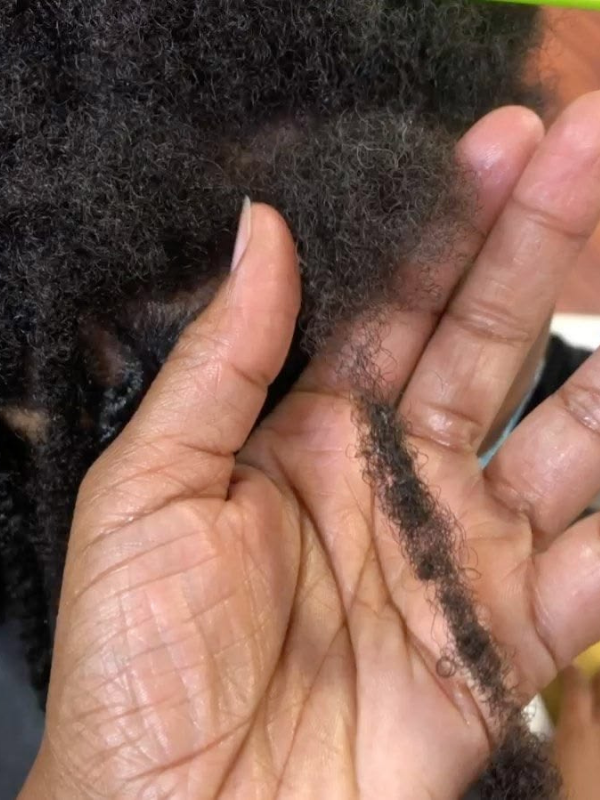
Identify the Exact Location of the Weak Section
A loc that is thinning in the middle needs a different assessment from one that is thinning at the root.
Start by identifying where the loc becomes narrow.
Look for a weak area, a gap, visible breakage, or a section that bends more easily than the surrounding hair.
Avoid repeatedly pulling or bending the loc to test its strength.
If the area looks fragile, leave it alone until a professional can assess it.
The cause may be friction, breakage, chemical damage, or an earlier repair that did not hold well.
Understanding the location and cause helps determine which repair method is appropriate.
Reduce Friction Around the Affected Loc
If friction appears to be contributing to thinning, identify the source.
For example, a particular loc may repeatedly rub against a bag strap, clothing seam, or headrest.
Changing the way you wear your hair or reducing contact with the rough surface may help prevent additional damage.
You can also protect your hair at night with a comfortable satin or silk covering.
However, reducing friction will not automatically repair a loc that has already lost a significant amount of hair.
If the weak area is severe, ask a qualified loctician to assess whether reinforcement or another repair method is appropriate.
Ask About Professional Loc Repair
Some thinning locs can be repaired by carefully incorporating suitable loose hair into a weak area on this How to fix thinning locs.
However, the success of a repair depends on the condition of the loc, the amount of hair remaining, and the technique used.
A professional should assess whether the loc can safely support a repair.
If the affected area is extremely fragile, aggressive manipulation may cause more breakage.
Avoid attempting complicated repairs with a crochet hook or other tools without appropriate training.
Incorrect technique can damage the remaining hair or create another weak point.
For How to fix thinning locs along their length, professional assessment is especially useful when the loc has developed a gap or is close to breaking.
Understand When Combining Locs May Be an Option
Combining two locs can sometimes help when individual locs are too small for the amount of hair supporting them.
However, combining locs is not suitable for every situation.
If the problem is caused by tension, a scalp condition, or ongoing hair loss, combining the locs may not address the underlying cause.
The result also depends on the location of the weak area and the structure of the existing locs.
Ask an experienced loctician to assess whether combining the locs is appropriate.
You should also discuss how the change may affect the appearance and styling options of your locs.
Avoid combining sections simply because you want them to look thicker without first understanding why they became thin.
How to Prevent Thinning Locs From Getting Worse Through Better Maintenance
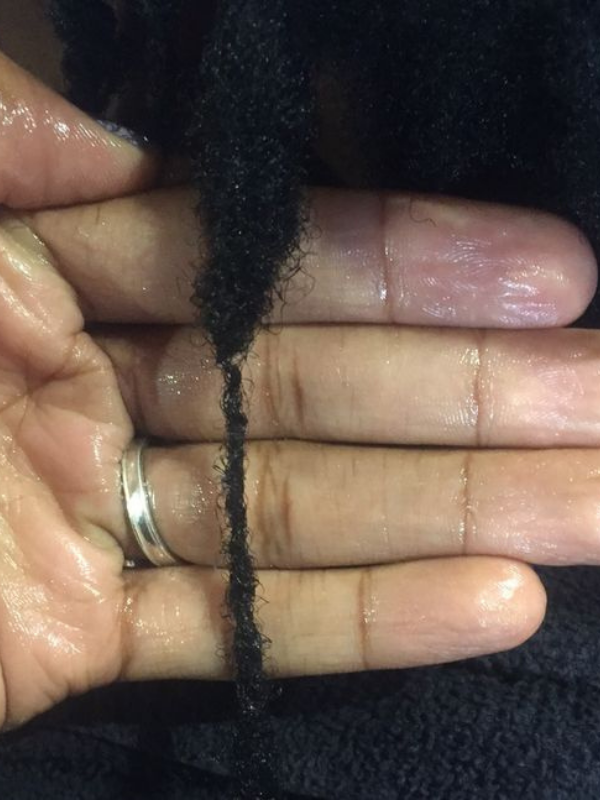
Create a Maintenance Schedule That Suits Your Hair
Your locs need maintenance, but the appropriate schedule depends on your hair and installation method.
Retwisting or interlocking too frequently can contribute to tension and breakage.
At the same time, your locs may still need professional attention when new growth becomes difficult to manage.
Instead of following a rigid schedule simply because someone else uses it, ask your loctician what works for your hair.
If your locs are already thinning, mention this before maintenance begins.
Your professional may recommend changing the technique or adjusting the schedule to reduce stress.
The aim is to keep your locs manageable without repeatedly manipulating the same areas.
Avoid Making Every Retwist Extremely Tight
A fresh retwist can make your locs look neat, but it should not leave your scalp painful.
If you experience soreness after every appointment, tell your loctician.
Persistent discomfort is a reason to reassess the technique.
Do not assume that tightness is necessary for your locs to mature.
Your hair can continue developing without being pulled firmly at every maintenance session.
A gentler approach may also make it easier to protect fragile areas.
Give Your Locs a Break Between Styles
Repeated styling can place stress on the same roots.
For example, wearing a tight ponytail followed by a tight bun may continue pulling on the same sections.
Instead, alternate between styles that allow your hair to rest.
Wear your locs loose when practical, and choose comfortable accessories that do not pull on the scalp.
If you notice tenderness after removing a style, avoid repeating it until you have identified the cause.
For more guidance on managing texture without unnecessary manipulation, read How to Fix Frizzy Locs Without Retwisting: Easy Tips That Work.
Protect Your Locs While Sleeping
Friction during sleep can contribute to wear, particularly when the same areas rub against rough bedding.
A satin or silk bonnet, scarf, or pillowcase may help reduce friction especially in How to fix thinning locs.
Choose a covering that fits comfortably without pulling on your edges.
You do not need to wrap your locs tightly to protect them.
If your locs are long, arrange them comfortably so they are not trapped beneath your body or pulled awkwardly while you sleep.
This simple habit can help protect your hair from unnecessary friction.
Avoid Pulling at Loose Hairs
You may notice loose hairs around your locs, especially as they mature.
It can be tempting to pull these strands or repeatedly twist them back into the loc.
However, aggressive manipulation may weaken the surrounding hair.
Avoid picking at the roots or pulling loose strands forcefully.
If a loc has a significant weak area, ask your loctician whether it needs professional attention.
A little frizz is not necessarily a problem, and you do not need to correct every loose hair immediately.
Washing and Moisturizing Thinning Locs Without Creating More Problems
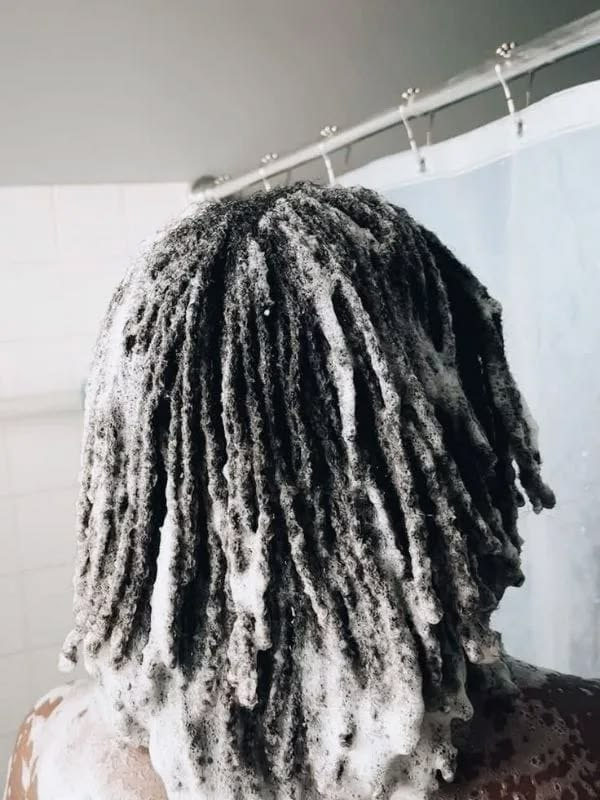
Keep Your Scalp Clean With a Suitable Shampoo
A clean scalp is an important part of a healthy hair-care routine.
Sweat, dirt, natural oils, and styling products can accumulate between washes.
Choose a shampoo that suits your scalp and loc method, and rinse thoroughly.
Your washing frequency should reflect your scalp condition, lifestyle, and the maturity of your locs.
If your locs are newly established, follow the washing instructions recommended for your installation method.
Avoid scrubbing aggressively or repeatedly twisting the roots during cleansing.
If you have persistent itching, redness, or unusual flaking, seek professional advice rather than assuming that more washing or more products will solve the problem.
Use Moisture Without Relying on Heavy Products
Dry hair can be more vulnerable to breakage, so appropriate moisture may be useful.
However, applying large amounts of oil or heavy cream will not repair a weakened loc or restore hair that has been lost.
Choose lightweight products according to your hair’s needs.
A water-based moisturizer may help with dryness, while an appropriate oil may be useful for some hair-care routines.
The key is to avoid excessive product buildup.
If your locs feel coated or residue accumulates, reassess the products you use and how thoroughly you cleanse your hair.
Avoid Applying Oil as a Treatment for Every Type of Thinning
Oils can help reduce friction or support certain hair-care routines, but they are not a universal treatment for hair loss.
If your locs are thinning because of excessive tension, applying oil will not remove the pulling force.
Similarly, if a scalp condition is causing hair loss, the appropriate treatment depends on the diagnosis.
Use products for their intended purpose, and do not rely on oils alone when your hair is visibly thinning.
For more information about scalp symptoms, read What Really Causes Dandruff With Locs and How to Treat It.
Dry Your Locs Thoroughly After Washing
Locs can retain moisture, particularly when they are thick or long.
After washing, make sure they dry thoroughly rather than remaining damp for extended periods.
The amount of time required depends on their length, density, and the surrounding conditions.
Avoid using excessive heat in an attempt to dry your locs quickly.
If you are unsure about the best drying method, ask your loctician for guidance.
Good drying practices support overall loc care, although they will not directly reverse thinning caused by traction or a scalp condition.
When Thinning Locs Need Professional Medical Attention

Recognizing Possible Traction Alopecia
Traction alopecia is a type of hair loss associated with repeated pulling on the hair.
Tight hairstyles, repeated tension at the roots, and certain maintenance practices can contribute to this condition.
Early signs may include tenderness, bumps, broken hairs, or thinning around areas that experience repeated pulling.
The hairline and temples can be particularly vulnerable.
If you suspect traction alopecia, stop hairstyles that pull on the affected areas and seek medical assessment.
Early intervention may help prevent further damage. However, long-standing traction can cause permanent hair loss in some cases.
Do not wait for the area to become severely thin before taking the problem seriously.
When to See a Dermatologist
A dermatologist can help assess unexplained thinning, patchy hair loss, scalp inflammation, and other changes that may require treatment.
Arrange an appointment if the thinning continues despite reducing tension, affects several areas, or occurs alongside persistent itching, redness, pain, or scaling.
You should also seek medical advice if you notice sudden or extensive hair loss.
A professional assessment can help distinguish mechanical damage from other causes.
Avoid using unverified growth products or taking supplements without appropriate guidance.
The right treatment depends on the underlying problem.
Why Home Remedies May Not Be Enough
Home remedies are often presented as simple solutions for every hair concern.
However, thinning locs can have several different causes.
A product that helps with dryness may not treat a scalp condition. Similarly, an oil that improves the feel of the hair will not necessarily reverse traction-related damage.
If you have been applying several products without improvement, stop adding new treatments and reassess the situation.
Seek professional guidance when the thinning continues.
Understanding the cause is more useful than repeatedly trying different remedies without a clear plan.
Nutrition, General Health, and Supporting Healthy Hair Growth
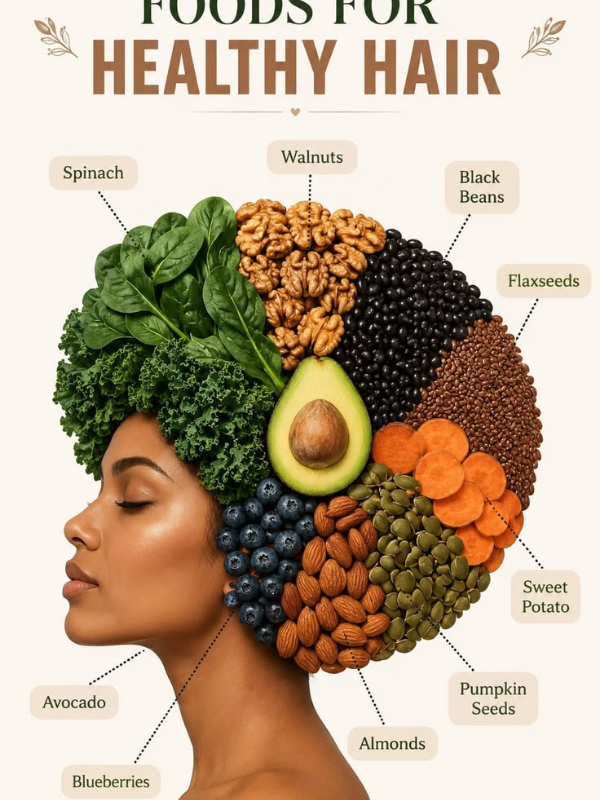
Eat a Balanced Diet That Supports Normal Hair Growth
Hair growth depends on several factors, including genetics, general health, and nutritional status.
A balanced diet provides nutrients that the body needs to support normal hair growth.
Include a variety of foods such as beans, eggs, fish, vegetables, fruits, whole grains, nuts, and other suitable sources of protein and essential nutrients.
However, eating a particular food will not automatically repair a thinning loc.
If your diet is limited or you suspect a nutritional deficiency, discuss your concerns with a qualified healthcare professional.
They can help determine whether further assessment is needed.
Avoid taking high-dose supplements without guidance, because more is not always better.
Understand the Role of Stress and General Health
Stress and certain health conditions can contribute to changes in hair shedding.
For example, some people experience increased shedding after a major illness, significant physical stress, or another health event.
However, not every case of thinning locs is related to stress.
If you notice a sudden change in hair density, consider your overall health and seek appropriate medical advice.
Do not assume that relaxation techniques alone will solve unexplained hair loss.
A balanced routine, adequate sleep, and appropriate healthcare can support general well-being while you investigate the cause.
Be Careful With Products That Promise Rapid Hair Growth
Products that promise instant thickness or dramatic hair growth should be approached cautiously.
No oil or shampoo can guarantee that thinning locs will become thicker.
Some products may improve the appearance or feel of your hair, but that is different from restoring lost hair or treating a medical condition.
Before using a product, understand what it is intended to do.
If your locs are thinning progressively, prioritize identifying the cause and reducing further damage.
A qualified healthcare professional can advise you about evidence-based treatment when a medical condition is involved.
What to Do When Several Locs Are Thinning at the Same Time

Look for Patterns Across Your Scalp
When several locs begin thinning, look for a pattern rather than examining each loc in isolation.
Are the affected areas concentrated around the hairline? Do they occur where you usually gather your hair into a bun? Are the changes spread across the scalp?
The location can provide useful clues about possible causes.
For example, thinning around areas repeatedly exposed to tension may suggest a styling-related problem.
However, widespread thinning can have other explanations.
Avoid diagnosing the cause yourself based only on appearance.
If several locs are affected, particularly if the change is progressing, seek professional assessment.
Pause Hairstyles That May Be Contributing to the Problem
If you suspect that styling is causing the thinning, temporarily avoid tight ponytails, heavy updos, and styles that pull on the affected areas.
Choose comfortable arrangements that place minimal tension on your roots.
Tell your loctician about the changes before your next maintenance appointment.
You may need a different technique or a longer interval between appointments.
If the thinning continues, arrange a medical assessment.
Changing your hairstyle is a useful first step when tension is involved, but it may not be enough if another condition is contributing to hair loss.
Keep Track of Changes Without Constantly Manipulating Your Locs
Occasional photographs can help you monitor your hair.
Take pictures of the affected areas under similar lighting and from similar angles.
Avoid repeatedly pulling apart the locs or checking their strength throughout the day.
Constant handling can create additional stress and make it harder to leave the affected areas alone.
If you notice that the thinning is progressing, share your observations with your loctician or dermatologist.
This information may help them assess the problem more accurately.
Can Thinning Locs Become Thicker Again?
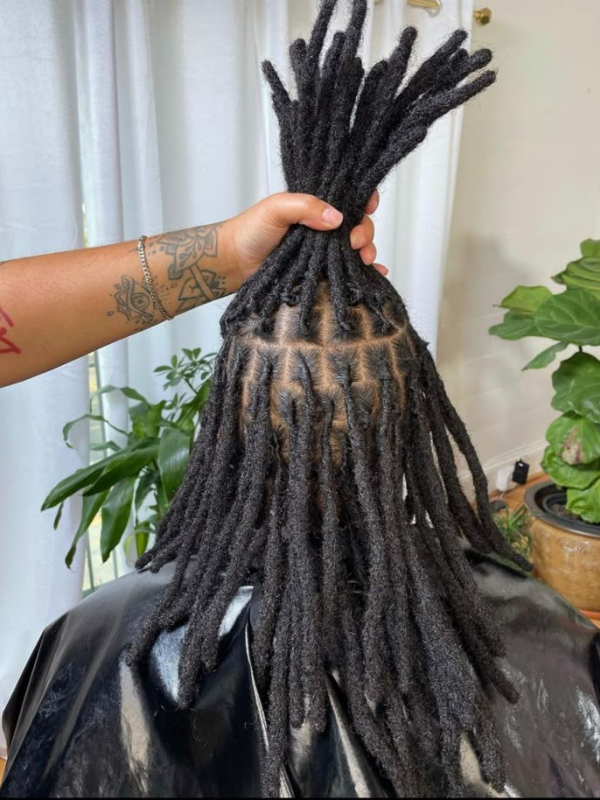
Understanding What Recovery May Look Like
Whether thinning locs can become thicker again depends on the cause and extent of the damage.
If the problem involves a loc that has become weak because of friction or mechanical stress, reducing the stress and arranging appropriate professional repair may help protect the remaining hair.
If the thinning is caused by a condition affecting the hair follicles, recovery depends on the diagnosis and treatment.
Some causes of hair loss are reversible, while others can result in permanent changes.
It is important to set realistic expectations.
You may need to change your maintenance routine, adjust your hairstyles, or seek treatment before you see improvement.
Why Recovery Takes Time
Hair does not become stronger overnight.
Even after you remove a source of tension, you may need time to observe whether further damage has stopped.
If the hair follicles remain healthy, new growth may gradually become visible.
However, a loc that has already lost hair along its length will not automatically regain that hair simply because you stop manipulating it.
A weakened loc may require professional repair or another suitable adjustment.
Avoid repeatedly checking the affected area or trying multiple treatments at once.
A consistent, appropriate approach makes it easier to monitor changes.
When Combining or Repairing Locs May Help
Combining or repairing locs may be an option when the individual locs are too weak or small to support their structure.
However, these techniques should be selected carefully.
The cause of the thinning, the amount of hair remaining, and the location of the weak area all matter.
Ask an experienced loctician to assess the locs before deciding.
If you are experiencing scalp inflammation or ongoing hair loss, address those concerns as well.
Repairing the visible loc without addressing the underlying cause may lead to further problems.
Building a Long-Term Routine That Helps Prevent Thinning Locs
Choose Maintenance Based on Hair Health Rather Than Appearance Alone
It is understandable to want neat, well-defined locs.
However, a hairstyle that looks perfectly maintained is not necessarily healthier than one with some natural frizz or visible new growth.
Avoid treating every change in appearance as a problem that needs immediate correction.
Instead, focus on scalp comfort, suitable cleansing, gentle maintenance, and protection from unnecessary tension.
If your locs are thinning, tell your loctician that preserving their strength is more important than achieving a tightly retwisted appearance.
This helps ensure that maintenance decisions reflect your hair’s actual needs.
Make Gentle Styling a Regular Habit
Choose hairstyles that feel comfortable and allow your roots to rest.
If you enjoy updos, avoid pulling the same areas tightly every time.
You can also alternate between gathered styles and wearing your locs loose.
When using accessories, make sure they do not catch on the hair or create pressure at the roots.
If a style causes discomfort, remove it rather than trying to tolerate the tension.
These small changes can help reduce repeated stress on vulnerable areas.
Review Your Hair-Care Routine When Problems Appear
Your hair’s needs can change as your locs grow longer and become heavier.
A routine that worked well when your locs were short may need adjustments later.
For example, longer locs may require more careful styling to manage their weight.
Similarly, a maintenance technique that suits strong roots may not be appropriate for a loc that has begun to thin.
If you notice changes, reassess your routine with a qualified professional.
Avoid continuing the same habits simply because they worked in the past.
Remember That Healthy Locs Do Not Need to Look Perfect Every Day
Locs naturally develop texture and change as they grow.
You may notice frizz, new growth, or small differences in thickness between individual locs.
These changes do not automatically indicate damage.
Learning to distinguish normal variation from progressive thinning can help you avoid unnecessary manipulation.
You do not need to retwist your locs every time the roots become visible.
Give your hair time to grow, and seek help when you notice genuine signs of weakness or hair loss.
Frequently Asked Questions About How to Fix Thinning Locs
Can thinning locs become thick again?
Sometimes. The outcome depends on the cause of the thinning and the condition of the hair. Reducing tension and arranging appropriate professional repair may help in some cases. If a scalp condition or hair-loss disorder is involved, treatment may be necessary.
How to fix thinning locs without cutting them?
The first step is to identify the cause. Reducing tension, changing your maintenance routine, and protecting weak areas may help prevent further damage. A loctician can assess whether professional repair is possible. However, some severely damaged locs may require trimming or another adjustment.
Should I combine my thinning locs?
Combining locs may help in some situations, particularly when individual locs are too small to support their structure. However, the right approach depends on the cause and location of the thinning. Consult an experienced loctician first.
How often should I retwist thinning locs?
There is no single schedule that suits everyone. If your locs are thinning, ask your loctician to assess the roots and recommend a suitable maintenance approach. Avoid repeatedly tightening weak sections.
Can thinning locs grow back naturally?
It depends on the cause. If the hair follicles remain healthy and the problem is related to temporary mechanical stress, recovery may be possible. Other causes of hair loss may require treatment. A dermatologist can help determine what is happening.
What should I do if my edges are thinning?
Avoid tight styles and repeated manipulation around your hairline. If the thinning continues, arrange an assessment with a dermatologist or qualified healthcare professional. Early attention is important when traction-related damage is suspected.
Can I use a crochet hook to repair thinning locs?
Crochet repair requires appropriate technique and an assessment of the affected loc. Incorrect handling can weaken the remaining hair. It is best to consult an experienced professional rather than attempting a complicated repair without proper training.
Does washing locs cause thinning?
Washing does not automatically cause thinning. However, aggressive handling can disturb weak locs, and some starter methods require particular care. Follow a suitable cleansing routine and ask your loctician about any concerns.
Why do my locs look thinner after a retwist?
Retwisting can change the way your locs sit and expose more of the roots or scalp. This may make the sections appear different. However, if a retwist leaves your scalp painful or reveals progressive thinning, ask your loctician to assess the technique.
Conclusion on How to fix Thinning locs
Learning How to fix thinning locs begins with understanding that thinning is a sign to assess your hair’s condition rather than a problem to hide with tighter styling or additional products.
The most important step is identifying what is causing the change. Frequent retwisting, tight hairstyles, excessive tension, friction, and heavy locs can all contribute to weakening in certain situations. However, scalp conditions and other forms of hair loss may require professional medical attention.
Once you understand the likely cause, you can make changes that protect your hair. Reduce unnecessary tension, choose comfortable hairstyles, maintain a suitable cleansing routine, and avoid repeatedly manipulating weak areas.
If a loc has developed a narrow section or appears close to breaking, consult an experienced loctician about appropriate repair options. If your hairline is receding or the thinning continues, seek an assessment from a dermatologist or qualified healthcare professional.
Remember that not every thin loc is damaged. Some people naturally have smaller locs because of their hair density and original section size. What matters is whether your locs are becoming weaker or changing in a way that suggests a problem.
You do not need to make your locs look perfectly neat every day. A little frizz or visible new growth is often preferable to maintenance that places excessive stress on your roots.
With a suitable routine, gentle styling, and early attention to warning signs, you can work toward protecting your locs and reducing the risk of further damage.
Your goal should not simply be thicker-looking locs. It should be healthier hair, a comfortable scalp, and a maintenance routine that supports your locs over time.