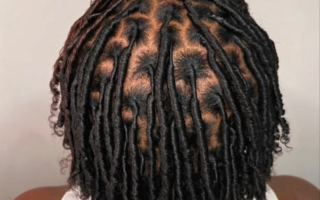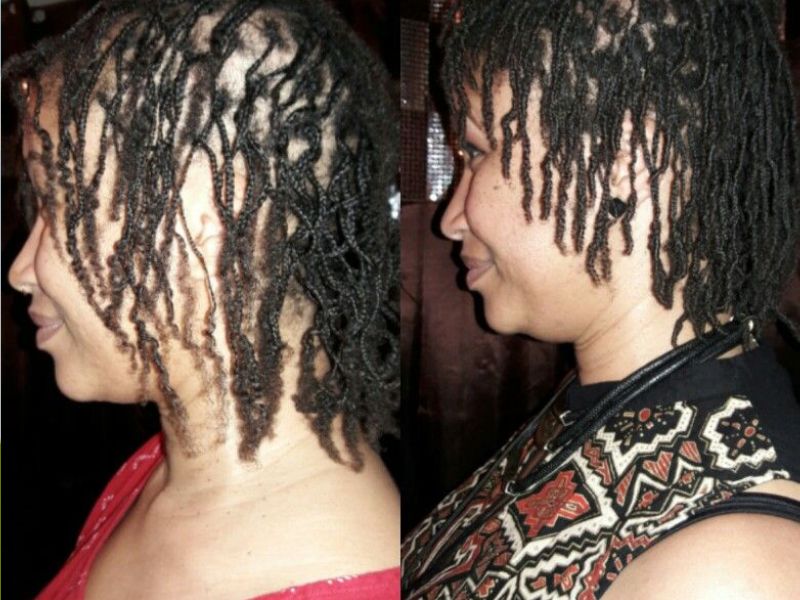
In This Post You will Understand the Reasons, Why Your Locs Is Thinning at the Roots? 9 Causes and How to Fix Them.
Have you ever looked at your locs in the mirror and noticed that the roots seem thinner than they used to be? Perhaps your locs look full along their length, but the hair growing from your scalp appears weak, sparse, or almost ready to pull away. You might even notice that some locs are hanging by only a few strands of hair, leaving you worried about whether you could lose them completely.
If this sounds familiar, you are not alone. Thinning at the roots is a concern for some people with locs, especially when their hair is exposed to repeated tension, frequent retwisting, or styling practices that put stress on the scalp and hair follicles.
The good news is that not every case of thinning locs means you will lose your hair permanently. Sometimes, the problem is related to hair-care habits that can be changed. However, thinning can also be a sign of an underlying scalp condition or a form of hair loss that requires professional attention.
Understanding what is happening at your roots is the first step toward protecting your locs. Simply adding more oils, tightening your retwist, or changing your shampoo may not solve the problem. In some cases, these changes can make the situation worse if they do not address the actual cause.
In this guide, we will explore nine possible reasons your locs are thinning at the roots, how to recognize the warning signs, and what you can do to protect your hair. We will also discuss mistakes to avoid, ways to care for your roots, and when to seek professional help.
I have a very useful On What Really Causes Dandruff with Locs and How to Treat It, that will help you take care of your Locs Issues Concerning Dandruff.
What Does It Mean When Your Locs Are Thinning at the Roots?
When your locs are thinning at the roots, the hair connecting your locs to your scalp may be becoming less dense, weaker, or more fragile than it used to be.
You might notice that your locs appear thinner where they meet your scalp, that the roots have become weak and wispy, or that some locs seem to be hanging from only a small amount of hair.
However, it is important to understand that thinning roots do not always mean the same thing.
For example, someone with new growth may notice that the hair near the scalp looks loose compared with the compacted length of mature locs. This can be a normal part of the loc process. On the other hand, someone who notices that their locs are becoming progressively thinner, their scalp is increasingly visible, or their roots are breaking may be experiencing a genuine hair problem.
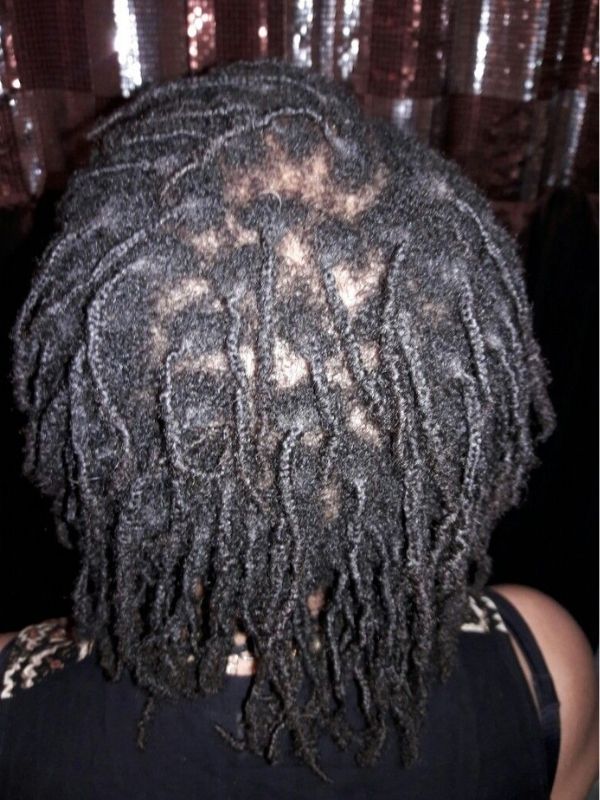
Here are some signs worth paying attention to:
- Your locs look noticeably thinner where they meet your scalp.
- Some locs appear to be hanging by a few strands of hair.
- You notice broken hairs around the roots.
- Your hairline or the areas around your temples are becoming thinner.
- Your scalp is becoming more visible in areas where it was previously covered.
- Your locs are becoming weaker after repeated retwisting or tight styling.
- You notice bald patches, persistent itching, redness, tenderness, or scaling.
The location of the thinning can also provide useful clues. For example, thinning around the front hairline may be associated with tension from hairstyles, while thinning across the crown may have other causes.
These signs cannot establish the cause on their own, but they can help you recognize when your hair needs closer attention.
One important thing to remember: The goal is not to make every new-growth section look as tight as the mature part of your locs. Healthy roots need to be handled gently, and excessive tightening can cause damage.
Do you want to know What Happens When You Stop Retwisting Your Locs ? check this article to find out.
9 Reasons Your Locs May Be Thinning at the Roots and How to Fix Them
There are several possible explanations for thinning roots. Some relate to styling and hair-care practices, while others involve scalp conditions, genetics, or changes in the hair-growth cycle.
Let’s look at nine possibilities and what you can do about each one.
1. Retwisting Your Locs Too Frequently
One of the first things to examine when your locs are thinning at the roots is how often you retwist them.
Retwisting helps maintain the appearance of your locs by directing new growth into the loc structure. However, doing it too frequently can place repeated stress on the hair growing from your scalp.
Every time you retwist, you manipulate the roots. If the process involves pulling the hair tightly, twisting the same area repeatedly, or using excessive tension to create a neat appearance, the roots may become weaker over time.
You might initially notice small areas of thinning, but continued stress can lead to breakage or traction alopecia, a type of hair loss caused by repeated pulling on the hair.
This is particularly concerning if your roots are already fragile.
How to fix it
Start by reviewing your retwisting routine.
If you retwist every one or two weeks simply because you prefer a neat appearance, consider allowing more time between sessions. The right interval varies depending on your hair, the condition of your scalp, your loc stage, and your styling preferences.
Some people find that waiting several weeks between retwists works better for their hair. The important thing is to avoid repeatedly manipulating fragile roots.
During your next retwist:
- Ask your loctician to use gentle tension.
- Avoid repeatedly twisting the same roots to make them look smaller.
- Do not force new growth into a tight, compact shape.
- Stop if you experience pain, burning, or significant tenderness.
- Give your scalp enough time to recover between sessions.
If you have noticed actual thinning, consider pausing tight retwisting while you assess the problem. If the thinning continues, seek an evaluation from a dermatologist.
Remember, neat locs and healthy roots should go together. You do not need to sacrifice the health of your hair to maintain a tidy appearance.
If you want to learn more about developing a suitable retwisting routine, link this section to your article “How Often Should You Retwist Your Locs? Signs You Are Retwisting Too Often or Not Enough.”
2. Wearing Tight Loc Hairstyles
Have you ever styled your locs into a high bun, a tight ponytail, an elaborate updo, or a style that requires your hair to be pulled firmly away from your face?
These styles can look beautiful, but the amount of tension they place on your roots matters.
Locs can become heavier as they grow longer and mature. When long or thick locs are pulled into a tight style, their weight can place additional strain on the hair at the scalp.
Repeated tension may weaken the roots, especially around the temples, hairline, and edges.
This type of damage is particularly important because traction alopecia can become permanent if the pulling continues long enough to damage the hair follicles.
You may notice tenderness after styling, small bumps around the hairline, broken hairs, or gradual thinning where your hair is pulled most tightly.
A hairstyle should not leave your scalp feeling painful.
How to fix it
Choose hairstyles that allow your locs to sit comfortably without pulling on your roots.
If you enjoy buns and ponytails, try wearing them loosely rather than pulling every loc tightly into position. You can also alternate between updos and styles that allow your locs to hang freely.
Here are some helpful adjustments:
- Avoid wearing tight ponytails every day.
- Choose loose buns instead of tightly secured ones.
- Reduce the use of styles that pull your temples backward.
- Avoid heavy extensions or added hair that increases the weight on your roots.
- Give your scalp breaks between elaborate styles.
- Remove a style immediately if it causes pain or persistent discomfort.
Pay particular attention to the front and sides of your head. These areas may show the effects of repeated tension before other parts of the scalp.
If you notice thinning around your edges, do not keep styling over the affected area in an attempt to hide it. Reduce tension and seek medical advice if the problem persists.
You can still enjoy attractive loc hairstyles without making tightness part of your styling routine.
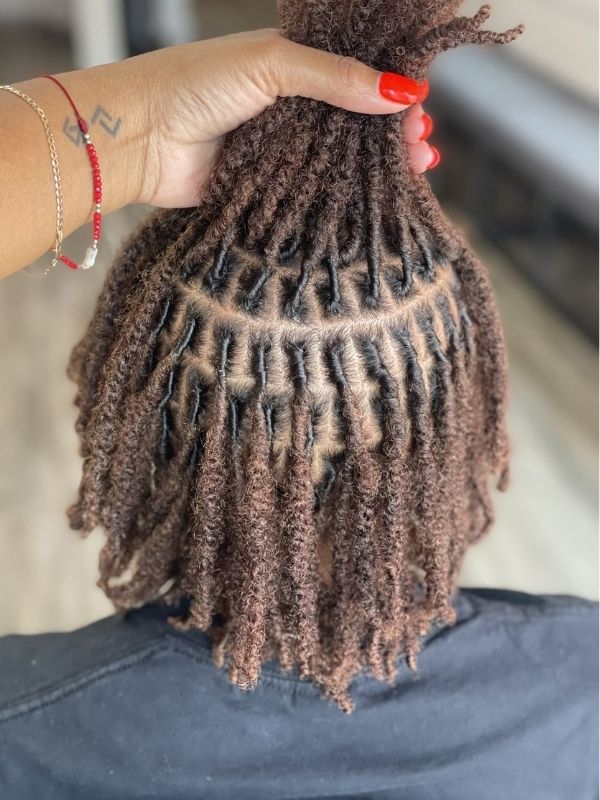
3. Using Too Much Tension During Interlocking
Interlocking is a method of maintaining locs by passing the ends or sections of the loc through the root area in a particular pattern.
It can be a useful maintenance technique when performed appropriately. However, interlocking too tightly or repeatedly manipulating the same small section can contribute to root weakness and breakage.
The problem is not necessarily interlocking itself. The technique, the amount of tension, the condition of the hair, and how frequently the roots are maintained all matter.
If a loc is repeatedly pulled too tightly at the same point, that section may become weak. In some cases, the loc can develop a thin area or a weak spot where the hair is under repeated stress.
You might notice that the root looks unusually compact, that the loc feels tight against your scalp, or that the area becomes uncomfortable after maintenance.
If you are still in the early stages of your loc journey, choosing gentle hairstyles is important for protecting your new locs. Learn Starter Locs on Short Hair: What to Expect and How to Style Them with practical tips to keep your locs secure while looking beautiful.
How to fix it
If you use interlocking to maintain your locs, pay attention to how your roots feel during and after the process.
Ask your loctician to avoid excessive tension and to assess any locs that already appear thin or fragile.
You should also avoid repeatedly interlocking your roots simply because they have started to look loose. New growth is normal, and it does not always need immediate manipulation.
A few helpful practices include:
- Have your maintenance technique assessed by an experienced loctician.
- Avoid repeatedly working on the same section when it is already weak.
- Do not pull a loc forcefully through the root.
- Allow adequate time between maintenance sessions.
- Ask for a gentler approach if your scalp becomes tender.
- Seek professional advice if a loc develops a narrow, weak section.
If a loc is already thinning, do not attempt to repair it by repeatedly tightening the root. That may put additional stress on the remaining hair.
A loctician can help you evaluate the structure of the loc, while a dermatologist can assess thinning caused by scalp or hair-growth conditions.
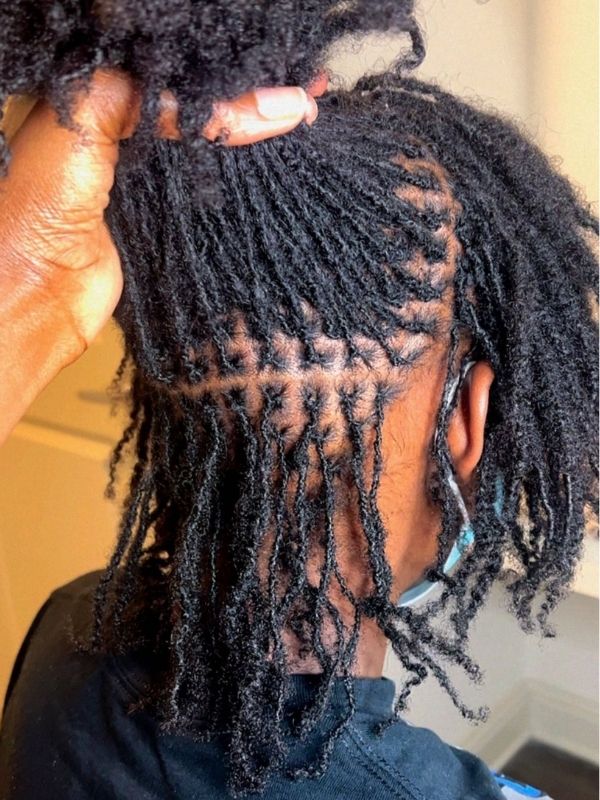
4. Your Locs Have Become Too Heavy for Fragile Roots
Locs can become longer, thicker, and heavier as they mature.
Although this is a normal part of the journey for many people, the weight of long locs can place additional strain on roots that are already weak.
This is particularly relevant if you have fine hair, naturally fragile roots, existing thinning, or locs that have been weakened by previous tension.
Imagine tying a heavy object to a delicate thread. The thread may hold for a while, but repeated pulling can eventually weaken it.
Hair does not behave exactly like thread, but the comparison helps explain why weight and tension matter when caring for locs.
If you notice that a few locs are thinning while the rest remain healthy, examine whether those locs are especially long, thick, or frequently styled in ways that pull on their roots.
How to fix it
Start by reducing unnecessary weight and tension.
You do not automatically need to cut your locs short because they have grown longer. Instead, consider whether your current styling habits are placing too much strain on particular areas.
You can try the following:
- Wear long locs down or in loose styles more often.
- Avoid pulling heavy locs into tight updos.
- Reduce the use of accessories that add substantial weight.
- Ask an experienced loctician to assess unusually heavy or weak locs.
- Consider a carefully planned trim if excessive length contributes to the problem.
- Seek medical advice if thinning continues despite reducing tension.
If a loc has become extremely thin at its base, avoid attaching extensions or wrapping additional hair around it without understanding the cause.
Adding more hair may increase the load on an already fragile root.
The aim is to preserve the hair you have while reducing the stress that could cause further damage.
If you want to give your locs a beautiful look for weddings, birthday parties, church events, or other special occasions, Check out these Beautiful Loc Styles for Special Occasions That Will Make You Stand Out for more inspirations.
5. Your Hair Is Breaking at the Roots
Sometimes, what appears to be thinning at the roots is actually breakage.
Hair can become fragile when it is subjected to repeated tension, rough handling, excessive manipulation, or other forms of damage.
When the hair connecting a loc to your scalp begins to break, the loc may appear to hang loosely or become thinner at its base.
You might also notice short broken hairs around your scalp, uneven roots, or a loc that seems to have lost its support.
It is important to distinguish breakage from hair shedding.
Hair shedding occurs when hairs are released from their follicles as part of the natural hair-growth cycle. Breakage happens when the hair shaft snaps. Both can make your hair appear thinner, but their causes and treatments may differ.
How to fix it
Start by handling your roots as gently as possible.
Avoid repeatedly pulling, twisting, separating, or tightening the affected locs. If you suspect breakage, it is better to reduce manipulation than to attempt to make the roots look neat immediately.
Here are some practical steps:
Handle your roots gently. Avoid forceful twisting, aggressive combing, or repeatedly pulling loose hair into the loc.
Reduce tension. If you regularly wear tight hairstyles, switch to looser options.
Wash carefully. Clean your scalp without scrubbing the roots aggressively or pulling on fragile locs.
Avoid unnecessary chemical treatments. Chemical processes that weaken your hair can increase the risk of breakage.
Get fragile locs assessed. An experienced loctician can examine the loc structure and help you determine whether a loc needs professional repair.
If the breakage is accompanied by scalp pain, redness, scaling, bald patches, or progressive thinning, consult a dermatologist.
Also, avoid assuming that applying more oil will automatically repair broken hair. Oils may help with lubrication and the feel of the hair, but they cannot reconnect a broken strand or reverse damage to a hair follicle.
The most useful approach is to reduce the source of damage and protect the hair that remains.
Do you want to Know How to Fix Frizzy Locs Without Retwisting: Easy Tips That Work Check Out this Article for more Guidance,
6. Your Scalp Is Inflamed or Has an Underlying Condition
Your scalp plays an important role in the health of your hair.
If the scalp is persistently inflamed, irritated, or affected by a condition that disrupts normal hair growth, your locs may begin to thin.
Possible causes include inflammatory scalp conditions, certain infections, and forms of hair loss that affect the hair follicles.
You might notice itching, redness, flaking, tenderness, sores, or patches where your hair is becoming sparse.
However, not every itchy scalp indicates a serious condition, and not every scalp condition causes hair loss. The combination of symptoms, their duration, and the appearance of your scalp can help a healthcare professional determine what is happening.
How to fix it
The first step is to identify and treat the underlying problem rather than simply covering it with hair products.
Keep your scalp clean using a shampoo suitable for your hair and scalp needs. Rinse thoroughly and allow your locs to dry completely.
Avoid scratching aggressively, applying multiple products to irritated skin, or using strong homemade mixtures that may worsen irritation.
If you experience persistent itching, unusual scaling, redness, painful bumps, sores, or patches of hair loss, arrange an appointment with a dermatologist or another qualified healthcare professional.
Seek prompt medical assessment if you notice painful areas, pus, spreading redness, or rapidly developing bald patches.
Some inflammatory and scarring conditions can cause permanent hair loss if treatment is delayed. Early assessment is therefore important.
If an infection or scalp disorder is responsible, a healthcare professional can recommend appropriate treatment. Simply increasing the amount of oil you apply may not address the cause.
Your locs deserve attention, but your scalp deserves just as much care.
Learn How to Style Medium Length Locs
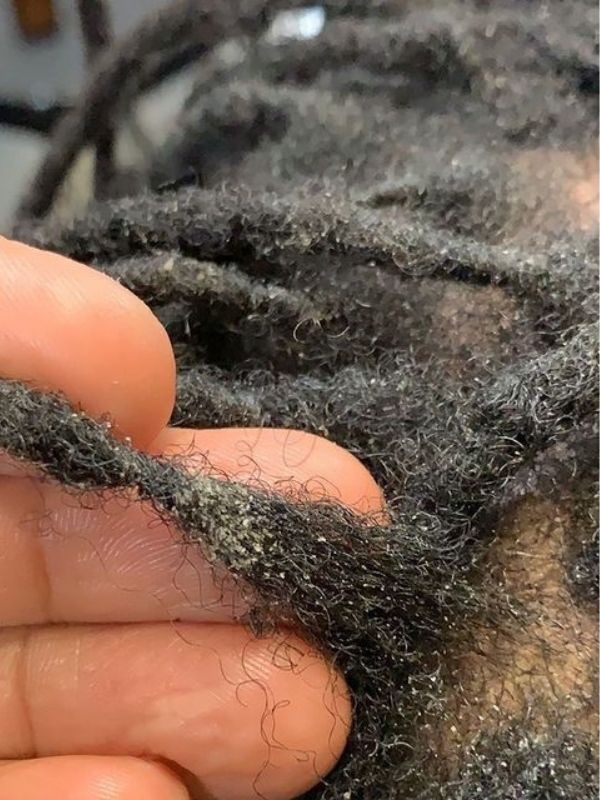
7. Product Buildup Is Affecting Your Scalp and Locs
Locs can collect residue from shampoos, conditioners, gels, waxes, oils, and other styling products.
Some buildup is visible as white flakes, a sticky coating, or residue trapped inside the locs. At other times, the scalp may feel uncomfortable or appear coated with product.
Buildup does not automatically cause root thinning, so it is important not to assume that every thin root is the result of using too many products.
However, heavy product use can make loc maintenance more difficult. Some products may also irritate the scalp, and excessive manipulation to remove residue can contribute to breakage.
If your locs are thinning, review your product routine rather than adding several new products at once.
How to fix it
Start with a simple, consistent cleansing routine.
Choose a shampoo that suits your scalp and locs, and focus on cleansing the scalp thoroughly. Rinse carefully so that residue does not remain trapped in your hair.
Consider these practices:
- Use styling products sparingly.
- Avoid heavy waxes that are difficult to rinse out.
- Rinse your scalp and locs thoroughly after shampooing.
- Avoid applying multiple oils and creams simply because your roots look thin.
- Follow product instructions rather than using excessive amounts.
- Allow your locs to dry thoroughly after washing.
If a product causes itching, burning, redness, or swelling, stop using it.
For stubborn buildup, seek advice from an experienced loctician about an appropriate cleansing method. Avoid aggressive scrubbing or harsh mixtures that may damage your hair or irritate your scalp.
Most importantly, remember that clean roots are not the same as thick roots. Cleansing can help maintain scalp hygiene, but it will not necessarily reverse thinning caused by tension, genetics, or a medical condition.
If the thinning continues after you simplify your routine, investigate other possible causes.
I Am Sure You wondering when your Locs will Fully Mature As a Beginner, Check this Article to Find Out What Do Mature Locs Look Like? 11 Signs Your Locs Are Fully Mature
8. Nutritional Deficiencies or Other Health Changes
Hair growth is influenced by more than the products you use.
Your body needs adequate nutrition to support normal hair growth. Certain nutritional deficiencies, significant weight loss, illness, major physical stress, and some medical conditions can contribute to increased shedding or changes in hair density.
For example, iron deficiency can contribute to hair loss in some people. Thyroid disorders and other medical conditions may also affect hair growth.
Sometimes, increased shedding occurs after a major illness, surgery, or another significant physical stressor. This type of shedding may not become noticeable until weeks or months after the triggering event.
If your locs are thinning across several areas rather than only where they are pulled or retwisted, it may be worth considering whether something beyond your hair-care routine is involved.
How to fix it
Focus on meeting your nutritional needs through a balanced diet.
Include a variety of foods containing protein, iron, zinc, and other nutrients necessary for normal health. Eggs, fish, beans, meat, vegetables, nuts, and other nutrient-rich foods can contribute to a balanced eating pattern.
However, eating particular foods does not guarantee thicker locs, and supplements are not automatically necessary.
If you have experienced persistent thinning, increased shedding, fatigue, significant weight changes, or other symptoms, speak with a healthcare professional.
Depending on your history and examination, they may recommend blood tests to investigate possible deficiencies or medical causes.
Avoid taking high doses of iron, zinc, biotin, or other supplements without appropriate advice. Supplements are most useful when there is a genuine need, and excessive amounts of certain nutrients can cause harm.
It is also worth remembering that hair growth takes time. Even after the underlying cause of shedding is addressed, visible improvement may take several months.
Be patient with your hair, but do not ignore persistent or worsening changes.
Are you just starting your Locs Journey, But you do not know which type of Locs to start with, Go Through this Article to find the right Answer Sisterlocks vs. Traditional Locs: Which One Is Right for You?
9. Genetics, Hormonal Changes, or a Form of Hair Loss
Sometimes, thinning locs are not primarily caused by retwisting, hairstyles, or product buildup.
Genetics, hormonal changes, and certain forms of hair loss can affect the density of your hair.
For example, androgenetic alopecia, commonly called pattern hair loss, can cause gradual thinning in particular areas of the scalp.
Central centrifugal cicatricial alopecia, also known as CCCA, is another condition that can cause progressive hair loss, often beginning around the crown. It is particularly important to recognize because it can lead to permanent scarring if not treated appropriately.
Traction alopecia is another possibility when repeated tension has damaged the hair follicles.
These conditions are different from one another, and they cannot be reliably diagnosed simply by looking at a photograph of your locs or identifying where the hair appears thin.
You might notice that your scalp is becoming increasingly visible, that a thinning area is expanding, or that your hair is not recovering after you stop tight styling.
Some people also experience itching, tenderness, or other scalp symptoms, while others have little discomfort.
How to fix it
If your locs are progressively thinning despite gentle care, arrange an assessment with a dermatologist.
A dermatologist can examine your scalp, review your medical and hair-care history, and determine whether further investigations are needed.
Treatment depends on the specific condition. Some forms of hair loss can be managed with appropriate medication or other treatment, while scarring conditions require early attention to prevent further damage.
Do not rely on oils, scalp massages, or hair-growth products as a substitute for diagnosis.
If you suspect traction alopecia, reduce tension immediately while arranging an assessment. If the cause is another condition, a dermatologist can guide you toward suitable treatment.
The earlier you investigate persistent thinning, the better your chances of identifying a treatable cause before more hair is lost.
Learn How to Detox Your Locs at Home: A Step-by-Step Guide Properly without Breaking the Bank.
How to Tell Whether Your Locs Are Thinning or Simply Growing
It is easy to become concerned when your roots look different from the mature sections of your locs. However, not every change in appearance indicates a problem.
Understanding the difference between normal new growth and possible thinning can help you decide whether you need to adjust your routine or seek professional advice.
Normal New Growth
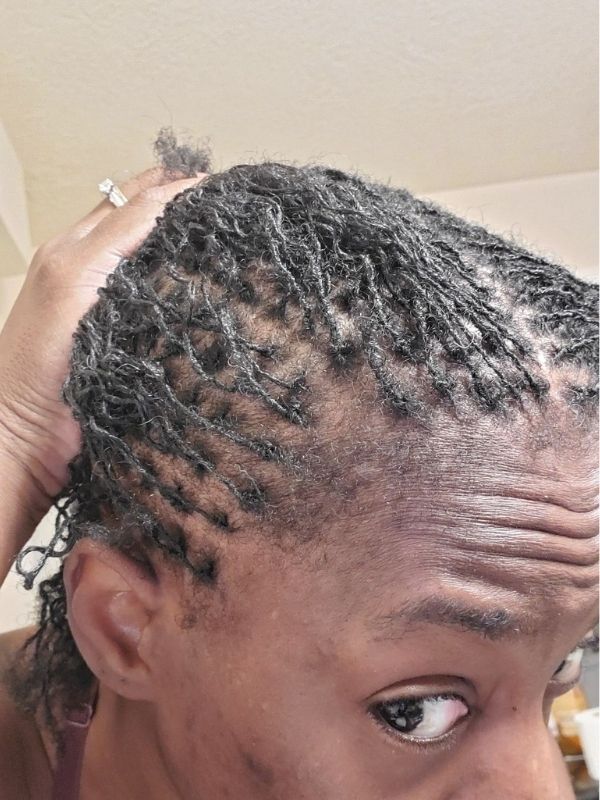
When your hair grows, the new section near your scalp may look softer, looser, or less compact than the mature part of your locs.
This is expected because newly grown hair has not yet become incorporated into the loc in the same way as the older sections.
You may notice a small amount of loose hair around the roots, particularly if you have gone several weeks without retwisting.
If the roots remain strong, your locs are not progressively becoming thinner, and your scalp looks healthy, this may simply be part of your normal loc maintenance cycle.
Possible Root Thinning
Root thinning is more concerning when the amount of hair supporting a loc appears to be decreasing over time.
You may notice that the base of a loc is becoming unusually narrow, that individual hairs are breaking, or that your scalp is becoming more visible.
You might also notice that a loc is hanging from only a small amount of hair or that the affected area is becoming larger.
These changes deserve attention, particularly if they occur alongside tenderness, inflammation, or bald patches.
A Simple Comparison
| What you notice | What it may mean |
|---|---|
| Soft, loose new growth | Normal hair growth |
| Roots look less neat between retwists | Normal maintenance changes |
| A loc is becoming thinner at its base | Possible breakage or root weakness |
| Increasingly visible scalp | Possible hair thinning or hair loss |
| Broken hairs around the roots | Possible breakage |
| Thinning around the temples after tight styling | Possible traction-related damage |
| A widening thin area around the crown | Possible scalp or hair-loss condition |
| Painful bumps, sores, or persistent inflammation | A scalp problem that needs assessment |
These observations are clues, not a diagnosis. If you are unsure whether your locs are thinning, a dermatologist can help determine the cause.
7 Habits That Can Help Protect Your Loc Roots
After identifying possible causes, the next step is to develop habits that reduce unnecessary stress on your hair.
You do not need an elaborate routine with expensive products. In many cases, the most useful changes involve gentle handling, appropriate cleansing, and avoiding practices that repeatedly pull on your roots.
1. Give Your Roots a Break Between Retwists
Your roots do not need to be tightly retwisted every time you notice new growth.
Allowing more time between maintenance sessions can reduce repeated manipulation, particularly if your roots are already fragile.
Choose a maintenance schedule that suits your locs and scalp rather than copying someone else’s routine.
If you have noticed thinning, ask your loctician whether your usual technique or schedule could be contributing to the problem.
2. Choose Comfortable Hairstyles
Beautiful loc hairstyles should not require persistent pulling or pain.
If your favorite style leaves your scalp tender, consider loosening it or choosing another style.
Alternate between updos and looser styles, and be especially gentle around the hairline and temples.
If a hairstyle repeatedly causes discomfort, do not continue wearing it simply because it looks neat.
3. Keep Your Scalp Clean
A consistent cleansing routine helps remove sweat, dirt, and product residue.
Use a shampoo appropriate for your scalp and locs, rinse thoroughly, and avoid aggressive scrubbing.
If you have a diagnosed scalp condition, follow the treatment and cleansing advice provided by your healthcare professional.
4. Avoid Excessive Product Use
Applying more oil or cream does not necessarily make roots stronger.
Use products according to your needs and avoid layering several heavy products onto your scalp.
If your scalp becomes irritated after using a particular product, stop using it and seek advice if the symptoms persist.
5. Be Gentle When Drying Your Locs
After washing, gently squeeze excess water from your locs rather than rubbing them vigorously with a towel.
Allow them to dry thoroughly. Thick or long locs may take considerably longer to dry than loose hair.
If your locs are fragile at the roots, avoid pulling them forcefully while drying or styling.
6. Support Your Hair With Balanced Nutrition
A varied diet that provides adequate protein, iron, and other essential nutrients supports normal body functions, including hair growth.
If you suspect a deficiency, seek medical advice rather than automatically purchasing hair supplements.
Correcting an underlying deficiency may help when that deficiency is contributing to hair loss, but supplements will not fix every cause of thinning.
7. Pay Attention to Changes in Your Scalp
Get familiar with how your roots normally look and feel.
If you notice progressive thinning, widening patches, persistent tenderness, unusual scaling, or broken hair around particular areas, investigate the problem rather than waiting for it to become severe.
Early assessment is especially important if you suspect a condition that can cause permanent hair loss.
Should You Apply Oil to Locs That Are Thinning at the Roots?
This is a common question because many people associate scalp oiling with healthy hair growth.
Oils can help reduce friction and improve the feel of the hair, depending on the product and how it is used. However, oil cannot reliably reverse root thinning or repair damaged hair follicles.
If your locs are thinning because of repeated tension, applying oil without changing your styling habits will not remove the source of the problem.
Likewise, if your thinning is caused by a nutritional deficiency, hormonal condition, or inflammatory scalp disorder, oil alone is unlikely to address the underlying cause.
If you enjoy oiling your scalp, use products that you tolerate well and avoid excessive application.
Pay attention to how your scalp responds. Stop using a product if it causes irritation, redness, or itching.
You should also be cautious about homemade mixtures containing strong essential oils or other ingredients that may irritate the skin when used improperly.
If your scalp is already inflamed or you have unexplained thinning, ask a healthcare professional whether any particular product should be avoided.
The most important step is to determine why your locs are thinning before investing in products that promise thicker roots.
Can Thinning Loc Roots Grow Back?
In some cases, yes. However, recovery depends on the cause and the extent of the damage.
If thinning is related to early traction or breakage, reducing tension and avoiding further damage may allow some hair to recover.
However, recovery is not guaranteed. When hair follicles have been permanently damaged or destroyed by scarring, the lost hair may not grow back without specialized treatment.
The same applies to other forms of hair loss: outcomes depend on the underlying condition and how it responds to treatment.
If you have noticed thinning after repeatedly wearing tight styles, start by removing the source of tension.
Avoid pulling the affected roots into another tight style, and give your scalp time away from stressful manipulation.
If the thinning is progressive, has continued for several weeks, or is accompanied by bald patches or scalp symptoms, consult a dermatologist rather than relying on home remedies alone.
It is also important to be patient. Hair grows gradually, and visible improvement may take months even when the cause has been addressed.
Taking photographs of your scalp periodically under similar lighting conditions can help you monitor changes. Avoid checking repeatedly throughout the day, as small differences in lighting and positioning can make your roots look different.
If the affected area continues to expand, seek professional advice promptly.
Can You Repair Locs That Are Thinning at the Base?
Sometimes a weakened loc can be repaired by an experienced loctician. However, the best approach depends on whether the loc itself is damaged, the supporting hair is breaking, or an underlying hair-loss condition is present.
A loc that has become thin at its base should not automatically be tightened or wrapped with additional hair.
Doing so may add more weight or tension to a fragile area.
Before attempting a repair, consider the following:
If the loc is structurally weak: An experienced loctician can assess whether gentle reinforcement is appropriate without placing unnecessary tension on the roots.
The hair around the root is breaking: Reduce manipulation and determine what is causing the breakage before attempting a repair.
If the scalp is visibly thinning: A dermatologist should assess possible hair loss, particularly if the thinning is spreading or accompanied by inflammation.
And If the loc is almost detached: Avoid pulling or tightening it. Seek professional advice about the safest way to manage it.
A loctician can help with the structure and maintenance of your locs, but a dermatologist is the appropriate professional for diagnosing medical causes of hair loss.
The priority is to protect the remaining hair rather than make a weakened loc look thicker temporarily.
We Put-together 10 Two Strand Twist Loc Styles That Are Too Beautiful To Ignore Check them out for more inspiration.
Mistakes to Avoid When Your Locs Start Thinning
When you first notice thinning, it is natural to want to fix it quickly. However, some common reactions can put additional stress on already fragile roots.
Here are mistakes worth avoiding.
Retwisting More Frequently to Hide the Thinning
A fresh retwist may make your locs look neater, but it does not necessarily make the roots stronger.
Repeated tightening can worsen tension-related damage.
Wearing Tight Styles to Cover Sparse Areas
Pulling your locs over a thinning section or securing them tightly may increase tension on the surrounding hair.
Choose styles that sit comfortably without pulling on fragile areas.
Applying Every Hair-Growth Oil You Find
Using multiple products at once can make it difficult to identify what helps and what irritates your scalp.
More products do not automatically mean healthier roots.
Ignoring Pain After Styling
Pain, tenderness, or persistent discomfort after a retwist or hairstyle can indicate excessive tension or irritation.
Do not assume that your scalp simply needs to get used to the style.
Trying to Repair Every Thin Loc Yourself
Repeatedly twisting, wrapping, or manipulating a fragile loc can worsen the damage.
Have a qualified loctician assess structural problems and seek medical advice if the scalp or surrounding hair is affected.
Waiting Too Long to Investigate Bald Patches
A growing bald patch or progressive thinning should not be dismissed as ordinary loc maintenance.
Some conditions can cause permanent hair loss if treatment is delayed. Early assessment is important.
When Should You See a Dermatologist About Thinning Locs?
Not every change in the appearance of your roots requires medical treatment. However, some signs should prompt you to seek professional advice.
Arrange an appointment with a dermatologist if:
- Your locs are becoming progressively thinner.
- Your hairline or temples are losing density.
- You notice a widening area of thinning around the crown.
- Your roots are breaking despite gentle handling.
- You have persistent itching, redness, or scaling.
- You notice painful bumps, sores, or areas of tenderness.
- You develop smooth or clearly defined bald patches.
- Thinning continues even after you stop wearing tight hairstyles.
- You are experiencing sudden or unusually heavy hair shedding.
Seek prompt medical assessment if you develop painful or swollen areas, pus, spreading redness, or rapidly progressing hair loss.
A dermatologist can examine your scalp and determine whether the problem is related to traction, breakage, a scalp condition, genetics, nutritional deficiencies, or another medical cause.
Depending on the findings, they may recommend further tests or treatment.
Do not wait until a loc becomes completely detached before seeking help. If you suspect that your roots are becoming weaker, early action can help prevent additional damage.
Frequently Asked Questions About Locs Thinning at the Roots
1. Why are my locs thinning at the roots?
Locs may thin at the roots because of frequent retwisting, tight hairstyles, excessive tension during interlocking, breakage, or the weight of long locs. Scalp conditions, nutritional deficiencies, genetics, and other forms of hair loss can also contribute.
The correct solution depends on the underlying cause.
2. Can retwisting cause locs to thin?
Yes. Retwisting too frequently or using excessive tension can weaken the hair at the roots and contribute to breakage or traction alopecia.
Gentle maintenance and avoiding unnecessary tension can help protect your roots.
3. How often should I retwist thinning locs?
There is no single schedule that works for everyone. The appropriate interval depends on your hair, loc stage, scalp condition, and maintenance technique.
If your locs are thinning, avoid repeatedly tightening them to make them look neat. Consider pausing tension-heavy maintenance and consulting an experienced loctician or dermatologist.
4. Can oil make my loc roots thicker?
Oil may help with lubrication and the feel of your hair, but it cannot reliably reverse thinning caused by damaged follicles, traction, genetics, or a medical condition.
Identify the cause of the thinning before choosing a treatment.
5. Why are my locs thinning around my edges?
Thinning around the edges may be associated with tight ponytails, buns, extensions, or other hairstyles that repeatedly pull on the hairline.
However, other causes are possible. Reduce tension immediately and consult a dermatologist if the thinning persists or progresses.
6. Can long locs cause thinning at the roots?
The weight of long locs can increase strain on fragile roots, particularly when combined with tight styling.
If your roots are becoming weak, consider wearing your locs in loose styles and reducing unnecessary tension.
7. Can thinning locs become thick again?
Some thinning caused by early tension or breakage may improve when the source of damage is removed. However, recovery depends on the cause and whether the hair follicles remain healthy.
Scarring hair loss can be permanent, so progressive thinning should be assessed by a dermatologist.
8. Should I cut my locs if they are thinning?
Not necessarily. Cutting your locs may reduce weight in some situations, but it will not address every cause of thinning.
Have the affected locs assessed before making a major decision. If the problem involves scalp hair loss, seek medical advice.
9. How long does it take for thinning locs to recover?
There is no fixed recovery period. If the cause is reversible, improvement may take several months, and the timeline depends on the condition of the follicles and the treatment required.
If your hair continues to thin, do not simply wait for it to recover. Seek professional advice.
Conclusion Why Are My Locs Thinning At The Roots
Noticing that your locs are thinning at the roots can be worrying, especially when you have spent time growing and maintaining them. However, the first step is not to panic or start buying every product that promises thicker hair.
Instead, pay attention to what has changed.
Think about how often you retwist, whether your hairstyles pull tightly on your scalp, how your roots feel after maintenance, and whether you have noticed any other changes in your hair or scalp.
If your routine involves repeated tension, making your hairstyles looser and reducing unnecessary manipulation may help prevent further damage. If your scalp is irritated or your locs continue to thin, seek professional advice rather than relying on home remedies.
Remember that healthy locs do not need to be tightly maintained at all times. Your roots need gentle handling, and your scalp deserves the same attention you give the length of your locs.
Your goal should be to protect the hair you have, identify problems early, and give your roots the care they need.
With a suitable maintenance routine and the right treatment when necessary, you can make more informed decisions about the health of your locs and your long-term loc journey.
I have an article On Wedding Hairstyles for Locs styles that steal the attention, you should check out for your big day.